





Bottom surgery is one of the most studied, as well as most private, procedures on the road to gender-affirming treatment. No matter whether you are a trans woman thinking about having vaginoplasty, a trans man looking into phalloplasty or metoidioplasty, or just seeking some facts, getting reliable medical information about bottom surgery is unexpectedly hard. Prices differ from country to country, terms used at the clinic might not be the same, and marketing information tends to greatly simplify the subject.
The following guide explains what bottom surgery consists of, how much it costs in different medical tourist countries, and what factors should be taken into account before going for a consultation based on current information up to 2026.
What Is Bottom Surgery?
Bottom surgery is a type of gender-affirming surgical treatment that seeks to change the genitalia of a person to match their gender identity. Bottom surgery is just one aspect of many when it comes to gender-affirming medical care; other aspects include top surgery (breast surgery), as well as feminine or masculine facial surgery. Bottom surgery is not performed by all transgender and non-binary people, as it may or may not be a part of the individual's transition period.
Since there are several procedures available in the form of bottom surgery, it would be helpful to categorize them into two main types: feminizing bottom surgery for trans women, otherwise referred to as MTF bottom surgery, and masculinizing bottom surgery, used by trans men (FTM bottom surgery).
Types of Bottom Surgery for Transgender Women (MTF)
Female genital reconstructive surgery centers on the construction of male genitalia structures into a female appearance. The major surgeries involved include:
Vaginoplasty – It is the most common type of MTF bottom surgery. Vaginoplasty is a type of genital surgery in which a new vagina, vulva, clitoris, and labia are created. The most popular form of vaginoplasty is the penile inversion vaginoplasty, which is regarded as the gold standard for genital reconstructive surgery. Penile inversion vaginoplasty involves the use of existing penile and scrotal tissues to line the vaginal cavity.
Colon vaginoplasty – This is the procedure in which part of the sigmoid colon is used to create the vaginal canal; preferred for those with insufficient penile tissues and those undergoing redo vaginoplasty due to previous surgery.
Vulvoplasty or zero depth vaginoplasty – This involves the creation of female external genitalia such as labia and vaginal opening but not the vaginal canal. It is a suitable procedure for individuals who do not require penetrative capability.
Orchiectomy – It involves the surgical removal of the testicles, which is either done alone or together with vaginoplasty.
Types of Bottom Surgery for Transgender Men (FTM)
Masculinizing bottom surgery reconstructs genital anatomy to align with a male gender identity. The two primary surgical pathways are:
Metoidioplasty – Uses the clitoris, which typically enlarges after prolonged testosterone therapy, to construct a small phallus. It's a less invasive procedure than phalloplasty, generally involves fewer surgical stages, and can preserve natural erectile sensation, though the resulting phallus is smaller (typically 3–7 cm).
Phalloplasty – A more extensive, multi-stage procedure that constructs a full-sized phallus using a skin flap from a donor site, most commonly the forearm (radial forearm free flap) or thigh (anterolateral thigh flap). Phalloplasty typically includes urethral lengthening (to allow standing urination), and may include a later-stage penile implant to enable erectile function.
Scrotoplasty – Constructs a scrotum, typically using labial tissue, often combined with testicular implants.
Hysterectomy and vaginectomy – Removal of the uterus and ovaries, and closure of the vaginal canal, are frequently performed as part of a complete FTM bottom surgery plan, though not everyone chooses to include vaginectomy.
Both metoidioplasty and phalloplasty can be performed as standalone procedures, and some patients choose metoidioplasty first with phalloplasty as a later option.
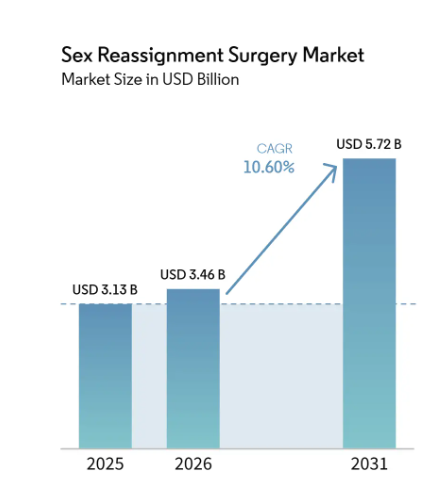
Source: Mordor Intelligence
Bottom Surgery Cost by Country
Cost is one of the biggest factors shaping where people choose to have bottom surgery. Prices vary significantly depending on the procedure, technique, surgeon experience, and whether the price includes hospital stay, anesthesia, and aftercare. The table below summarizes typical 2026 price ranges for MTF bottom surgery (vaginoplasty) across major destinations.
| Country | MTF Bottom Surgery (Vaginoplasty) Cost Range (USD) | Notes |
|---|---|---|
| United States | $25,000 – $50,000+ | Highest cost; some insurance coverage possible for medically necessary care |
| United Kingdom | $20,000 – $35,000 (private) | NHS coverage exists but waitlists can run years |
| Germany | $25,000 – $45,000 | High safety standards, longer wait times |
| Thailand | $7,000 – $20,000 | World's leading bottom surgery destination by volume |
| India | $6,000 – $15,000 | Rapidly growing medical tourism hub |
| Turkey | 30–50% less than US/Europe | Competitive pricing, growing surgeon base |
| Serbia | $9,000 – $16,000 | Known for experienced genital reconstruction specialists |
For FTM bottom surgery, cost depends heavily on which procedure is chosen, since metoidioplasty and phalloplasty differ substantially in complexity:
| Procedure | Typical Cost Range (USD) | Notes |
|---|---|---|
| Metoidioplasty (simple release) | $4,000 – $20,000 | Lower end for basic release techniques |
| Metoidioplasty (full, with urethral lengthening) | $20,000 – $60,000 | Cost varies significantly by surgeon and country |
| Phalloplasty (single stage, abroad) | $10,000 – $35,000 | India, Turkey, and Thailand offer lower-cost options |
| Phalloplasty (full multi-stage, US) | $50,000 – $150,000+ | Includes urethral lengthening, implant, and revisions |
| Scrotoplasty (standalone) | $3,000 – $8,000 | Often bundled into a larger surgical package |
These figures are general ranges compiled from clinic pricing data and medical tourism sources; actual quotes vary by surgeon, technique, and what's included in the package (hospital nights, anesthesia, follow-up visits, and accommodation).
Best Countries for Bottom Surgery (Medical Tourism)
A handful of countries have become established global hubs for bottom surgery, combining experienced surgical teams with significantly lower costs than the US, UK, or Western Europe.
Thailand
Thailand can be described as the top destination for bottom surgery, as the country performs more gender affirming genital surgeries each year than any other country in the world. Thailand boasts experienced surgeons who have been operating in this field for years together, most of whom belong to the WPATH and ISAPS organizations. The cost of bottom surgery in Thailand is about 60-80% cheaper than in the United States and Australia, and clinics in Thailand offer all-inclusive bottom surgery packages which include accommodation and hospital stay in the package.
India
India is one of the emerging destinations in terms of bottom surgery, where low-cost bottom surgeries are available for both MTF and FTM procedures, and there has been an increase in the number of Indian surgeons who practice micro-surgery. The country also offers limited health insurance through its scheme Ayushman Bharat TG Plus.
Turkey
Turkey has developed as a destination for MTF and FTM bottom surgeries where procedures like metoidioplasty and phalloplasty are performed.
United States
The United States is where one of the best-experienced high-volume surgeons is still located, and it gives the benefit of geographical proximity, being English-speaking, and in some cases even partial insurance funding. But it is still the most costly destination, and the waiting list at a specialist center may be quite long.
Canada and certain countries within the European Union provide publicly funded services for bottom surgery in many cases.
Eligibility Requirements
Most reputable clinics around the world use the standards outlined by WPATH when considering candidacy for bottom surgery. Typical criteria are:
- At least one or two referral letters from licensed mental health professionals who have diagnosed a patient as suffering from gender dysphoria and ready for surgery.
- At least 12 months of hormone therapy (when it does not contraindicate the surgery and when it suits the goals of the patient).
- 12 months of living a life according to a gender role that matches one's gender identity.
- Age limit (usually 18 years), often supplemented with parental consent in case of minors in certain jurisdictions.
- Health check-up to make sure that the patient is physically healthy enough to undergo such surgery.
Most reputable international clinics will require at least one psychiatric evaluation in person or virtually, even if the patient has referral letters from their native country.
Recovery Timeline
The time for recovery from bottom surgery is highly dependent on the particular type of surgery and the patient's personal factors related to recovery:
Vaginoplasty: The period of recovery includes a period of 5-9 days of hospitalization, after which patients need about 2-3 weeks of recovery prior to traveling internationally. Most people recover within several weeks, but the total recovery time can last up to three months or more. Patients usually have to go through a prolonged period of vaginal dilation.
Vulvoplasty: In comparison with vaginoplasty, this type of bottom surgery creates external genitalia without a vagina. Therefore, the period of recovery is shorter than in full-depth vaginoplasty.
Metoidioplasty: In comparison with other surgeries, this kind of surgery does not require much time for recovery. Most patients recover in 4-6 weeks, but the recovery process depends on additional surgeries such as urethral lengthening.
Phalloplasty: The most involved recovery, often spanning 3–12 months across multiple stages, with donor site healing, catheter management, and gradual return of sensation.
Risks and Complications
As is common in all forms of surgery, there are associated risks which vary according to the type of surgery and technique involved. The rates of complications reported in peer-reviewed articles are fairly low when carried out by experienced and high-volume surgeons – studies of patients who underwent vaginoplasty have revealed normal wound healing in almost all cases, low rates of readmission, and low rates of unwanted re-operation. Risks associated with different types of surgery include infection, bleeding, delayed wound healing, loss of sensation, and risk of revision surgery. In the case of phalloplasty, there are risks associated with the urethra, as well as a revision rate due to implantation ranging between about 6 and 13%.
There are consistent reports of regret rates less than 1% for gender-affirming surgeries, among the lowest of all surgical procedures – but results depend heavily on proper pre-surgery evaluation and expectations, as well as experience of the surgical team.
Choosing the Right Surgeon or Clinic
Since bottom surgery is highly complex and irreversible in most cases, choosing the right surgeon is one of the key factors when considering bottom surgery – even more important than the price. The things to pay attention to when selecting a clinic for bottom surgery are:
- The number of surgeries the surgeon performs annually and his/her specialization: Be sure to ask exactly about the number of bottom surgeries rather than plastic surgeries.
- Clinic accreditation: Search for hospitals accredited internationally by organizations like JCI or ISO.
- Alignment with WPATH standards: Clinics adhering to WPATH Standards of Care will have a more thorough pre-surgery assessment process, and hence, more positive results.
- Aftercare services: Make sure you know what kind of care you will get after surgery once you go back home.
- Pricing transparency: Get a clear list of services that will be paid and those that won't be covered.
Insurance and Financing
Insurances for bottom surgeries differ dramatically from one nation to another as well as from one insurance company to another within each nation. In the USA, more insurance plans cover surgeries deemed medically necessary over the years, but details may vary from one state and from one insurance company to another, and some medicaid policies do not provide any coverage at all. Public insurance covers partially or fully such surgeries in Canada and most EU countries, depending on the requirements of the regions. When it comes to medical tourism, patients usually pay on their own, but there are several financing options now.
Combining Bottom Surgery With Other Procedures
Bottom surgeries for those on surgical journeys abroad can be complemented by other types of surgery for gender affirmation to help cut down on the need for multiple surgeries. Examples of bottom surgery combined with other surgical procedures include:
- Top surgery – The chest masculinization or breast augmentation procedure that can sometimes be offered separately due to different recovery needs.
- Facial feminization surgery (FFS) – A group of procedures involving modifications of the brow, jaw, chin, or hairline which may be offered alongside bottom surgery for MTFs traveling a long distance and wishing to take fewer trips.
- Body contouring – Procedures such as tummy tuck or liposuction may sometimes be added to bottom surgery in destination locations where surgical tourism packages are widespread, such as Thailand.
Although the combination of surgeries will lower the cost of travel and the time away from work, it will increase the risk involved in surgery and the recovery process. The surgeon and the patient need to consider whether the combination of surgeries is medically necessary for him or her, because some people may not be fit for such lengthy operations and the recovery process. Staging of the process – performing the bottom surgery first and then other surgeries later – is a safer option.
Preparing for Bottom Surgery Abroad
In case you have decided to travel abroad for bottom surgery, several things will help you make the trip more comfortable:
- Make sure you have all necessary documents before going on the trip – your referral letter, your hormone therapy records, and other necessary papers should be ready ahead of time.
- Consider spending extra time in the country – most likely, you will have to stay close to the operating hospital at least for 2-3 weeks after the procedure to minimize risks of blood clots that may develop during air travel.
- Find someone who could be your support during the trip – ideally, it would be your friend, partner, or another family member, but you can also arrange some local support by contacting the operating hospital.
- Prepare yourself for additional expenses – flights, accommodations, post-operative clothes, medicine, and additional follow-up trips are just a part of the list you need to consider.
- Figure out the plan for follow-up visits – find out how the operating hospital works after the patient goes back home and find a local doctor who can work with you.
Conclusion
Bottom surgery is a crucial milestone in the medical life of many people, and having full insight into the whole variety of options, cost estimates, top destinations, and eligibility criteria allows one to make the decision with confidence. Regardless of whether you want to compare vaginoplasty in Thailand, investigate phalloplasty prices in the USA, or explore metoidioplasty in Serbia or Turkey, your decision should be based on finding a perfect match of your personal priorities and skilled specialists. As in any other medical procedure, consulting healthcare professionals and mental health specialists will help you to make the right decision for yourself.
FAQs
What is the difference between top surgery and bottom surgery?
Top surgery refers to chest reconstruction (breast augmentation or removal), while bottom surgery refers specifically to genital reconstruction procedures.
Is bottom surgery reversible?
No. Bottom surgery is generally considered irreversible, which is why thorough pre-surgical evaluation and readiness assessments are a standard part of the process.
How long does bottom surgery take to fully heal?
Recovery timelines range from several weeks (vulvoplasty, metoidioplasty) to several months or longer for complex, multi-stage procedures like full phalloplasty.
Which country offers the most affordable bottom surgery without compromising safety?
Thailand and India are generally considered to offer the strongest combination of affordability and surgical experience, provided the clinic is accredited and the surgeon has a strong case history.
Do I need therapy or a psychological evaluation before bottom surgery?
Most clinics following WPATH Standards of Care require at least one referral letter from a qualified mental health professional, and some require a separate in-person evaluation as well.
References
Coleman, E., Radix, A. E., Bouman, W. P., Brown, G. R., de Vries, A. L. C., Deutsch, M. B., Ettner, R., Fraser, L., Goodman, M., Green, J., Hancock, A. B., Johnson, T. W., Karasic, D. H., Knudson, G., Leibowitz, S. F., Meyer-Bahlburg, H. F. L., Monstrey, S. J., Motmans, J., Nahata, L., … Arcelus, J. (2022). Standards of care for the health of transgender and gender diverse people, version 8. International Journal of Transgender Health, 23(Suppl. 1), S1–S259. https://doi.org/10.1080/26895269.2022.2100644
Hembree, W. C., Cohen-Kettenis, P. T., Gooren, L., Hannema, S. E., Meyer, W. J., Murad, M. H., Rosenthal, S. M., Safer, J. D., Tangpricha, V., & T'Sjoen, G. G. (2017). Endocrine treatment of gender-dysphoric/gender-incongruent persons: An Endocrine Society clinical practice guideline. The Journal of Clinical Endocrinology & Metabolism, 102(11), 3869–3903. https://doi.org/10.1210/jc.2017-01658
Bustos, V. P., Bustos, S. S., Mascaro, A., Del Corral, G., Forte, A. J., Ciudad, P., Kim, E. A., Langstein, H. N., & Manrique, O. J. (2021). Regret after gender-affirmation surgery: A systematic review and meta-analysis of prevalence. Plastic and Reconstructive Surgery – Global Open, 9(3), e3477. https://doi.org/10.1097/GOX.0000000000003477
Morrison, S. D., Shakir, A., Vyas, K. S., Kirby, J., Crane, C. N., & Lee, G. K. (2018). Phalloplasty: A review of techniques and outcomes. Plastic and Reconstructive Surgery, 141(3), 728–739. https://doi.org/10.1097/PRS.0000000000004123
Horbach, S. E. R., Bouman, M. B., Smit, J. M., Özer, M., Buncamper, M. E., & Mullender, M. G. (2015). Outcome of vaginoplasty in male-to-female transgenders: A systematic review of surgical techniques. The Journal of Sexual Medicine, 12(6), 1499–1512. https://doi.org/10.1111/jsm.12868