.webp&w=128&q=75)

If you are one of the people dealing with temporomandibular joint disorders you know the pain is not just in your jaw. It goes up into your head down into your neck. Can even cause ringing in your ears. This condition affects how you eat speak, sleep and your overall quality of life. For a time treatment options were mostly limited to night guards, physical therapy, painkillers or surgeries that are very invasive.
In the last few years something new has come up to help people with TMJ: Botulinum toxin, also known as Botox. Most people think Botox is for getting rid of wrinkles but it has many medical uses. Using Botox to treat TMJ has changed the way dentists, surgeons and dermatologists deal with jaw pain and tension. If you are tired of waking up with a jaw constant headaches and damaged teeth this guide will explain how Botox for TMJ works what it costs, the results you can expect and if it is right for you.
Understanding TMJ Disorders
Before we talk about the treatment we need to understand the anatomy and the problem. The temporomandibular joint is like a hinge that connects your jawbone to your skull. It is located in front of your ears on both sides of your head. This joint is complex. Relies on muscles, ligaments, cartilage and bones to work together. When something goes wrong it can cause a lot of problems.
Temporomandibular Disorders include conditions that cause pain and dysfunction in the jaw joint and the muscles that control jaw movement.
Common Causes of TMJ Disorders
Teeth grinding and clenching also known as bruxism is the common cause. This is often triggered by stress or anxiety and people do it without realizing it especially when they sleep. This overworks the jaw muscles leading to inflammation and spasms.
The disc in the joint can slip out of place causing pain, clicking or locking of the jaw.
Arthritis can affect the TMJ, like other joints in the body and cause cartilage to break down.
A blow to the jaw or whiplash from a car accident can damage the joint.
The Symptoms of TMJ
The symptoms of TMJ are very different. That is why it is often misdiagnosed. They include:
Pain in the jaw, face or neck
Severe headaches or migraines
Pain around the ear
Difficulty or discomfort while chewing
Locking of the joint making it hard to open or close the mouth
A clicking or grating sound when opening the mouth
Wearing down of the teeth
Ringing in the ears
Treatments usually start with simple measures: soft diets, heat or ice packs, painkillers and custom-fitted night guards. While these work for people some patients do not find much relief. This is where Botox for TMJ comes in.
The Shift in Treatment
For a time if a night guard and physical therapy did not work the next step was often a more invasive procedure or surgery. These options have a lot of downtime risks. Often do not work well.
The shift toward using Botox for TMJ is a move toward invasive treatments. Of trying to fix the joint itself Botox addresses the muscular component of the disorder. It acknowledges that for people with TMJ, the primary source of pain is not a broken joint but overworked muscles.
Botox has been used for years to treat different medical conditions, including migraines, muscle spasms and excessive sweating. Its use for TMJ is an extension of its ability to relax muscles.
How Botox TMJ Works
To understand why Botox for TMJ is so effective we need to look at the science. Botox is a protein that is produced by a bacterium. When it is injected into a muscle it acts as a neuromodulator.
Here is how it works:
The brain sends a signal to the jaw to clench. This signal causes the release of a chemical called acetylcholine.
Acetylcholine binds to receptors on the muscle cell telling it to contract. In people with TMJ this signal is firing frequently causing chronic contraction and spasms.
Botox binds to the nerve endings. Blocks the release of acetylcholine so the "contract" signal never reaches the muscle. The muscle is put into a state of temporary paralysis.
Botox does not numb the area or block pain receptors. It stops the muscle from moving which stops the muscle from generating tension and inflammation that cause pain.
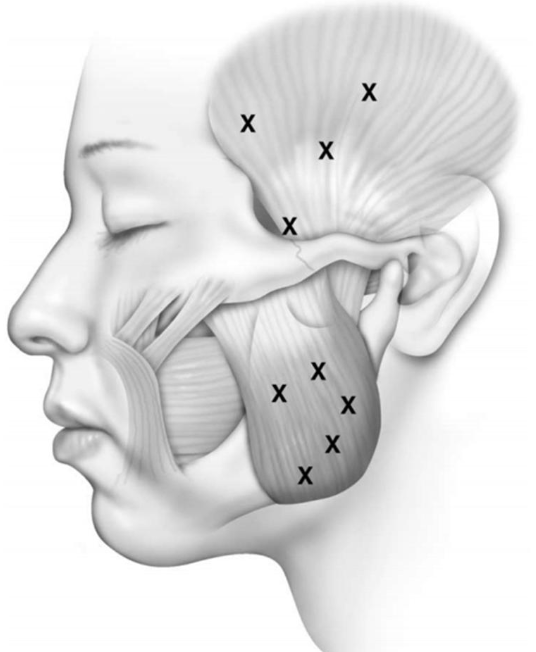
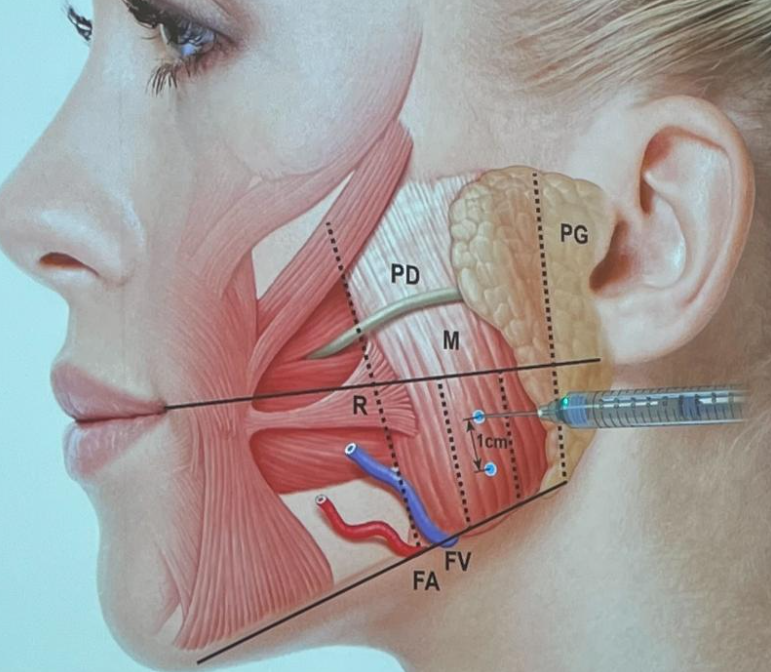
The muscles that are targeted during Botox TMJ injections include:
The Masseter Muscle, which's the large muscle at the back of the jaw that connects the cheekbone to the lower jaw.
The Temporalis Muscle, which sits on the side of the head and assists in closing the jaw.
The Lateral Pterygoid Muscle, which helps open the jaw and move it side to side.
The Procedure
Step 1: The Consultation and Mapping
Before any injection, you will have a consultation. The practitioner will palpate (feel) your jaw and neck muscles to identify exactly where the hyperactivity and trigger points are. They will ask you to clench your teeth so they can see the masseter and temporalis muscles bulge. Using a skin-safe marker, they will map out the precise injection sites on your face.
Step 2: Preparation
The skin is cleansed with an antiseptic solution. Some practitioners use a topical numbing cream, though most find it unnecessary because the needles used are incredibly fine (similar to acupuncture needles), and the Botox itself is mixed with a small amount of saline.
Step 3: The Injections
Using a very fine needle, the practitioner will administer the Botox into the marked muscles. For the masseter muscle, they will typically inject 3 to 5 different points along the muscle belly. The same is done for the temporalis muscle.
Pain Level: Most patients describe the sensation as a brief pinch or a mild stinging sensation. The entire injection process takes less than 15 minutes.
EMG Guidance: In advanced clinics, practitioners may use Electromyography (EMG) machines. A tiny sensor is inserted into the muscle to measure its electrical activity, ensuring the Botox is placed exactly in the most hyperactive part of the muscle.
Step 4: Post-Procedure Care
There is virtually no downtime. You can drive yourself home and return to work immediately. You will be advised not to rub or massage the treated areas for the next 24 hours to prevent the Botox from migrating to unintended muscles. You should also avoid strenuous exercise for the first 24 hours and avoid lying flat for 4 hours.
The Results
One of the common misconceptions about Botox, for TMJ is that you will be pain-free right away. Botox does not work instantly.
It takes 3 to 5 days for the Botox to start working. The full effect is usually not realized until 10 to 14 days post-injection. The relief provided by Botox is temporary and typically lasts 3 to 6 months. With repeated treatments many patients report that their muscles begin to "learn" not to clench aggressively and the results last longer.
What Kind of Results Can You Expect from Botox for TMJ?
The Botox for TMJ results are usually divided into two categories: relief from symptoms and changes in the way you look.
1. Relief from Symptoms:
Botox for TMJ can really help reduce pain in your jaw, face and neck.
You will have headaches because the muscle in your temple is relaxed.
You will sleep better at night because Botox for TMJ stops you from grinding your teeth.
The clicking and locking of your jaw will happen often because the disc in your TMJ is not slipping out of place as much.
2. Changes in the Way You Look:
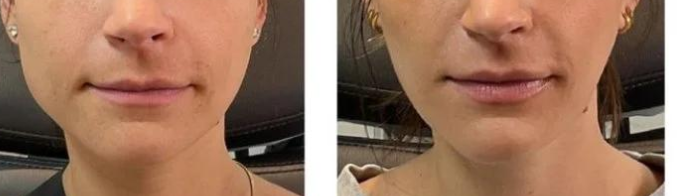
Some people who have Botox for TMJ are happy to find that their face looks slimmer.
This happens because Botox for TMJ shrinks the muscle in your jaw over time.
As a result your face can take on an oval or heart-shaped appearance.
For people this change in the way they look is just as good as the relief from pain that Botox for TMJ provides.
The Cost of Botox for TMJ
You need to understand how much Botox for TMJ costs so you can plan your treatment. The cost of Botox for TMJ can vary a lot depending on factors. It is priced differently than Botox for use. There are ways to price Botox for TMJ: by the unit or by the area.
Cosmetic Botox is often priced by the area like $300 for your forehead or $400 for the lines around your eyes.
Botox for TMJ is almost always priced by the unit. This is because Botox for TMJ requires a lot Botox than cosmetic Botox. The number of units you need can vary.
To relax your jaw you usually need 25 to 50 units of Botox for TMJ on each side of your face.
If you are treating both the muscle in your jaw and the muscle in your temple on both sides of your face you might need 50 to 100 units of Botox for TMJ in one session.
The average cost of Botox for TMJ can range from $10 to $20 per unit.
So if you need 50 units of Botox for TMJ it could cost you $500.
If you need 100 units of Botox for TMJ it could cost you $2,000.
Most people pay between $800 and $1,500 per session of Botox for TMJ.
There are factors that affect the cost of Botox for TMJ:
Where you live can affect the cost: it is more expensive in cities like New York or Los Angeles.
The expertise of the person giving you Botox for TMJ can also affect the cost: a specialist may charge more. They can give you safer and more effective results.
The number of muscles you are treating can also affect the cost: treating just the muscle in your jaw will cost less than treating the muscle in your jaw the muscle in your temple and the muscle in your forehead.
Does insurance cover Botox for TMJ?
Sometimes, but it is not easy. Botox for TMJ is an approved drug. Using it for TMJ is not the usual use. To get insurance to cover it you need to show that you really need it.
You need a diagnosis of TMJ from a dentist or doctor.
You need to show that you have tried treatments and they did not work.
You need to show that you have symptoms, like chronic migraines or trouble eating.
If your insurance approves it they may cover the cost of the Botox for TMJ. You may still have to pay for the injection or office visit.
The Good and Bad of Botox for TMJ
Like any medical treatment Botox for TMJ has its good and bad points.
The Good:
Botox for TMJ is a procedure that does not require surgery or anesthesia.
It can help with both the pain of TMJ and the way your face looks.
It is a procedure that takes less than 15 minutes.
It has a success rate for reducing pain and headaches related to TMJ.
If you do not like the results they will wear off in a months.
The Bad:
Botox for TMJ is not permanent so you need to get it repeated every 3 to 4 months.
It does not fix the problem so if your TMJ pain is caused by a problem with your joint Botox for TMJ will only mask the symptoms.
Getting insurance to cover it can be a hassle.
There are also some side effects of Botox for TMJ. These can include pain or bruising at the injection site trouble chewing foods, a crooked smile or a droopy lip. These side effects are rare and usually go away on their own.
Who is a Candidate for Botox for TMJ?
Botox for TMJ is not for everyone.
You are a candidate if you have been diagnosed with TMJ and it is causing you a lot of pain.
You are a candidate if you clench your teeth a lot or grind them at night.
You are a candidate if you get headaches or migraines because of your TMJ.
You are a candidate if you have tried other treatments and they did not work.
You are a candidate if you want a non-surgical solution and you understand that Botox for TMJ is not permanent.
You should not get Botox for TMJ if you are pregnant or breastfeeding if you have a muscle disease or if you are allergic to Botox, for TMJ.
Conclusion
Living with pain, headaches and dental damage from TMJ disorders can be a real challenge. For people who have tried night guards, painkillers and physical therapy but still wake up with a clenched, aching jaw Botox TMJ therapy is an option.
Botox TMJ therapy is an option for people who have tried other things and they did not work.
By going after the root cause of the tension in the muscles than just treating the pain Botox provides a very effective and minimally invasive solution. Botox TMJ therapy is very effective. The fact that it can provide a lot of pain relief and also improve the shape of your face makes it a rewarding procedure in modern medicine.
The cost of Botox TMJ therapy can be a problem if you do not have insurance and you have to get it done again and again which means you have to commit to it for a time.. Most people who have had it done say that being able to eat, sleep and live without jaw pain is worth the money. If you have TMJ you should talk to a healthcare provider to see if Botox can help you feel more comfortable and improve your quality of life.
Frequently Asked Questions (FAQs)
1. Does getting Botox in my jaw hurt?
Most people say that it does not hurt much. The needles used for Botox injections are very small. You might feel a pinch or a brief stinging sensation when the medicine is injected but it is over in a few minutes. A lot of doctors do not even use numbing cream because it does not hurt that much.
2. Will Botox make my face look unnatural or frozen?
When Botox is used for TMJ the goal is to relax the muscles not paralyze them. Because the medicine is targeted at the masseter and temporalis muscles it will not affect your ability to make facial expressions like smiling, talking or blinking. You will not look frozen you will just not be able to clench your jaw as. Botox TMJ therapy will help you.
3. How soon after Botox can I eat normally?
You can eat after the procedure. However for the 24 to 48 hours it is recommended to eat soft foods like yogurt, soup or scrambled eggs and avoid foods that are very chewy or hard like steak, gum or nuts so that the Botox can work properly without being affected by heavy chewing.
4. Can I get Botox for TMJ if I already get Botox for wrinkles?
Yes you can. In fact a lot of people get both treatments at the time. If you get headaches from TMJ your doctor might treat your jaw, your forehead and the area between your eyebrows all in one visit. Botox TMJ therapy and cosmetic Botox can be done together.
5. What happens if I stop getting Botox for my TMJ? Will my pain come worse?
No your pain will not come back worse than it was before you started treatment. If you stop getting Botox your jaw muscles will go back to normal over the 3 to 6 months. Any symptoms of clenching, grinding or pain will go back to what they were like before you started treatment. Your TMJ will not be permanently damaged if you stop getting the injections.
References
American Academy of Dermatology (AAD). (2024). Dermatologists Using Botox to Treat Temporomandibular.
Mayo Clinic. (2023). Temporomandibular Joint (TMJ) Disorders: Symptoms, Causes and Treatment Options. Mayo Clinic Medical Reference.
Journal of Oral and Maxillofacial Surgery. (2022). "Efficacy of Botulinum Toxin Type A, in the Treatment of Myofascial Pain and TMJ Disorders: A Systematic Review and Meta-Analysis."
American Dental Association (ADA). (2024). Understanding TMJ Disorders and Non-Surgical Interventions. ADA Dental Health Resources.
Allergan Aesthetics (AbbVie). (2024). Botox (OnabotulinumtoxinA) Prescribing Information: Medical Uses and Off-Label Applications. Official Product Monograph.