

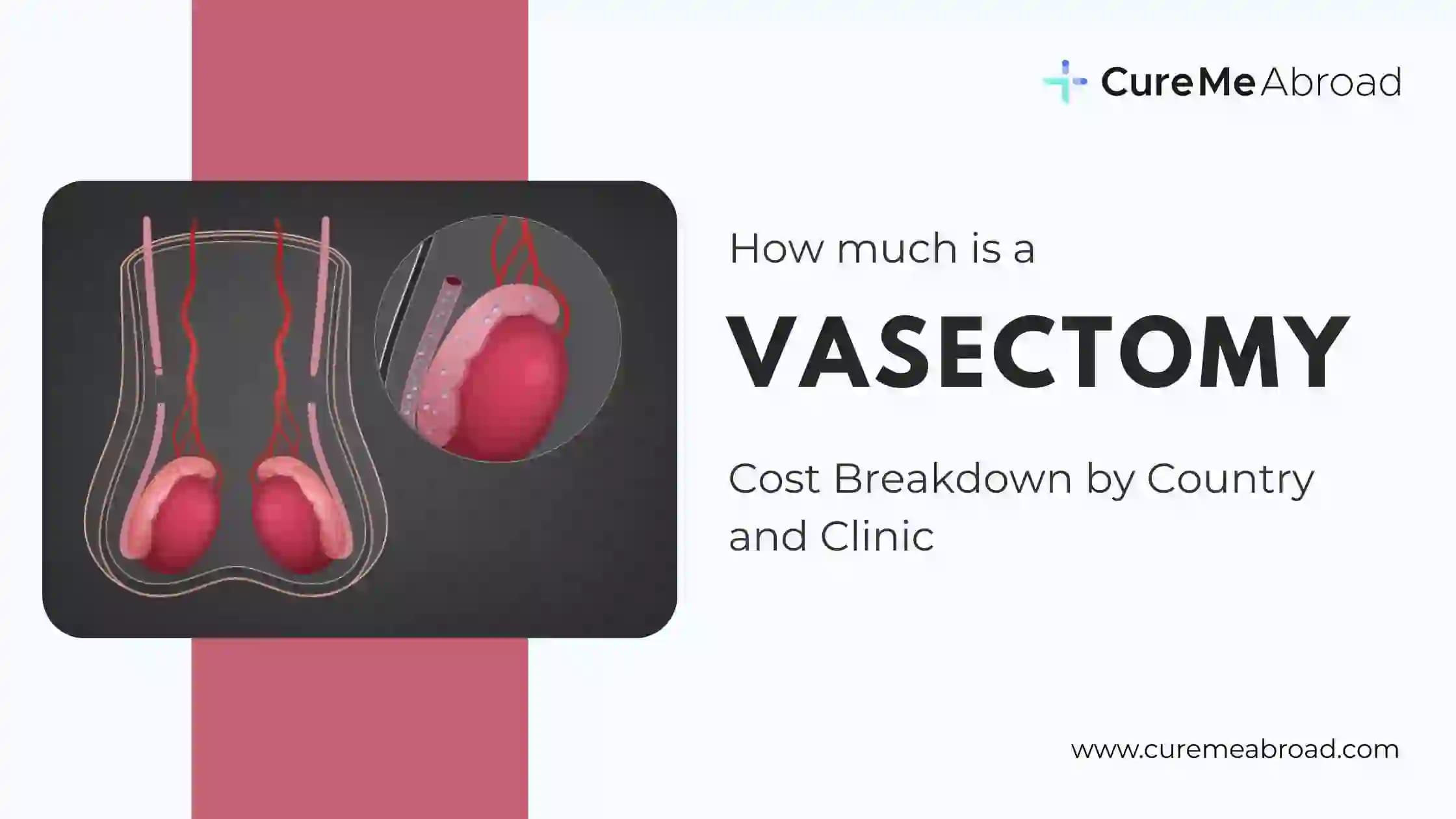
"How much is a vasectomy?" is one of those questions that sounds simple but rarely comes with a clean answer. Prices at private clinics across the United States tend to land between $500 and $1,500, yet the same procedure can cost well over $3,500 somewhere else once location, provider choice, and insurance coverage enter the picture. Two clinics in the same town quoting completely different numbers is something men run into more often than they'd expect.
On the whole, a vasectomy is still one of the most cost-effective permanent birth control options a man can choose. But the price a clinic advertises and the bill you actually receive don't always match. Sedation methods, facility fees, and post-procedure semen testing are expenses that have a habit of surfacing later.
This blog covers average vasectomy costs by state and clinic type, what makes prices rise or fall, where insurance comes into play, the charges people frequently overlook, and how vasectomy compares with other long-term birth control choices.
Vasectomy Cost in the United States
How much is a vasectomy? The cost of a vasectomy varies depending on the clinic type, location, and whether sedation or additional services are included. In most cases, the procedure ranges from a few hundred dollars to a few thousand dollars depending on the care setting and country.
For self-pay patients at in-office settings, the typical range is $500-$1,500. When hospital settings and general anesthesia are included, total costs can rise to $3,500 or more.
Insurance reduces costs considerably. Most people with coverage pay only a small portion of the total cost, often a few hundred dollars depending on their deductible, copay, and plan benefits. In some cases, the procedure may be fully covered.
| Payment Scenario | Estimated Cost |
|---|---|
| Self-pay, in-office | $300-$1,500 |
| Self-pay, hospital setting | $1,500-$3,500+ |
| With insurance, average out-of-pocket | $0-$500 |
| Same-day surgery center, with insurance | Approximately $236 |
| Hospital outpatient center, with insurance | Approximately $454 |
| General anesthesia, self-pay | $2,500-$3,500 |
Average Vasectomy Cost by State
Where you live plays a bigger role in vasectomy costs than most people expect, and it comes down to one thing: overhead. A urologist running a practice in downtown San Francisco is dealing with rent, staffing, and operating costs that a provider in rural Mississippi never has to think about, and those costs get passed along in the fees patients are quoted. The procedure itself is the same no matter where you go, but what's happening behind the scenes financially is a completely different story.
| State / Region | Estimated Self-Pay Range |
|---|---|
| California (Los Angeles, San Francisco) | $800-$1,800 |
| New York | $500-$1,500+ |
| Texas (Dallas, Houston, Austin) | $475-$1,200 |
| Florida | $400-$1,100 |
| Illinois (Chicago metro) | $600-$1,400 |
| Georgia (Atlanta area) | $350-$1,000 |
| Colorado | $600-$1,200 |
| Arizona | $400-$950 |
| Rural Midwest and South | $300-$800 |
Vasectomy Cost by Clinic Type
Moving a vasectomy from a physician's private office to a hospital outpatient center is the single decision most likely to raise the total bill. Hospitals generate separate charges for facility use, the physician's fee, and anesthesia. A private office typically rolls everything into one quote.
| Clinic / Provider Type | Estimated Cost Range | Notes |
|---|---|---|
| Private urology office | $400-$1,200 | Consultation often bundled |
| Dedicated vasectomy clinic | $500-$1,000 | All-inclusive pricing common |
| Planned Parenthood | $0-$1,000 | Sliding-scale, income-based |
| Same-day surgery center | $700-$1,800 | Facility fee applies |
| Hospital outpatient center | $1,000-$4,000+ | Separate facility, anesthesia, physician fees |
| Federally Qualified Health Centers | $0-$500 | Income-based; Medicaid accepted |
What's Included in a Vasectomy Cost (and Hidden Charges)?
A lot of men get caught off guard when they start researching how much a vasectomy costs and realize that two clinics quoting similar numbers aren't necessarily offering the same thing. What looks like a comparable price on the surface can fall apart quickly once you see what each one actually covers. Before you confirm anything, get a written itemization from the clinic so you know exactly what you're paying for. Depending on where you go, the following may or may not be rolled into the number you were given:
- Initial consultation, which certain clinics treat as a separate billable office visit
- Procedure fee with standard local anesthesia
- Post-procedure follow-up visit
- Post-vasectomy semen analysis, which many clinics break out as its own separate charge
Several charges appear in the final bill but not in the initial quote. Patients should ask about every line item below before the procedure date.
| Potential Additional Cost | Estimated Amount |
|---|---|
| Initial consultation, if not bundled | $100-$300 |
| Post-vasectomy semen analysis, if not bundled | $50-$150 |
| Sedation upgrade | $100-$500 |
| Prescription medications | $20-$80 |
| Supportive undergarment | $10-$30 |
| Repeat semen analysis, if initial result unclear | $50-$150 |
Vasectomy Cost by Country
The answer to how much is a vasectomy can vary considerably depending on your country of residence. Healthcare funding, standard provider rates, and insurance coverage differ enough between nations that the same exact procedure ends up priced very differently depending on location. Countries with public healthcare often reduce the cost to almost nothing, whereas private systems usually leave the patient responsible for most or all of the expense.
| Country | Typical cost |
|---|---|
| United States | $500-$1,500 |
| Canada | Often covered publicly, private options may cost $0-$300 |
| United Kingdom | £400-£700 (private clinics) |
| Australia | AUD $400-$1,000 |
| India | $50-$300 |
Take these figures as a general reference rather than a firm expectation. The clinic you go with, the technique involved, and whether the consultation, follow-up visits, and semen analysis come bundled or get charged separately can all move the number around quite a bit. A direct conversation with a local provider is still the only reliable way to pin down what you'll actually owe.
Does Insurance Cover a Vasectomy?
When people search how much is a vasectomy, insurance is often the most important factor in determining the final cost. Coverage varies depending on the type of health plan. Employer-sponsored plans may include partial or full coverage, while self-funded employer plans follow separate benefit rules. Public insurance programs may also cover the procedure depending on eligibility.
| Insurance Type | Coverage Status |
|---|---|
| ACA-compliant private plans | Varies by plan; many cover fully or partially |
| Employer-sponsored, fully insured | Often covered; confirm in Summary of Benefits |
| Self-insured employer plans | State mandates don't apply |
| Medicaid | Covered in 41 or more states and Washington, D.C. |
| Medicare Parts A and B | Not covered |
| Medicare Advantage | Varies by plan |
Patients calling their insurer should reference CPT code 55250 for a traditional vasectomy or 55450 for the no-scalpel variant and ask whether prior authorization is needed before scheduling.
Average Cost With Insurance vs Without
Whether you have insurance or not is usually what decides how much a vasectomy costs.
No insurance? Most people pay around $500-$1,500 at a regular clinic. If it's done in a hospital or includes extras like sedation, the total can go up to $3,500 or more.
With insurance, the cost usually drops quite a bit. Many people end up paying around $0-$500 out of pocket, depending on their deductible and what their plan actually covers. In some cases, the procedure is fully covered.
Can You Get a Free or Low-Cost Vasectomy?
Patients with limited insurance have real options for reducing or eliminating costs.
Planned Parenthood health centers apply income-based sliding-scale fees; qualifying patients at lower income levels pay nothing.
Federally Qualified Health Centers use the same sliding-scale model and accept Medicaid. Since Medicaid covers vasectomy in at least 41 states, patients who qualify should contact their state's Medicaid agency to confirm scope of coverage before scheduling.
Health Savings Accounts and Flexible Spending Accounts can be used for vasectomy costs under IRS rules, since contributions come from pre-tax income, effectively cutting the real cost by 20-37% depending on the patient's marginal tax bracket.
CareCredit and similar medical financing programs are accepted at many urology practices and sometimes offer 12-24-month deferred-interest terms for eligible applicants.
No-Scalpel vs. Traditional Vasectomy: Which Costs More?
| Feature | Traditional Vasectomy | No-Scalpel Vasectomy |
|---|---|---|
| Access technique | 1-2 small incisions | Single puncture, no cutting |
| Procedure time | 20-30 minutes | 10-20 minutes |
| Restricted activity | 5-7 days | 3-5 days |
| Scarring | Minor scar possible | Minimal to none |
| Infection risk | Slightly higher | Lower |
| Average self-pay cost | $300-$1,500 | $600-$1,500 |
At most facilities, both techniques fall within the same price band. When a gap does appear between quoted figures, it usually traces back to what is bundled with each option, particularly sedation and semen analysis coverage, rather than the surgical method.
Vasectomy vs. Tubal Ligation: Which Is More Cost-Effective?
| Factor | Vasectomy | Tubal Ligation |
|---|---|---|
| Average self-pay cost | $300-$1,500 | $5,000-$8,000 |
| Anesthesia | Local | General, in most cases |
| Operative setting | Outpatient office | Hospital, in most cases |
| Procedure duration | 10-30 minutes | 30-60 minutes |
| Recovery period | 2-7 days | 1-2 weeks |
| Effectiveness | Over 99.85% | Approximately 99.5% |
| Ectopic pregnancy risk | Negligible | Present |
| ACA preventive mandate | No | Yes (female sterilization) |
Planned Parenthood reports vasectomy costs roughly 1/6 the price of tubal ligation. Tubal ligation requires general anesthesia, a hospital setting, and a longer recovery period and carries a documented ectopic pregnancy risk on procedural failure. Lifetime contraceptive costs place the gap in broader financial context.
| Contraceptive Method | Estimated Lifetime Cost |
|---|---|
| Vasectomy | $300-$1,500, one-time |
| Tubal ligation | $5,000-$8,000 |
| Oral contraceptives | Over $20,000 across approximately 40 years |
| IUD, multiple replacements | Over $5,000 across 40 years |
| Condoms | Over $4,000 across a lifetime |
Vasectomy Procedure, Recovery, and Success Rate
Vasectomy is a minor outpatient procedure performed under local anesthesia. Through the scrotal skin, the surgeon locates the vas deferens bilaterally, then cuts, ties, or cauterizes each duct to block sperm transport. Operative time runs 10-30 minutes, and patients also leave the same day.
Recovery Timeline
| Timeframe | Expected Clinical Status |
|---|---|
| Days 1-2 | Rest advised; mild soreness and scrotal swelling are normal |
| Days 3-5 | Light activity permitted; heavy lifting restricted |
| Days 7-10 | Desk work and routine activity appropriate for most patients |
| Days 10-14 | Physically demanding work and vigorous exercise generally permitted |
| Week 12 | PVSA recommended by AUA guidelines to confirm azoospermia |
Postoperative discomfort responds to ibuprofen or acetaminophen. Hematoma and infection occur infrequently. Sperm persist in the ductal system for several weeks after surgery, so patients need backup contraception until PVSA at 12 weeks confirms azoospermia.
Success Rate
Following a confirmed clear PVSA result, procedural success exceeds 99.9%. Spontaneous recanalization after confirmed success occurs in roughly 1 in 2,000 cases.
How to Choose the Right Vasectomy Clinic
Questions to Ask Before Booking
- What exactly does the quoted price cover, and does it include the consultation, procedure, and semen analysis?
- How frequently does this provider perform vasectomies, and what's their annual volume?
- Which technique do they use, no-scalpel or traditional, or do they offer both?
- What are the available sedation choices and how much does each one change the total?
- Does the procedure take place in the office itself or at an outside surgery center?
- Part of figuring out how much is a vasectomy under your plan means asking the clinic point blank what you'll owe once insurance has been applied.
- What's the clinic's protocol if sperm still show up on the first semen analysis?
Red Flags to Watch For
- A low headline price that turns out to exclude the consultation or any follow-up care
- Providers who don't include post-vasectomy semen analysis or actively push back on follow-up
- No urology board certification on record
- Pricing details that aren't made available until you're already at the appointment
Before settling on a provider, check that they carry board certification in urology, confirm that post-vasectomy semen analysis is a standard part of their aftercare process, and ask for a fully itemized price list before your procedure is ever scheduled.
Conclusion
Most men don't think too deeply about birth control costs until they actually start comparing options, and that's usually when a vasectomy starts looking pretty attractive. But figuring out how much is a vasectomy isn't always as simple as checking a price list.
You need to know what the quoted fee actually covers, whether semen testing after the procedure is part of the deal, and exactly how much your insurance is going to take off the top. Skipping that research is how people end up with bills they weren't prepared for.
Take the time to shop around, ask the right questions, and get clarity on your coverage before anything gets scheduled. That alone puts you ahead of most people going through this process. The procedure itself is quick and straightforward, and the financial side doesn't have to be any more complicated than it needs to be.
With CureMeAbroad, you can compare vasectomy treatment options, connect with experienced specialists, and find care that fits your needs and budget.
FAQs
1. Does the type of vasectomy (traditional vs. no-scalpel) significantly affect the total cost?
At most clinics, the price gap between the two methods is barely noticeable, usually somewhere between $0 and $200. When there is a difference, it typically comes down to the sedation package tied to each approach rather than the technique on its own. Rather than getting hung up on method, pay closer attention to whether things like the consultation, semen analysis, and follow-up visits are bundled into the quote. Men trying to break down how much is a vasectomy by procedure type will usually find that what's included in the package matters far more than which surgical method is being used.
2. Can I use my HSA or FSA funds to pay for a vasectomy?
You can. The IRS classifies a vasectomy as a qualified medical expense, which means HSA and FSA funds are fair game. Paying this way lets you use pre-tax dollars, which cuts your real out-of-pocket cost by anywhere from 20-37% depending on where you fall in the tax brackets. It's one of the simplest ways to bring the number down without needing insurance to step in.
3. If my insurance doesn't fully cover a vasectomy, what's the cheapest legitimate option?
Planned Parenthood is worth checking first since they price based on income, and for lower-income individuals, the cost can get close to nothing. Federally Qualified Health Centers and Medicaid are also worth exploring if you meet the eligibility requirements. Beyond that, dedicated vasectomy clinics that advertise flat all-inclusive cash pricing often come in cheaper than hospitals or surgery centers, even when you factor in having no insurance coverage at all.
4. What happens if the vasectomy fails and I need a repeat procedure, and who pays?
The majority of urology practices and vasectomy clinics will redo the procedure at little to no charge if a follow-up semen analysis shows sperm are still present. That said, policies vary, so it's worth asking before you go in for the first one. Complete failure is uncommon and only affects a very small number of cases, but knowing where your provider stands on this ahead of time is just good practice.
5. Is there a "right time of year" to get a vasectomy that could save money?
The procedure itself doesn't get cheaper at any particular time of year, but your insurance deductible calendar absolutely matters. If you've already hit your annual deductible, getting the procedure done before it resets on January 1st could mean paying very little out of pocket. Some urology practices also offer promotional deals timed around major sporting events, March Madness being the most well-known example, so it never hurts to ask. People wondering how much is a vasectomy toward the end of the year often find that their deductible status ends up being the biggest factor in what they actually pay.
References
What Does a Vasectomy Cost? What Will You Pay Out of Pocket?: GoodRx Health: 2024
https://www.goodrx.com/health-topic/mens-health/vasectomy-cost
A Spotlight on Vasectomy: KFF (Kaiser Family Foundation): 2025
https://www.kff.org/womens-health-policy/a-spotlight-on-vasectomy/
Where Can I Get a Vasectomy and How Much Will It Cost?: Planned Parenthood
https://www.plannedparenthood.org/learn/birth-control/vasectomy/how-do-i-get-vasectomy
How Much Does a Vasectomy Cost? From $300 to $3,500+: ClearHealthCosts: 2024
https://clearhealthcosts.com/blog/2024/12/vasectomy-cost/
High Variability in Self-Pay Pricing for Vasectomy and Vasectomy Reversal in the United States: Perspectives on Sexual and Reproductive Health, Wiley: 2024
https://onlinelibrary.wiley.com/doi/10.1111/psrh.12266
How Much Is a Vasectomy, and Does Insurance Cover It: ValuePenguin: 2025
https://www.valuepenguin.com/vasectomy-cost-health-insurance
How Much Does a Vasectomy Cost? Insurance Coverage and Pricing: Purely Vasectomies: 2025
https://purelyvasectomies.com/blog/how-much-is-a-vasectomy-does-insurance-cover-it/