

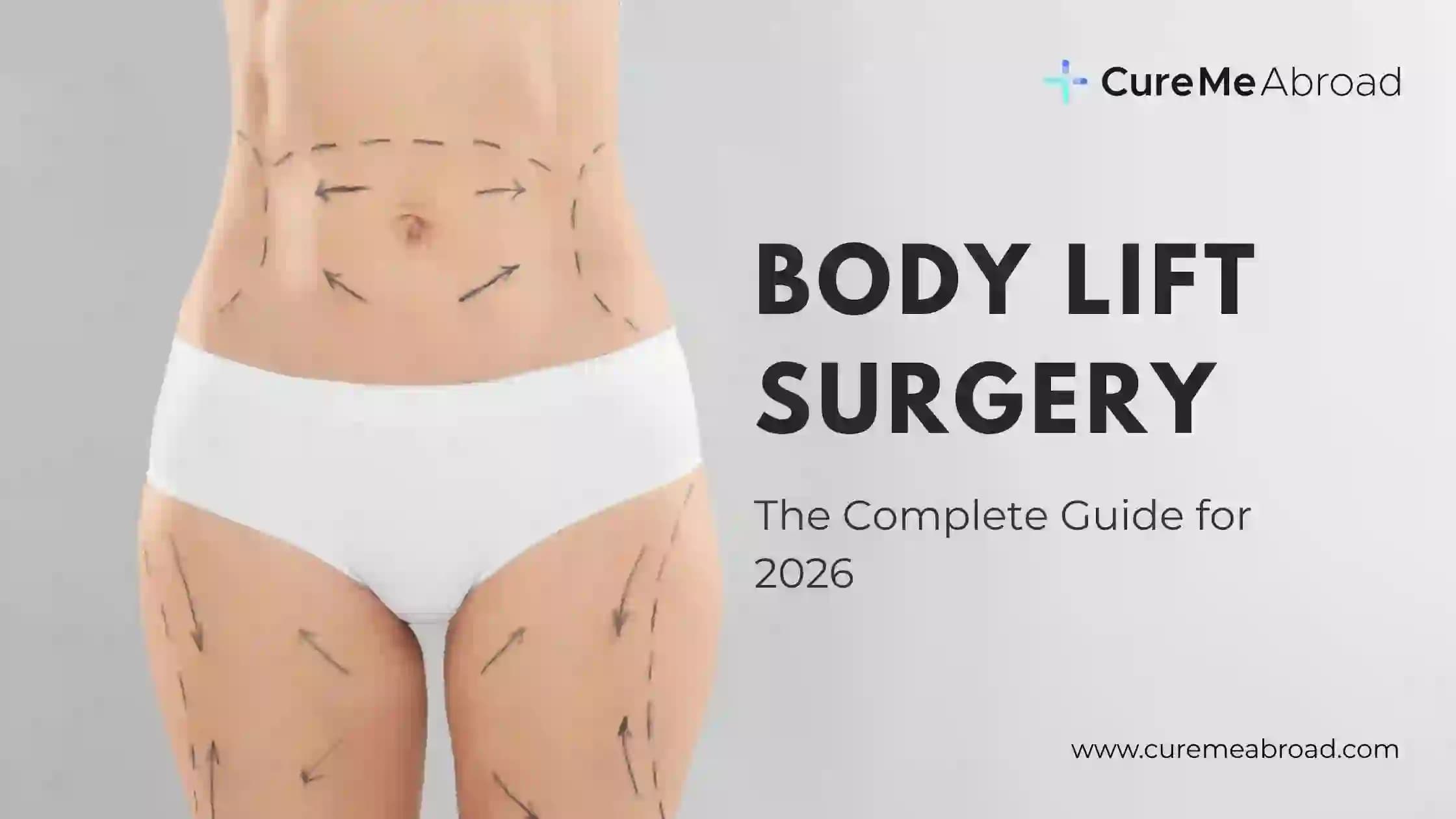
Massive weight loss is an achievement that takes a lot of dedication, resilience and time. However for people who have lost a lot of weightwhether through weight loss surgery, diet and exercise or medical treatments the final hurdle is often the most frustrating: excess sagging skin.
This loose skin does not just affect how you look; it can cause discomfort, rashes, limited mobility and emotional distress. This is where body lift surgery comes in as a life-changing solution.
As we move into 2026, plastic and reconstructive surgery has changed a lot. With the use of robots, AI-driven surgical planning and improved recovery protocols body lift surgery is safer, more precise and gives more natural-looking results than ever before.
If you are thinking about this procedure this guide will walk you through everything you need to know about body lift surgery in 2026.
What is Body Lift Surgery?
Body lift surgery also known as belt lipectomy or circumferential body lift is a surgical procedure that removes excess skin and fat from the torso and tightens the underlying muscles.
Unlike liposuction, which mainly removes fat but does not address skin a body lift focuses on removing skin. It is the comprehensive contouring procedure available addressing the abdomen, flanks, lower back, buttocks and thighs in one surgical intervention.
The Difference Between a Body Lift and a Tummy Tuck
A common misconception is that a tummy tuck and a body lift are the same. While both address the abdomen their scopes are vastly different:
- Tummy Tuck: Focuses on the front of the abdomen. It removes belly skin and tightens the rectus muscles.
- Body Lift: Goes entirely around the circumference of the body. It accomplishes what a tummy tuck does in the front. Also lifts the thighs, removes back rolls and elevates the buttocks.
The Different Types of Body Lifts
Not everyone requires the level of intervention. In 2026 board-certified plastic surgeons categorize body lifts into variations based on the patient's unique needs.
1. Lower Body Lift (Belt Lipectomy)
This is the commonly performed body lift. The surgeon makes an incision that goes around the waistline typically following the bikini line and extending over the hips and lower back. The underlying tissue is reshaped and suspended, the abdominal muscles are tightened and the upper layer of skin is pulled down and sutured into place. This improves the abdomen, hips, buttocks and outer thighs.
2. Upper Body Lift
An upper body lift targets the torso. It often combines a breast lift or breast augmentation with an excision of skin from the upper back, armpit area and the lateral chest wall. This procedure is beneficial for patients who have lost weight but retain sagging breasts and stubborn back fat.
3. Total Body Lift
A total body lift is the transformation. It is a combination of a body lift, an upper body lift and often includes inner thigh lifts and arm lifts. Because of the volume of tissue removed and the extensive surgical time required a total body lift is usually performed in stages often two or three separate surgeries spaced several months apart.
4. Fleur-de-Lis Body Lift
For patients with an amount of vertical excess skin on the abdomen a traditional horizontal incision is not enough. The Fleur-de-Lis technique adds an incision running from the sternum down to the pubic bone creating an inverted "T" or anchor shape. While this leaves scarring it allows for unprecedented waistline definition and skin removal.
Who is the Ideal Candidate in 2026?
The criteria for candidacy have become more refined. However the fundamental physical and psychological prerequisites remain the same. You may be a candidate for body lift surgery if:
- You have experienced massive weight loss: Typically defined as losing 50 to 100+ pounds.
- Your weight has been stable for least 6 to 12 months: Surgeons strictly enforce this rule. Operating on a patient whose weight is fluctuating can lead to results.
- You have overall health: Advanced age is no longer a strict barrier but underlying conditions like uncontrolled diabetes, heart disease or severe sleep apnea must be medically optimized before surgery.
- You are a non-smoker: Nicotine constricts blood vessels increasing the risk of tissue necrosis and wound separation. Surgeons require patients to be nicotine-free for least 4 to 6 weeks prior to surgery.
- You have expectations: A body lift removes skin; it is not a weight-loss tool. Furthermore it trades the deformity of skin for well-hidden surgical scars.
The 2026 Landscape – Technological and Surgical Advancements
The year 2026 represents an age of plastic surgery. If you are researching this procedure now you will benefit from leaps that were in their infancy just five years ago.
- AI-Driven 3D Surgical Planning: High-resolution 3D body scanners capture the patients topography. AI algorithms then analyze the skin elasticity, fat distribution and underlying musculoskeletal structure to help the surgeon simulate the amount of tissue to remove.
- Robotic-Assisted Surgery: Robotic arms provide precision when tightening the abdominal fascia and suturing in deep hard-to-reach areas resulting in stronger internal repairs and less tissue trauma.
- Advanced Tissue Sealants and "Drain-Free" Surgeries: The use of fibrin sealants and advanced electrocautery devices has drastically reduced the dead space where fluid accumulates. Many lower body lifts are now performed drain-free.
- Enhanced Recovery After Surgery (ERAS) Protocols: ERAS protocols have become the gold standard. By utilizing pre-operative carbohydrates, minimizing intra-operative opioids and getting patients moving within hours of surgery the recovery time has been cut nearly in half.
Preparing for Your Body Lift Surgery
Preparation is key to an outcome. A body lift surgery is an operation and how you treat your body in the weeks leading up to it directly impacts your healing.
Medical Optimization: Your plastic surgeon will likely require clearance from your primary care physician or a bariatric specialist. Blood work, an EKG and sometimes a cardiac stress test are standard to ensure your heart and lungs can handle a procedure that can last from 4 to 8 hours.
Body Lift Surgery is a help for people who want to reshape their bodies. Losing a lot of weight is a thing but it can leave you with extra skin that hangs down. This skin does not just look bad it can also cause a lot of discomfort. Make it hard to move around.
Body Lift Surgery is here to help you with that problem. As we go into 2026 the way surgeons do this operation has changed a lot. They are using machines and better ways to plan the surgery so it is safer and gives better results.
To get ready for your surgery you need to take care of your body. You should eat food, stop smoking and limit how much alcohol you drink. You should also get ready for your recovery by setting up a place to rest and having someone to take care of you.
The Surgical Procedure – Step-by-Step
On the day of your surgery you will get anesthesia so you will not feel anything. The surgeon will then make the cuts. Remove the extra skin and fat. They will also tighten your muscles and pull your skin down so it looks smooth.
After the surgery you will need to rest and take care of your body. You should follow the instructions of your surgeon. Take any medicine they give you. With time you will feel better. Your body will look great. Body Lift Surgery is an operation but it can really change your life for the better. Body Lift Surgery can help you get the body you want. It can make you feel more confident and happy.
- Buttock and Thigh Suspension: The surgeon does not just remove skin they also suspend the remaining fat and tissue of the buttocks to the ligaments of the pelvis. This helps create a youthful and lifted buttock without needing implants. The buttock suspension is a part of the procedure and it helps to give the buttock a more natural look.
- Closure: The deep tissue layers are closed together to reduce tension on the skin. Then the skin is closed with sutures and surgical glue. This means you do not have to go to the doctor to get staples removed. The closure is a part of the procedure and it helps to promote healing.
- Dressing: A special compression garment is put on to reduce swelling and support the shape of the tissues. The garment is worn to help the body heal and to reduce the amount of swelling.
Recovery – The Road to a New You
Recovering from body lift surgery takes time and patience. You have to follow the surgeons instructions and have a good support system. The recovery is not easy. It is worth it in the end. Body lift surgery is a procedure and the recovery is a big part of it.
| Timeline | Recovery |
|---|---|
| The 24 to 72 Hours | You will probably stay in the hospital for one or two nights after the surgery. You will be encouraged to walk a bit to prevent blood clots. The pain is managed with types of medicine and you will sleep in a special position to reduce tension on the incision. The first few days are the hardest. They are also the most important. |
| Weeks 1 to 3 | This is the part of the recovery. You will be swollen and bruised. You will feel tired. You have to wear the compression garment all the time except when you're showering. You cannot lift anything heavy and you cannot do any household chores. You can only take walks around the house. If you have drains they will probably be removed during this time. The body lift surgery recovery is not easy. It takes time. |
| Weeks 4 to 8 | You will start to feel better and you can go back to work if you have a desk job. The swelling will start to go down. You can walk a bit further. However you still have to be careful not to twist or lift anything. The body is still healing. You do not want to hurt yourself. |
| Months 3 to 6 | This is when you will start to see the real results of the body lift surgery. The swelling will go down. Your new shape will start to show. You can start to exercise and you can do things you could not do before. The scars will start to fade. They will always be there. The body lift surgery is a change and it takes time to get used to. |
Managing Scars in 2026
Scars are a part of the body lift surgery. However there are things you can do to make them less noticeable. The surgeon can use a laser to help reduce the scars and you can use special creams and gels at home. The scars will always be there. They do not have to be a big problem.
Risks and Complications
Body lift surgery is a big procedure and there are risks involved. You have to be careful and follow the surgeons instructions to reduce the risks. The risks include things like fluid building up under the skin, wound separation and infection. The body lift surgery is not without risks. You have to be aware of them.
- Seroma and Hematoma: These are when fluid or blood builds up under the skin. This is a complication and it can be treated with a simple procedure.
- Wound Dehiscence: This is when the wound opens up a bit. This can happen in the lower back where you sit. It can be treated with wound care and it will heal on its own.
- Infection: This is a risk with any surgery. You have to be careful to prevent it.
- Scarring Issues: Some people may get scars that are raised or keloid and these can be treated with injections.
- Asymmetry: The body is not always symmetrical. This can be a problem after surgery. However the surgeon will try to make the body as symmetrical as possible.
- Deep Vein Thrombosis and Pulmonary Embolism: These are blood clots that can form in the legs and travel to the lungs. This is a risk and you have to be careful to prevent it.
The Psychological Impact
Body lift surgery can have an impact on your mental health. It can make you feel more confident and happy with your body. However it can also be hard to deal with the recovery and the changes to your body. You have to be prepared for the impact of the surgery.
Patients who have a lot of skin may feel ashamed and hide their bodies. However after the surgery they can feel more confident and happy with their bodies. The body lift surgery can be a change and it can take time to get used to.
However it is also important to note that the recovery can be hard and you may feel down or depressed. You have to be prepared for this. Have a good support system. The body lift surgery is not a physical change but also a mental one.
Cost and Insurance Considerations in 2026
The cost of body lift surgery can vary depending on where you live and who your surgeon's. In 2026 the cost of a body lift can range from $15,000 to $35,000. An upper body lift can cost between $10,000 and $20,000 and a total body lift can cost than $60,000. The cost of body lift surgery is not cheap. You have to be prepared for it.
Does Insurance Cover It?
This is a question and it depends on your insurance and why you are having the surgery. If you are having the surgery for reasons, such as excess skin causing infections or mobility problems your insurance may cover some of the cost. However if you are having the surgery for reasons your insurance will not cover it. The insurance coverage for body lift surgery is not always clear. You have to check with your insurance company.
In 2026 getting insurance approval can be hard. You have to have a lot of documentation. You will need letters from your doctor, photographs of your skin and proof that you have tried treatments before. Even if your insurance approves the surgery they may only cover part of the cost. The body lift surgery is a procedure and the insurance coverage is not always easy to get.
Conclusion
Deciding to have body lift surgery is the big step in a long journey of losing a lot of weight. This surgery requires thought, planning and a commitment to following a tough recovery plan.
In 2026 we are lucky to live in a time when body lift surgery's safer and more comfortable than ever before. With the help of computers, robots and new ways to heal wounds recovering from surgery is not as hard as it used to be.
You still need to think carefully before making a decision. You are trading the weight and stress of skin for scars from surgery. For people this is a trade they would make again and again. Body lift surgery does not just remove skin it also removes the reminder of a heavier past letting you start your new healthy life with confidence. If you are ready you should talk to a plastic surgeon who specializes in helping people after they have lost a lot of weight.
Frequently Asked Questions (FAQs)
1. How much weight do people actually lose during body lift surgery?
Body lift surgery is not meant to help you lose weight. It can still help you lose 5 to 15 pounds because it removes extra skin and fat. The way you look will change more than the number on the scale because the extra skin was bulky and did not look good.
2. Can I get pregnant after having body lift surgery?
Yes you can still get pregnant. Have a baby after body lift surgery. Getting pregnant can stretch out the skin and muscles in your stomach, which could undo some of the benefits of the surgery. Doctors usually recommend waiting until you are finished having children before having body lift surgery.
3. Will I need to have another surgery after my lower body lift?
Many people choose to have another surgery. Lower body lift surgery helps the middle and lower parts of your body so you might want to have another surgery to help your arms, breasts and thighs. It is common for people to have another surgery 6 to 12 months after their one to finish their transformation.
4. How long do I have to wait after my weight loss surgery to get a body lift?
Most doctors agree that you should wait 12 to 18 months after your weight loss surgery before having body lift surgery. This gives your body time to get used to its weight and makes sure you are healthy enough for surgery.
5. Will my scars eventually disappear completely?
No, scars from body lift surgery will always be there. If you take good care of them and follow your doctors instructions they will fade and become less noticeable over time. They will not completely disappear. They will be easy to hide under clothes and swimsuits.
References
American Society of Plastic Surgeons (ASPS). (2025). Body Contouring After Massive Weight Loss: Statistical Trends and Procedural Guidelines. ASPS National Clearinghouse of Plastic Surgery Statistics.
Aesthetic Surgery Journal. (2024). "Advances in Circumferential Body Lift Techniques: Minimizing Drain Usage and Optimizing Wound Healing." Oxford University Press.
Panchapakesan, V., et al. (2025). "Enhanced Recovery After Surgery (ERAS) Protocols in Major Plastic Surgical Procedures: A Systematic Review." Plastic and Reconstructive Surgery Global Open, 13(2).
Mayo Clinic. (2025). Tummy Tuck and Body Lift Surgery: What to Expect, Risks and Preparation. Mayo Clinic Medical Reference.
The American Board of Plastic Surgery (ABPS). (2026). Patient Advisory: Navigating Insurance Authorization for Post-Bariatric Body Contouring. ABPS Guidelines.