


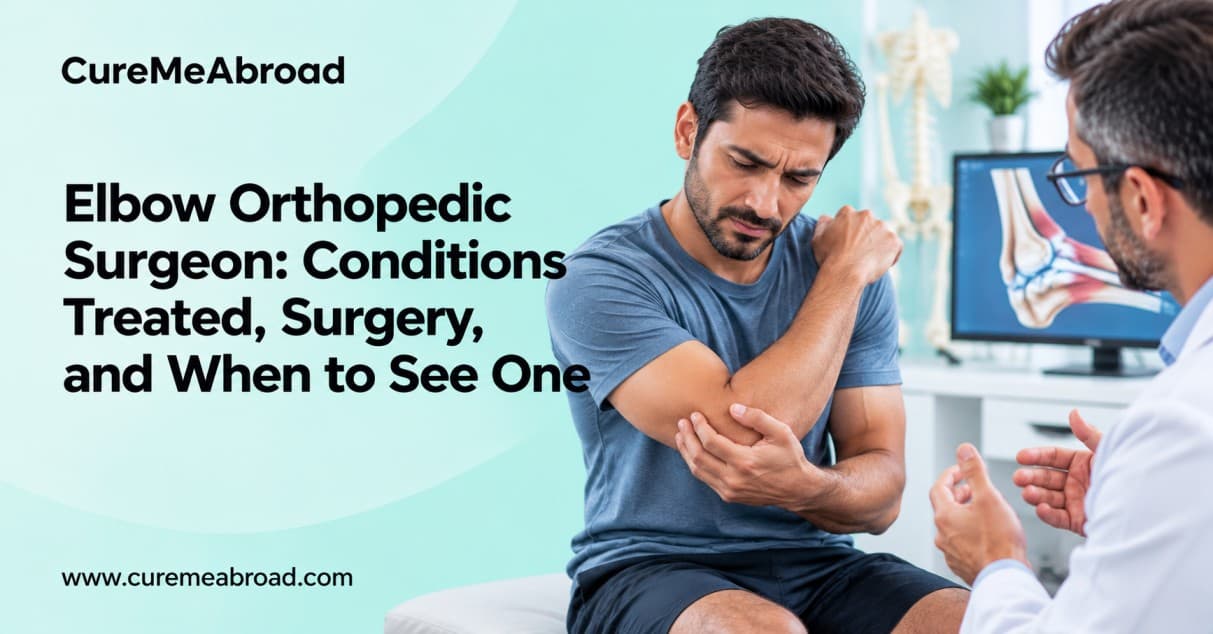
Elbow Orthopedic Surgeon: Conditions Treated, Surgery, and When to See One
Elbow pain can make everyday activities such as lifting a bag or turning a door handle difficult. Some cases improve with rest and activity modification. However, persistent pain, swelling, weakness, or limited movement may indicate an underlying condition that needs specialist evaluation. An elbow orthopedic surgeon diagnoses and treats conditions affecting the bones, tendons, ligaments, and nerves around the elbow joint.
This blog explains the conditions an elbow orthopedic surgeon treats and when to seek specialist care. It also covers nonsurgical treatments, surgical options, and what to expect during recovery.
Conditions Treated by an Elbow Orthopedic Surgeon
Your elbow faces a surprising number of different problems. The specialist takes care of injuries that come from doing too much of the same activity and also handles serious structural damage that needs surgery.
| Condition | What It Involves | Common Causes |
|---|---|---|
| Tennis Elbow (Lateral Epicondylitis) | Tendinopathy affects the tendons on the outer side of the elbow | Squeezing or gripping the same way over and over, playing tennis, or heavy weightlifting |
| Golfer’s Elbow (Medial Epicondylitis) | Tendinopathy affects the tendons on the inner side of the elbow and may cause pain or reduced grip strength | Throwing, swinging a golf club, or bending your elbow the same way repeatedly |
| Cubital Tunnel Syndrome | A nerve gets squeezed inside your elbow and causes tingling or numbness | Bending your elbow too much or leaning on it constantly throughout the day |
| Elbow Bursitis | A fluid sac near your elbow swells up and becomes painful | A direct blow to your elbow, doing the same motion all day long, or an infection |
| Arthritis | The protective cartilage in your elbow gradually wears away | Years of wear and tear, an old injury that didn’t heal right, or just getting older |
| Biceps Tendon Tears | The big tendon from your upper arm muscle rips or tears | Lifting something way too heavy, a sudden strong pull, or the tendon wearing out |
| Elbow Fractures | One or more of the bones that make up your elbow breaks | Falling directly on your elbow, getting hit hard, or a sports injury |
| Dislocations | The bones in your elbow come completely out of place | Falling forward on your hand with your arm stretched out or a forceful impact |
Although several elbow conditions can cause similar symptoms, their underlying causes and treatments may differ. Tennis elbow affects the tendons on the outside of the joint, while cubital tunnel syndrome involves compression of the ulnar nerve. An elbow orthopedic surgeon can assess these differences and recommend treatment based on the diagnosis.
When to See an Elbow Orthopedic Surgeon for Pain or Injury
Knowing when to contact a specialist can stop you from dealing with months of pain and keep your arm from getting permanent damage. Keep your eye out for these warning signs that mean it’s time to make an appointment.
Persistent Pain Lasting More Than A Few Weeks
If your elbow is hurting you when you do normal daily activities and resting it for 2-3 weeks doesn’t help, you should call a specialist. Don’t sit around waiting to see if it gets worse or if you lose more ability to move your arm. Getting help early on usually means the treatment will be easier and less invasive.
Swelling That Doesn’t Go Away
When your elbow stays puffy for more than a few days, it often means something is wrong that goes beyond a small bump or minor injury. A specialist can figure out if you have bursitis, a ligament that’s torn, or extra fluid that needs to be dealt with by a doctor.
Numbness Or Tingling In Your Hand Or Fingers
If you’re feeling numb or getting pins and needles sensations in your fingers or hand, you need to see a specialist as soon as you can. These feelings often come from problems like cubital tunnel syndrome or a nerve that’s getting pinched. Persistent nerve compression can cause lasting damage, particularly when symptoms are severe or treatment is delayed.
Loss Of Strength Or Inability To Straighten Your Arm
If you develop new weakness or can’t straighten your elbow, seek prompt medical evaluation. Sudden symptoms following an injury may require urgent assessment.
Clicking, Popping, Or Locking Sensations
Clicking and popping can have several causes, but persistent symptoms accompanied by pain, swelling, or locking warrant medical evaluation.
Pain That Wakes You At Night
When pain in your elbow is bad enough to wake you up from sleep, your body is telling you that you need to get it fixed. An elbow orthopedic surgeon can figure out what’s causing the pain at night and get treatment started before things get worse.
Visible Deformity Or Severe Trauma
If your elbow looks crooked or twisted out of shape after you hurt it, you need emergency medical care right away. You should also get immediate help if you fell from somewhere high up, got hit really hard, or are bleeding or in severe pain.
How Untreated Elbow Conditions Can Affect Joint Function
The effects of an untreated elbow condition depend on its cause and severity. Without appropriate care, some conditions may lead to persistent pain, stiffness, muscle weakness, or reduced joint function.
When you stop using your elbow because it hurts, the muscles there get weaker in just a couple of weeks. Your arm and shoulder have to work extra hard to make up for that weakness. Before long, your shoulder starts hurting too. What started as a simple tennis elbow problem has now turned into both an elbow and shoulder issue that’s much harder to fix.
A tendon that’s only partially torn can sometimes heal with rest and physical therapy. But if you don’t get treatment, that whole tendon can end up ripping all the way through. A complete tendon tear may require surgery, depending on the tendon involved, the severity of the injury, and the patient’s needs.
The longer you wait to get help, the more scar tissue builds up inside your elbow. That scar tissue makes the surgery harder to perform and takes much longer to recover from.
Cartilage damage that doesn’t get treated just keeps getting worse over time. It may contribute to joint degeneration, although progression depends on the underlying condition. Selected cartilage problems may be treated with minimally invasive procedures, depending on the extent and location of the damage. But when arthritis becomes really advanced, it takes much more serious treatment to help.
Persistent nerve compression can lead to worsening numbness or weakness. In some cases, delayed treatment may increase the risk of lasting nerve damage, so progressive symptoms should be assessed promptly.
How Elbow Conditions Are Diagnosed
Getting checked out by a specialist is more involved than just talking about where it hurts.
Your surgeon will ask you a lot of questions first. They want to know exactly how you hurt your elbow, when the pain started, what makes it feel better or feel worse, and what things you can’t do anymore because of the pain. They’re trying to understand what happened to you personally rather than just putting a diagnosis name on your problem.
Then comes the physical exam where the surgeon actually touches and tests your elbow. They’ll see how much you can move it in different directions, check if your muscles are as strong as they should be, and test whether your joint feels solid or loose. They’ll do special tests that help them figure out if the problem is with your tendons, ligaments, or nerves. The way your elbow acts when they do these tests tells them what’s really wrong.
After that, you’ll probably need some pictures or tests of your elbow. X-rays show your bones so the doctor can see if anything is broken or damaged. MRI provides detailed images of soft tissues in the elbow, including tendons, ligaments, and cartilage. Ultrasound lets the doctor watch how your tendons actually work when you move your arm. Sometimes they’ll do a nerve test to see if your nerves are sending signals correctly.
The surgeon knows which tests you actually need for your situation. They won’t waste time with tests that won’t help you, but they will make sure to get every piece of information that matters for getting you an accurate diagnosis.
Nonsurgical Treatment Options for Elbow Problems
Most elbow problems get better with conservative care. The surgeon will try these treatments first before even thinking about surgery.
Rest And Activity Modification
The easiest treatment is just avoiding the movements that make your pain worse. This gives your elbow a chance to start healing. But this doesn’t mean you have to sit completely still with your arm frozen. The surgeon will tell you exactly which activities you need to stop doing and which ones are fine to keep doing.
Ice And Heat Therapy
Ice works best right when you first get hurt because it brings down the swelling. Later on when you’re healing, heat helps by getting more blood flowing to your elbow and relaxing your muscles. Your surgeon will explain when to use ice and when to use heat so you get the most benefit.
Physical Therapy And Targeted Exercises
A physical therapist will work with you following what your surgeon recommends. They’ll help you build up the muscles that support your elbow, get your movement back, and change the way you move so you don’t hurt yourself the same way again. The exercises they give you focus on the exact structures that are causing your pain.
Anti-Inflammatory Medications
Pain relievers and anti-inflammatory drugs that you can buy at the store or that your doctor prescribes can help reduce swelling and pain. Your surgeon will figure out which medication will work best for you and how much you should take.
Bracing And Strapping
Special braces hold your injured elbow in place and take pressure off the damaged tendons. Your surgeon will pick the right kind of brace for whatever your specific problem is.
Injections
Shots of steroid medicine can calm down inflammation in certain spots around your elbow. PRP injections may help with certain tendon conditions, although evidence of their effectiveness varies. Stem cell therapies remain under investigation for many orthopedic conditions. Your surgeon can tell you whether injections would be a good choice for your situation.
Types of Elbow Surgery and When They Are Needed
When rest, physical therapy, and other conservative treatments don’t help after several weeks or months, an elbow orthopedic surgeon might suggest surgery. The type of surgery depends on what exactly is wrong with your elbow.
Arthroscopic Surgery
This type of surgery uses tiny cameras and small instruments that the surgeon puts through very small cuts in your skin. The surgeon can see inside your elbow joint and repair damage from there. Elbow arthroscopy can be used to remove loose bodies and treat selected cartilage and joint problems. Recovery depends on the procedure performed and the extent of the damage.
Open Surgical Repair
When you have a severely torn tendon, a ligament that needs to be rebuilt, or really bad arthritis, you’ll need open surgery. The surgeon makes larger cuts so they can get full access to the inside of your elbow and fix the serious damage that needs more extensive work.
Epicondylectomy Surgery
This surgery treats chronic tennis elbow or golfer’s elbow that just won’t go away. The surgeon removes the damaged tissue and the bumps on your bones where the tendons attach. This procedure may relieve persistent pain when nonsurgical treatments haven’t provided sufficient improvement.
Tommy John Surgery
This surgery is common in baseball players and other throwing athletes. The surgeon rebuilds the ligament on the inside of your elbow that got damaged. They take a tendon from somewhere else in your body and use it to replace the ligament that’s no good anymore.
Elbow Joint Replacement
When you have severe arthritis and nothing else has helped, the surgeon can replace the damaged parts of your elbow joint with artificial parts made of metal and plastic. Elbow replacement may reduce pain and improve joint function in selected patients with severe arthritis.
Nerve Decompression Surgery
This surgery takes pressure off a nerve that’s being squeezed or pinched. It’s especially helpful for people with cubital tunnel syndrome, where the ulnar nerve is compressed. The elbow orthopedic surgeon carefully frees the nerve from whatever is pressing on it.
How to Choose the Right Elbow Orthopedic Surgeon
Picking the right specialist involves more than just doing a quick Google search.
Check Credentials And Fellowship Training
Start by making sure the surgeon is board certified in orthopedic surgery, which is the bare minimum you want to see. Then look for extra training called a fellowship that focuses on hands and upper arms or sports medicine that includes elbows. These fellowships mean the surgeon spent additional years learning specifically about elbows beyond their basic orthopedic training.
Ask About Their Experience
You should find out how many elbow surgeries this surgeon does every year. A surgeon’s experience with elbow procedures is an important factor to consider when choosing a specialist. Don’t be shy about asking. Most surgeons are happy to tell you how many patients they treat because they’re proud of their experience.
Look For Hospital Affiliations
Find out which hospitals the surgeon is affiliated with. Consider the hospital’s facilities, available support services, and the surgeon’s experience with the procedure you may need.
Read Patient Reviews Carefully
Online reviews can tell you helpful things, but don’t just look at the star rating. Read what people actually wrote about their experience. Look for comments about whether the surgeon listened to them, whether they felt cared for, and whether they got the results they wanted. Find out if patients felt like the surgeon took time to explain things and whether they were happy with how they healed.
Consider Geographic Convenience
When you need a specialist, you’ll probably have multiple appointments to go to and physical therapy sessions to attend. Picking someone who isn’t too far from your house makes it much more likely that you’ll actually keep going to your appointments and stay on track with your recovery.
Elbow Surgery Recovery and Rehabilitation
Recovery time varies depending on the procedure, the extent of the injury, and individual healing. Some patients resume light activities within a few weeks, while more complex repairs may require several months of rehabilitation.
If you had open surgery to repair something, you’ll need to wear a brace or sling for about 6-12 weeks. After that comes several months of physical therapy. Your elbow orthopedic surgeon will give you a timeline that’s specific to your surgery so you know what to expect.
Physical therapy begins when your surgeon determines it is safe, according to the procedure performed and the healing plan. Moving your elbow gently early on stops it from getting stiff while keeping the repair safe. As your elbow heals, your therapist will gradually have you do harder exercises and work on making your range of motion better.
Your rehabilitation team will guide the progression of exercises based on your healing, symptoms, and surgical restrictions. Right after surgery, ice, keeping your arm elevated, and medicine help with pain. As you heal more, you can learn when you’re ready to do tougher exercises.
Your surgeon will set up appointments at regular times to check on how you’re doing. They’ll watch your progress and change your rehabilitation plan if needed to help you heal properly.
Conclusion
Persistent elbow pain may require medical evaluation, especially when symptoms worsen or interfere with daily activities. An elbow orthopedic surgeon can assess your condition and recommend appropriate treatment, such as injections, physical therapy, or surgery when necessary. The goal is to relieve pain and help you return to your daily activities safely. If elbow pain is affecting your quality of life, consulting a specialist can help you understand your treatment options and take the next step toward recovery.
With CureMeAbroad, you can connect with trusted hospitals and experienced orthopedic specialists abroad to explore suitable treatment options for your elbow condition.
Frequently Asked Questions
1. What’s the difference between tennis elbow and golfer’s elbow, and does a specialist treat both?
Tennis elbow causes pain on the outside of the elbow, while golfer’s elbow causes pain on the inside. An elbow orthopedic surgeon treats both conditions based on symptom severity and individual needs.
2. How long does it usually take to recover from elbow surgery?
Recovery depends on the type of surgery and individual healing. Some patients resume light activities within a few weeks, while complex procedures may require several months of rehabilitation. Your elbow orthopedic surgeon can explain your expected recovery timeline.
3. Can a specialist help if my regular doctor says nothing is wrong but I still have pain?
Yes. An elbow specialist can perform a detailed examination and recommend further testing to identify the cause of persistent pain, even if your initial evaluation didn’t reveal a problem.
4. When should I consider surgery instead of continuing physical therapy?
Surgery may be considered if symptoms persist despite appropriate nonsurgical treatment or if the injury requires surgical repair. Your surgeon can recommend the most suitable option based on your diagnosis and treatment goals.
5. What should I expect during my first visit with a specialist?
During your first visit, the elbow orthopedic surgeon will review your symptoms and medical history and examine your elbow. They may order X-rays or other imaging if needed. The surgeon will then explain the findings, discuss your treatment options, and outline the next steps in your care.
References:
- Elbow Injuries and Elbow Pain: Penn Medicine: 2025
https://www.pennmedicine.org/specialties/orthopaedics/elbow-pain - What Is an Orthopedic Surgeon and When Should You See One?: MedStar Health: 2025
https://www.medstarhealth.org/Blog/what-is-an-orthopedic-surgeon-and-when-should-you-see-one - Elbow Surgery: Massachusetts General Hospital (Mass General Orthopaedics): 2024
https://www.massgeneral.org/orthopaedics/hand/conditions-and-treatments/elbow-surgery - Nonsurgical Treatment of Elbow Injuries: Vail Orthopedic Surgery: 2023
https://www.vailorthopedicsurgery.com/elbow/nonsurgical-treatment-of-elbow-pain-vail-co/ - Postoperative Rehabilitation in Elbow Surgery: National Institutes of Health, PubMed Central (PMC): 2021
https://pmc.ncbi.nlm.nih.gov/articles/PMC8254033/ - Why Should I Choose a Fellowship-Trained Shoulder and Elbow Surgeon?: University of Texas Medical Branch (UTMB Health): 2025
https://www.utmb.edu/utmbhealth/services/orthopedics/services/shoulder-elbow