



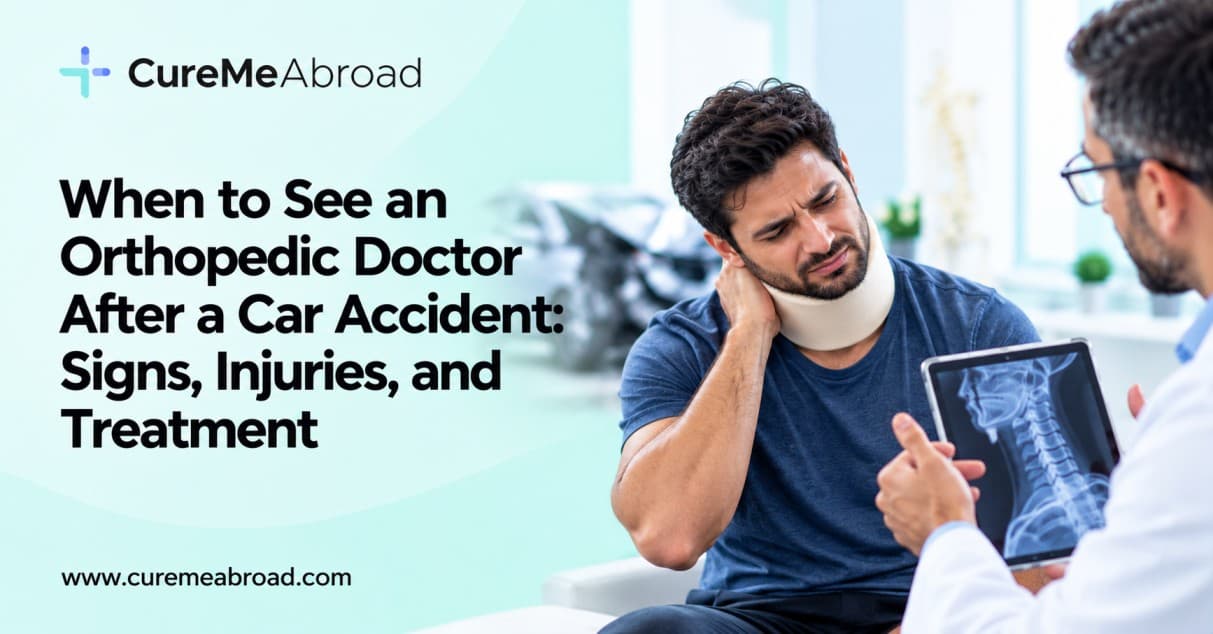
When to See an Orthopedic Doctor After a Car Accident: Signs, Injuries, and Treatment
You may walk away from a car accident thinking you escaped without an injury. Then you wake up the next morning with a stiff neck or find that turning your shoulder hurts more than it did the day before. These changes are easy to dismiss, but they may signal an injury that needs medical attention. Knowing when to see an orthopedic doctor after a car accident can help you avoid delays in diagnosis and treatment. In this blog, you will learn which symptoms need attention, how common injuries are diagnosed, what treatments may help, and how long recovery can take.
When Should You See an Orthopedic Doctor After a Car Accident?
The short answer is you should seek medical attention sooner than you probably think. When a crash happens, your body releases adrenaline that masks pain, so you might feel fine right after the accident even though you could have a serious injury building underneath.
Here’s when you really need to see an orthopedic doctor after a car accident:
Persistent pain that lasts more than 48 hours: If your joints, neck, back, or limbs still hurt 2 days later, you need to get checked out.
You can’t move the way you normally do: Trouble turning your head, bending forward, or moving your shoulder is a sign something’s wrong.
You feel numbness, tingling, or weakness: These feelings usually mean a nerve is being pinched or your spine is involved, and both need professional evaluation.
You have swelling or bruising around a joint: If the swelling doesn’t go down in a day or two, it’s worth getting imaging to rule out internal damage.
Your pain gets worse when you move: An injury that feels okay when you’re sitting still but hurts when you move usually won’t fix itself.
You were in a high-speed crash or rollover: Even if you don’t feel hurt, major accidents can damage your spine, pelvis, or limbs in ways that aren’t obvious at first.
You already had bone or joint problems: If you had arthritis or a disc problem before the accident, the crash could have made it much worse and you need a specialist to figure out what’s new.
Most family doctors will send you to an orthopedic specialist anyway after a car accident because these injuries are complicated and need quick attention.
Common Orthopedic Injuries Caused by Car Accidents
Not every car accident injury is the same. How bad your injury is and what type it is depends on how fast the cars were going, which direction you were hit from, whether you were wearing a seatbelt, and your overall health. But there are some injuries that come up over and over again in car accidents:
Whiplash
This happens when your neck snaps back and forth quickly during the crash. It damages the muscles and soft tissue in your neck. You might feel neck pain, stiffness, and headaches, and these symptoms sometimes don’t show up until days later.
Herniated Discs
The force of the impact can push the discs in your spine out of place. When this happens, they can press on nearby nerves and cause pain that radiates down your arms or legs, along with numbness or weakness.
Fractures
Your wrists, collarbones, ribs, spine, and ankles break commonly in car accidents, especially when you brace yourself as you’re about to hit or when you’re struck from the side.
Spinal Cord Injuries
In really serious crashes, the spinal cord itself can be damaged. This can range from temporary problems to permanent damage that affects feeling and movement.
Knee Injuries
The impact with the dashboard or sudden hard braking can tear the ligaments and cartilage inside your knee.
Rotator Cuff Tears
When you grip the steering wheel hard during impact, the tendons around your shoulder can tear.
Hip and Pelvis Fracture
These happen more often in side crashes or T-bone collisions, and they almost always need surgery right away.
Sprains, Strains, and Bruises
These soft tissue injuries are the most common car accident injuries overall, but people often don’t realize how serious they can be.
Can Car Accident Injuries Appear Days After a Crash?
Yes, but many people don’t realize it. Delayed car accident symptoms are injuries that don’t hurt right after the crash but start showing up hours, days, or even weeks later. Delayed symptoms can happen after both minor and serious car accidents. If you notice new or worsening symptoms after a crash, seek medical attention.
Here’s why this happens. When you go through a stressful event like a car crash, your body floods your system with hormones like adrenaline and cortisol. These chemicals basically turn down your pain signals for a while, which means you can leave the scene of the accident feeling pretty much okay while the actual injury is sitting there undetected.
Most people start noticing symptoms somewhere between 1 and 3 days after the accident. Common signs include difficulty moving your neck, tightness in your shoulders and upper back, and sometimes headaches that start at the base of your skull. Some of the most common delayed injuries are herniated discs, compressed nerves in your spine, and deep muscle strains.
If you develop pain or other symptoms after the incident, see a doctor to find out what is wrong. Depending on your symptoms, you may need to see an orthopedic doctor after a car accident.
Emergency Room vs. Orthopedic Care: Where Should You Go First?
This is one of the biggest questions people face after a crash, and it really depends on how serious your injuries are.
| Situation | Go To |
|---|---|
| You’re unconscious or confused after the crash. | Emergency Room right away |
| You can see a bone is bent wrong or has an open fracture. | Emergency Room right away |
| You think your spine is injured and you can’t feel your legs or move them. | Emergency Room right away |
| You have severe pain in your chest or belly after the impact. | Emergency Room right away |
| You’re bleeding heavily or think you have internal injuries. | Emergency Room right away |
| Your pain is moderate and you can manage it. | Orthopedic specialist within 48-72 hours |
| You’re stiff or sore but don’t have serious warning signs. | Orthopedic specialist within 72 hours |
| You’re going back to the doctor after the ER checked you for fractures or sprains. | Orthopedic specialist as the ER directs |
| Your symptoms don’t go away after you leave the ER. | Orthopedic specialist as soon as possible |
Emergency room doctors are trained to handle life-threatening injuries and urgent situations. Orthopedic specialists are the experts in treating bones, joints, and muscles. They focus on making sure your injuries heal properly and that you get back to normal function. Think of the ER as the first step when something might be seriously wrong, and the orthopedic doctor after a car accident as the specialist who makes sure you heal the right way.
How Does an Orthopedic Doctor Diagnose Car Accident Injuries?
The Initial Evaluation
When you go to an orthopedic specialist after a car accident, you’ll go through a detailed intake appointment. The doctor will ask you exactly how the accident happened, where it hurts, how your symptoms have changed since the crash, and about any past injuries or medical conditions that matter.
Diagnostic Tools Commonly Used
| Diagnostic Tool | What It Reveals |
|---|---|
| X-ray | Broken bones, dislocated joints, and how your bones are lined up |
| MRI (Magnetic Resonance Imaging) | Damage to muscles and soft tissue, bulging discs, torn ligaments, and pinched nerves |
| CT Scan | Detailed pictures of your bones and complicated fractures, especially spine injuries |
| Ultrasound | Swelling in soft tissue and problems with your tendons and muscles |
| Nerve Conduction Studies | Damage to nerves that’s causing numbness or weakness |
| Physical Examination | How far you can move, muscle strength, reflex tests, and how stable your joints are |
X-rays may not show every injury, especially damage to discs, ligaments, or muscles. Depending on your symptoms, your doctor may recommend an MRI or CT scan to check for these problems.
What Treatment Options Are Available for Car Accident Injuries?
Each person’s treatment depends on the type and severity of their injuries. Here’s what you can generally expect when recovering from a car accident:
Physical Therapy
You’ll do this for most orthopedic injuries because it really works. A therapist shows you exercises that get your strength back, help you move normally again, and make sure you don’t hurt yourself the same way twice.
Immobilization
Your doctor will probably put you in a cast, brace, or splint to keep fractured bones and torn ligaments from moving while they’re healing.
Medications
Depending on your injury and medical history, your doctor may recommend medication to help manage pain and swelling.
Corticosteroid Injections
If a joint is really swollen or a nerve is getting squeezed, your doctor can inject steroids right there to calm things down. This usually means you don’t have to take as many pain pills.
Minimally Invasive Procedures
Sometimes they do arthroscopic surgery, which is basically surgery through tiny holes. They can fix torn ligaments and cartilage damage without cutting you open, and you heal way faster.
Spinal Interventions
If you have a bulging disc, pinched nerve, or cracked vertebra, your doctor may recommend steroid injections around your spine or a nerve block. In more serious cases, surgery may be needed to stabilize the spine.
Open Surgery
Severe fractures, dislocations, or injuries that affect multiple parts may need open surgery. They use rods, plates, or screws to hold everything together.
Pain Management Programs
Sometimes pain sticks around after the accident. When that happens, your doctor combines medication, therapy, and lifestyle changes to help you deal with it long-term.
What Complications Can Occur if Car Accident Injuries Go Untreated?
This is where a lot of people make a big mistake. The pain you feel right after a car accident can actually get worse or turn into something bigger if you don’t deal with it early. Ignoring an orthopedic injury isn’t something that just goes away on its own.
Chronic Pain
Soft tissue injuries and disc problems that you don’t treat often turn into long-term pain that’s way harder to manage than the original injury was.
Progressive Joint Degeneration
When you don’t treat torn ligaments, damaged cartilage, or broken bones, they can speed up arthritis in that joint.
Spinal Instability
Vertebrae injuries or bulging discs that you leave alone can cause progressive nerve damage, loss of mobility, and sometimes permanent disability.
Muscle Atrophy
When you avoid using an injured area because it hurts, the muscles around it get weaker over time. This creates imbalances and makes you more likely to get injured again.
Failed Healing
Fractures that don’t get properly aligned and protected might heal wrong, and then you end up needing surgery to fix it later.
Loss of Function
Torn tendons or ligaments that go untreated can permanently weaken your joint and limit how much you can move.
Psychological Complications
Chronic pain isn’t just physical, as it feeds into anxiety and depression. Also, untreated injuries create a cycle that hurts your mental health as much as your body.
Here’s something important you need to know. If you wait too long to get diagnosed by an orthopedic doctor after a car accident, your condition can get significantly worse. Getting treated quickly by a specialist also creates documentation that your injuries came from the accident, which matters for insurance claims and legal cases.
What Should You Do if Pain Persists After an Emergency Room Visit?
Don’t Assume ER Clearance Means All Clear
The emergency room is good at getting you stable and making sure nothing is immediately life-threatening. But that isn’t the same as a detailed assessment of what’s actually wrong with your bones, joints, and muscles. A lot of people walk out of the ER with some pills and a vague “follow up with your doctor," and then they never do.
If your pain continues or gets worse after leaving the ER, contact your doctor. Seek emergency care if you develop new weakness, significant numbness, confusion, or severe chest or abdominal pain.
Contact your doctor if you notice any of the following after leaving the ER:
Your pain isn’t getting better even though you’re taking the medication they gave you
You've been developing new symptoms since you left the ER, like numbness, tingling, or swelling
You’re having trouble doing normal things like walking, sleeping, or getting dressed
Your joint feels unstable or something just doesn’t feel right
Your symptoms got better for a bit but then came back or got worse
The first 48-72 hours after your accident matter a lot. If you get checked out by a specialist during that window, you catch problems early and you’re way less likely to end up with long-term issues.
How Long Does Recovery Take After a Car Accident Injury?
How long you take to get better depends a lot on what got injured, how you treat it, your age, and your overall health. Here’s a realistic picture of what recovery usually looks like:
| Injury Type | Typical Recovery Time | What Makes Recovery Take Longer |
|---|---|---|
| Mild whiplash | 2-6 weeks | You already had neck problems, or you didn’t get treated right away |
| Moderate soft tissue injuries | 6-12 weeks | How bad the injury is, not moving around enough, skipping physical therapy |
| Minor fractures (no surgery needed) | 6-12 weeks | Your age, bone strength, not wearing the cast like you’re supposed to |
| Ligament sprains (mild to moderate) | 4-12 weeks | Which joint got hurt, how active you are |
| ACL or MCL tear (needs surgery) | 6-12 months | How complicated the surgery is, how much you commit to rehab |
| Bulging disc (treated without surgery) | 6 weeks to 6 months | How much the nerve is being squeezed |
| Spinal surgery recovery | 3-18 months | Where the injury is, what kind of surgery did they do? |
| Serious or multiple fractures | 3-18 months or longer | How many injuries you have, how complicated the surgery is |
Recovery from a car accident injury isn’t a straight path. You’re going to have setbacks. The real difference maker is staying committed to your treatment plan, especially physical therapy. Working closely with your orthopedic doctor after a car accident and following their treatment plan can help you get back to your normal routine.
How to Choose the Right Orthopedic Specialist
Not every orthopedic doctor after a car accident is going to fit what you need. Here’s what to pay attention to when you’re picking one:
Board Certification In Orthopedic Surgery
This basically means the doctor finished all their training and passed the official tests. It’s just proof that they have the right qualifications and experience.
Subspecialty Expertise
Not all orthopedic doctors do the same thing. If you hurt your spine, you want someone who focuses on spines. If you injured your knee, you want a sports medicine specialist. Just make sure whoever you pick actually deals with your injury.
Experience With Trauma And Accident Cases
Some orthopedic offices see many car accident patients, while some don’t. You want to find one that does because they get how accident injuries work.
Advanced Imaging Equipment In Their Office
If they have their own MRI and CT machines right there, you get your test results way faster. You aren’t running all over town to different places.
A clear Treatment Philosophy
A good doctor explains what your options actually are. They try the non-surgery approach first if that makes sense. And they talk to you about surgery instead of just pushing you into it.
Close Work With Physical Therapists
If the office works closely with physical therapists or has them on staff, your care is way more coordinated, and you get better results.
Good Communication And Easy Follow-Up
You want a doctor who picks up the phone. Someone who doesn’t make you chase them down for answers or beg to get an appointment scheduled. That’s really important when you’re healing up.
Conclusion
A car accident can leave you with injuries that aren’t obvious at first. Even if the pain seems manageable, don’t ignore symptoms that persist or get worse. Seeing an orthopedic doctor after a car accident can help identify the cause of your pain and determine the right treatment. Early care may also help prevent complications and support a smoother recovery. Pay attention to what your body tells you and seek medical advice when something doesn’t feel right.
With CureMeAbroad, you can connect with trusted orthopedic specialists and compare treatment options to find the right care for your recovery.
Frequently Asked Questions
1. Is it normal to feel sore all over after a car accident even if no specific injury was found in the ER?
Yes, it’s really common to feel sore all over after a car accident. Your muscles tense up to protect you during the impact. You get tiny tears in soft tissue that you can’t see on basic X-rays. Your body is also just stressed from the trauma of the event. However, if the soreness is concentrated in specific joints or your back, you should pay attention. If it lasts more than 72 hours or you’re feeling numbness or tingling, you should see an orthopedic doctor after a car accident. They can order imaging to see what’s actually going on beneath the surface.
2. Do I need a referral to see an orthopedic specialist after a crash, or can I go directly?
In most places and with most insurance, you can just call an orthopedic office and make an appointment without asking your regular doctor first. Some HMO plans do require a referral, though, so call your insurance company to check. If you already went to the ER, that can actually speed up the process.
3. Can a rear-end collision at low speed cause serious orthopedic injuries?
Yes, absolutely. Studies show that even low-speed rear-end hits at 5-10 miles per hour can cause whiplash, neck muscle strain, and disc injuries. You don’t need a big impact to do real damage, so even “small” accidents should be checked out by a professional.
4. Will my health insurance cover orthopedic visits after a car accident?
Most insurance covers orthopedic care after an accident, but you might have to pay your copay and deductible upfront and then get reimbursed from the other driver’s insurance later. If you live in a no-fault state, you probably have Personal Injury Protection coverage that pays for orthopedic evaluation and treatment no matter who caused the accident.
5. How can I tell if my back pain after a car accident is just muscle pain or if my spine is actually injured?
That’s actually really hard to figure out without imaging. Muscle pain usually feels spread out, hurts when you touch it, and gets better with rest and gentle movement. Spinal injuries like a bulging disc, broken vertebra, or pinched nerve usually cause pain that radiates down your arms or legs, numbness, tingling, or sharp pain with specific movements. An orthopedic doctor after a car accident can figure out which one it is with an exam and imaging, and that answer determines how you get treated.
References:
- Alexander Orthopaedics: Seeing an Orthopedic Surgeon After a Car Accident: 2022
https://alexanderorthopaedics.com/blog/seeing-an-orthopedic-surgeon-after-a-car-accident/ - Alexander Orthopaedics: Auto Accident Recovery: 2023
https://alexanderorthopaedics.com/auto-accident-recovery/ - AICA Orthopaedic: How to Find an Orthopedic Doctor After a Car Accidents: 2021
https://aica.com/how-to-find-an-orthopedic-doctor-after-an-accident/ - Path Medical: When to Get an Orthopedic Evaluation After a Crash: 2026
https://pathmedical.com/orthopedic-evaluation-after-car-accident/ - Center for Orthopedic & Sports Medicine: When Should I see an Orthopedic Specialist After a Car Accident?: 2020 :https://www.cfosm.com/blog/when-should-i-see-an-orthopedic-specialist-after-a-car-accident-20102.html