
Sinus Lift (for Dental Implants)
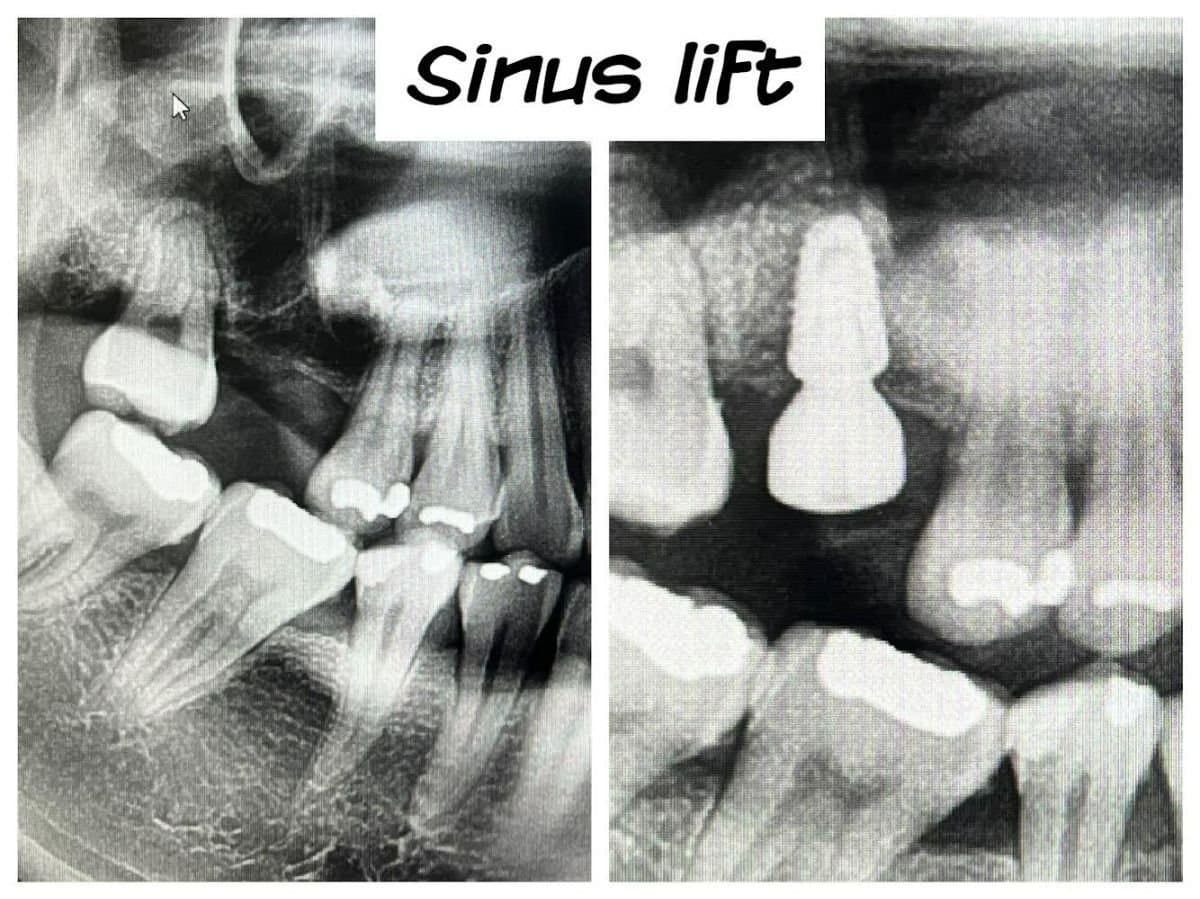
Losing a back tooth doesn't just leave a gap. The whole jawbone underneath it doesn't just sit there unused. It can start thinning once there's no tooth root left to support it. In the upper jaw, that thinning bone sits right against the sinus cavity and no amount of waiting fixes this on its own. A sinus lift rebuilds that lost bone so a dental implant actually has something solid to hold onto. For a lot of patients, it's the step that decides whether an implant is even possible for them. A sinus lift, also known as sinus augmentation, adds bone to the upper jaw near the back molars, exactly where the maxillary sinus sits closest to the jawbone. Without enough bone height in that spot, an implant has nothing solid to hold onto, and placing one anyway risks failure or even a puncture into the sinus itself. There are two main approaches, and which is the right one depends on how much bone is actually missing. A closed lift works through the same opening the implant will eventually use, gently raising the sinus membrane without a separate cut. It suits patients who only need a small amount of lift. An open, or lateral window, approach is slightly more involved. The surgeon creates a small window in the side of the jawbone to reach the membrane directly, which is necessary when there's significant bone loss. The bone graft material fills the space created by the surgeon. It can come from the patient's own body, a donor, or even a synthetic source. Usually, your surgeon will walk you through which is suitable for your case. Often, healing is the part most patients tend to underestimate. It typically takes 4 to 9 months before there's enough new bone for an implant to be placed on top of it. In rare cases with minimal bone loss, both procedures happen in the same sitting, but that's the exception rather than what most patients should expect. For anyone comparing bone sinus lift cost across countries, the gap is real and worth pricing out properly. CureMeAbroad lists accredited dental clinics and verified specialists so patients researching maxillary sinus lift abroad can see actual figures instead of guessing from a single quote.

FREE HOTEL & FLIGHTS
100% OFF ON DENTAL CHECKUP

BEST PRICE GUARANTEED
Overview
Losing a back tooth doesn't just leave a gap. The whole jawbone underneath it doesn't just sit there unused. It can start thinning once there's no tooth root left to support it. In the upper jaw, that thinning bone sits right against the sinus cavity and no amount of waiting fixes this on its own. A sinus lift rebuilds that lost bone so a dental implant actually has something solid to hold onto. For a lot of patients, it's the step that decides whether an implant is even possible for them. A sinus lift, also known as sinus augmentation, adds bone to the upper jaw near the back molars, exactly where the maxillary sinus sits closest to the jawbone. Without enough bone height in that spot, an implant has nothing solid to hold onto, and placing one anyway risks failure or even a puncture into the sinus itself. There are two main approaches, and which is the right one depends on how much bone is actually missing. A closed lift works through the same opening the implant will eventually use, gently raising the sinus membrane without a separate cut. It suits patients who only need a small amount of lift. An open, or lateral window, approach is slightly more involved. The surgeon creates a small window in the side of the jawbone to reach the membrane directly, which is necessary when there's significant bone loss. The bone graft material fills the space created by the surgeon. It can come from the patient's own body, a donor, or even a synthetic source. Usually, your surgeon will walk you through which is suitable for your case. Often, healing is the part most patients tend to underestimate. It typically takes 4 to 9 months before there's enough new bone for an implant to be placed on top of it. In rare cases with minimal bone loss, both procedures happen in the same sitting, but that's the exception rather than what most patients should expect. For anyone comparing bone sinus lift cost across countries, the gap is real and worth pricing out properly. CureMeAbroad lists accredited dental clinics and verified specialists so patients researching maxillary sinus lift abroad can see actual figures instead of guessing from a single quote.
Success Rate
Most patients considering a sinus lift abroad see the procedure succeed without any complication. Even if the membrane tears during surgery, it's usually repaired on the spot without changing the treatment plan.
Procedure Time
A maxillary sinus lift abroad is typically a short outpatient procedure. The real time commitment comes during the healing process, not the surgery itself.
Recovery Timeline
Swelling and discomfort settle within a week or two. However, full bone integration before a sinus lift dental implant can take up to 4 to 9 months.
Average Cost
Sinus augmentation cost in the US typically runs $1,500 to $2,500 per side, up to $5,000 if both sides need work. In many dental tourism destinations, the same procedure often costs in the range of $300 to $2,000. This is for the total treatment cost, keeping bone sinus lift cost manageable even with travel factored in.
Affordable Care | Transparent Costs | Expert Guidance
Get best price with CureMeAbroad
Things to Check for Sinus Lift (for Dental Implants) Abroad
- Get a full medical checkup before booking your flight ticket. Conditions like uncontrolled diabetes or recent radiation near the jaw can affect healing and may even cause delay.
- Tell your dentist about any medication and supplement you are currently taking. Blood thinners especially may need to be paused, and that's not something to sort out once you've already arrived.
- Confirm your surgeon has specific experience with sinus lifts, not just general implant work, since the risk profile is genuinely different.
- Get a written breakdown of your sinus lift dental implant costs that separates the graft, the lift, and the implant itself, since these are often billed as separate items even when quoted together.
- Plan your travel around the healing period, not just the surgery date, and find out upfront whether a follow-up visit means a second trip.
Risks And Complications of Sinus Lift (for Dental Implants) Abroad
- Infection or sinusitis can develop after surgery. This is usually managed well with antibiotics if it's caught early.
- Nerve damage or numbness in the upper lip or cheek is possible, though it's not common. Sensation typically returns as the area heals.
- Bleeding or hematoma can occur at the surgical site. Your surgeon will usually monitor for this closely in the days right after the procedure.
- Prolonged swelling or bruising around the eyes and face can follow after surgery. This is more noticeable for sinus lift than with many other dental procedures.
- The sinus membrane can tear during the procedure. This is a recognized and well-understood risk of the technique, not a sign anything went wrong. It's typically corrected on the spot.
- Graft failure is possible, meaning the bone material doesn't properly integrate. When this happens, it can delay or complicate the eventual implant placement.
- Unsatisfactory results, such as inadequate lift height, are possible too. In such cases, a revision procedure may be needed before an implant can go in.
Do’s
- ✓Verify surgeon credentials (e.g. ISAPS, JPRAS)
- ✓Ask for before-after photos
- ✓Check language barriers
- ✓Review aftercare and follow-up options
- ✓Consider local laws on medical malpractice
Don'ts
- ✗Don't Choose a Clinic Based Only on Price
- ✗Don't Rely Solely on Social Media or Influencers
- ✗Don't Ignore Language Barriers
- ✗Don't Rush Into Surgery Without Research
- ✗Don't Assume You Can Fly Back Immediately
sinus lift with dental implants
Doctor: Akarapat Rattananon
Under Dental Treatment
Loading...
CureMeAbroadIs Absolutely Free
Just discovery so you can choose what's right for you!


World's No. 1 Medical Discovery Platform
Sinus Lift (for Dental Implants)
This procedure involves specific medical techniques tailored to address particular health conditions. Your doctor will explain the detailed process based on your case.
Sinus Lift (for Dental Implants)
Eligibility depends on your medical history, current condition, and treatment goals. A consultation and evaluation will determine if you are a suitable candidate.
Sinus Lift (for Dental Implants)
Preparation may include lab tests, imaging, medication adjustments, fasting, or lifestyle recommendations. Your healthcare provider will give you personalized instructions.
What does this procedure involve?
Sinus Lift (for Dental Implants)
This procedure involves specific medical techniques tailored to address particular health conditions. Your doctor will explain the detailed process based on your case.