Dentures Abroad: Restore Your Smile
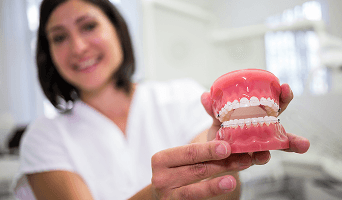
A denture is a removable prosthetic appliance that replaces missing teeth and rests on the gum tissue. Full dentures abroad are used when all teeth in an arch are absent. Partial dentures are fitted when some natural teeth remain and specific gaps require restoration. Snap on dentures abroad are secured to implant attachments, providing considerably better stability than conventional tissue-supported designs. All appliance types are fabricated from direct clinical impressions of the patient's own oral anatomy. No two are identical. The false teeth cost at home remains a practical barrier for a large number of patients. In the UK, US, and Australia, full prosthetic treatment routinely costs several thousand pounds or dollars. The same work carried out in Turkey, India, or Thailand is available at considerably lower prices, and this isn’t a reflection of reduced clinical standards or inferior materials at accredited facilities. Lower operational costs and different labor market conditions in those countries account for the difference. Dental tourism has grown into an established sector across all 3 destinations, the clinical infrastructure in place reflects years of investment driven by sustained international patient demand. Prosthetic rehabilitation with dentures restores masticatory function, supports clear speech, and slows alveolar resorption following tooth loss. A well-fitted and properly maintained appliance functions reliably for 10 or more years in most patients

FREE HOTEL & FLIGHTS
100% OFF ON DENTAL CHECKUP

BEST PRICE GUARANTEED
Overview
A denture is a removable prosthetic appliance that replaces missing teeth and rests on the gum tissue. Full dentures abroad are used when all teeth in an arch are absent. Partial dentures are fitted when some natural teeth remain and specific gaps require restoration. Snap on dentures abroad are secured to implant attachments, providing considerably better stability than conventional tissue-supported designs. All appliance types are fabricated from direct clinical impressions of the patient's own oral anatomy. No two are identical. The false teeth cost at home remains a practical barrier for a large number of patients. In the UK, US, and Australia, full prosthetic treatment routinely costs several thousand pounds or dollars. The same work carried out in Turkey, India, or Thailand is available at considerably lower prices, and this isn’t a reflection of reduced clinical standards or inferior materials at accredited facilities. Lower operational costs and different labor market conditions in those countries account for the difference. Dental tourism has grown into an established sector across all 3 destinations, the clinical infrastructure in place reflects years of investment driven by sustained international patient demand. Prosthetic rehabilitation with dentures restores masticatory function, supports clear speech, and slows alveolar resorption following tooth loss. A well-fitted and properly maintained appliance functions reliably for 10 or more years in most patients
Procedure Time
4-6 appointments across several weeks. Each visit runs approximately 30-60 minutes. Intervals between appointments are used by the dental laboratory to fabricate or modify the appliance based on findings from the preceding clinical visit
Recovery Timeline
Gum soreness in the first week is a normal tissue response to new loading. It’s expected, not indicative of error. Week 2 is easier for most patients. Full adaptation by week 4 in the majority of cases.
Expected Results
Around one month after final fitting, most patients have returned to a normal diet and report no sustained awareness of the prosthesis. Individual fabrication from direct impressions supports stable fit and natural appearance once adaptation is complete
Ideal Candidates
False teeth cost at home is frequently the catalyst for seeking treatment internationally. Dentures are appropriate for patients with multiple missing teeth who aren’t eligible for implants, most often due to inadequate bone volume or elevated surgical risk. A clinical assessment is required to determine suitability.
Affordable Care | Transparent Costs | Expert Guidance
Get best price with CureMeAbroad
Things to Check for Dentures Abroad
- A proper clinical assessment must be completed before any treatment plan is discussed. This includes radiographic imaging, examination of the soft tissue, and evaluation of the underlying bone. Any practitioner who moves to cost discussion before completing this step warrants caution.
- A proper clinical assessment must be completed before any treatment plan is discussed. This includes radiographic imaging, examination of the soft tissue, and evaluation of the underlying bone. Any practitioner who moves to cost discussion before completing this step warrants caution.
- Clinic websites are self-produced. Independent patient reviews on third-party platforms, case documentation from the treating clinician's own practice, and direct qualification verification through the relevant professional body's registry are all more reliable sources
- A fully itemized written cost estimate is required before any payment. Full dentures abroad and partial dentures cost every appointment, adjustment, and follow-up visit as discrete line items. Anything absent from the list requires written clarification before any financial commitment.
- Patients should schedule at least 1 or 2 days between the final fitting appointment and their return flight. Same-day departure removes any practical ability to go back to the clinic if the fit is uncomfortable or requires adjustment. Fit issues aren’t uncommon in the days immediately following final delivery.
Risks And Complications of Dentures Abroad
- Some degree of mucosal soreness, mild difficulty with speech, and awkwardness during chewing are common in the first 2 weeks of wearing a new appliance. These symptoms reflect the normal process of tissue adaptation to sustained loading and don’t indicate that anything has gone wrong clinically.
- Persistent sharp pain after 2 weeks, or ulceration returning consistently to the same site, indicates a localized pressure problem. The appliance is loading incorrectly against the tissue. Clinical correction is required. Continued wear without intervention doesn’t resolve it.
- Residual alveolar bone resorbs progressively after tooth extraction. An appliance that fitted accurately at delivery may become unstable over subsequent years as ridge morphology changes. Regular review identifies when relining or replacement is indicated. Without those reviews, the change goes unmanaged.
- High-adhesion and high-force foods create the most difficulty in early wear. Most patients find their functional range quickly and return to a broad diet within weeks.
- Denture stomatitis is a fungal infection of the oral mucosa at the denture-bearing surface. It develops primarily through inadequate appliance hygiene and continuous wear without overnight removal. The condition presents as erythema and soreness of the gum tissue beneath the prosthesis.
Do’s
- ✓Verify surgeon credentials (e.g. ISAPS, JPRAS)
- ✓Ask for before-after photos
- ✓Check language barriers
- ✓Review aftercare and follow-up options
- ✓Consider local laws on medical malpractice
Don'ts
- ✗Don't Choose a Clinic Based Only on Price
- ✗Don't Rely Solely on Social Media or Influencers
- ✗Don't Ignore Language Barriers
- ✗Don't Rush Into Surgery Without Research
- ✗Don't Assume You Can Fly Back Immediately
Under Dental Treatment
Loading...
CureMeAbroadIs Absolutely Free
Just discovery so you can choose what's right for you!


World's No. 1 Medical Discovery Platform
Dentures
This procedure involves specific medical techniques tailored to address particular health conditions. Your doctor will explain the detailed process based on your case.
Dentures
Eligibility depends on your medical history, current condition, and treatment goals. A consultation and evaluation will determine if you are a suitable candidate.
Dentures
Preparation may include lab tests, imaging, medication adjustments, fasting, or lifestyle recommendations. Your healthcare provider will give you personalized instructions.
What does this procedure involve?
Dentures
This procedure involves specific medical techniques tailored to address particular health conditions. Your doctor will explain the detailed process based on your case.