




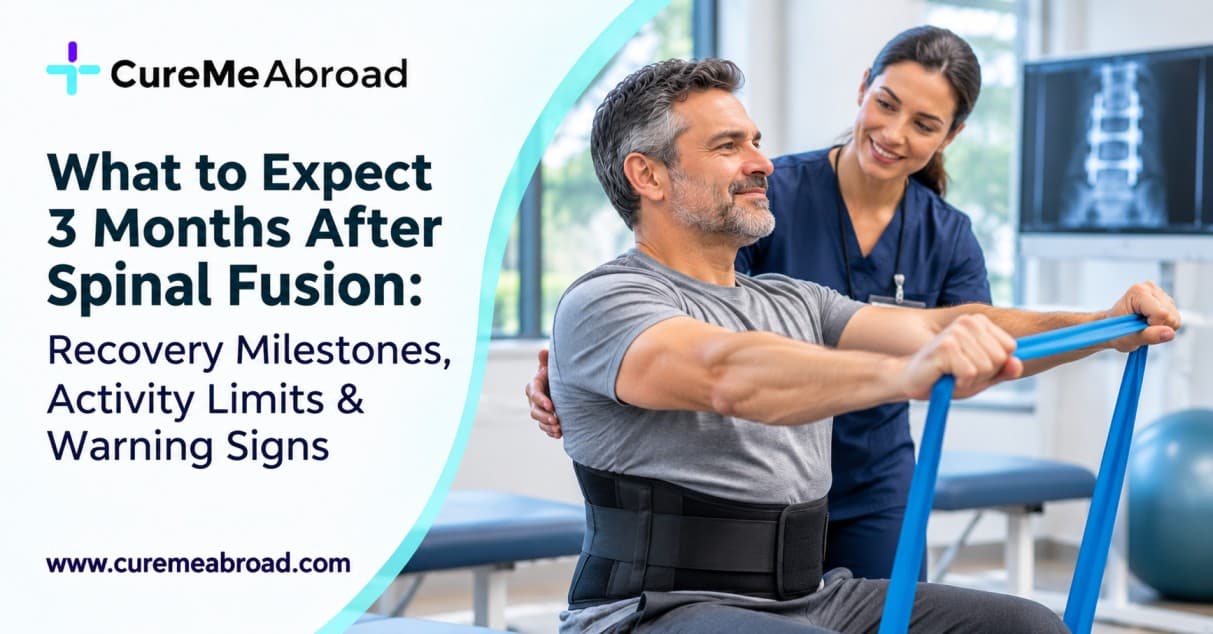
What to Expect 3 Months After Spinal Fusion: Recovery Milestones, Activity Limits & Warning Signs
Have you reached three months after spinal fusion but still feel back pain, stiffness or uncertainty about what you can do? You may be wondering whether your recovery is on track or if you're pushing yourself too soon. Understanding what to expect 3 months after spinal fusion can help you recognise normal healing changes, follow the right activity limits and know when to contact your surgeon.
In this guide you'll learn and understand the healing milestones, pain, exercise, daily activities, work, warning signs and what happens during the next stages of recovery.
Quick Answer: What Should Recovery Look Like 3 Months After Spinal Fusion?
Three months after spinal fusion, you should be noticing some improvement in your pain and daily movements. Walking longer distances, doing light household work and attending physical therapy should become easier.
Some soreness, stiffness and tiredness can still be there. That is normal for many people.
What Recovery Should Look Like at 3 Months
| Recovery Area | What to Expect |
|---|---|
| Pain | Gradually improving, mild soreness may remain |
| Walking | Longer walks become easier |
| Daily activities | Light chores and desk work may be possible |
| Driving | Possible after surgeon approval |
| Physical therapy | Exercises gradually increase |
| Bone healing | Fusion is still developing |
| Energy | Improving, but tiredness may continue |
You should still avoid heavy lifting, repeated twisting and high-impact activities until your surgeon allows them.
Where You Are at 3 Months: Healing Milestones
At three months, you are making progress, but your spine is still healing. Many people can return to light activities and sleep more comfortably, but the bone graft needs more time to join the spinal bones together.
Is the Fusion Solid Yet? How Bone Healing Progresses
Spinal fusion recovery at 3 months does not mean your bones are completely joined. The bone graft is still growing and becoming stronger, which takes several more months.
| Healing Stage | What Happens |
|---|---|
| First few weeks | Early healing begins |
| Weeks to 3 months | New bone starts forming |
| 3 to 6 months | Bone gradually becomes stronger |
| 6 to 12 months | Fusion continues to mature |
Some factors can slow down bone healing:
- Smoking or nicotine use.
- Diabetes or poor blood sugar control.
- Weak bones or osteoporosis.
- Poor nutrition.
- Multiple-level or revision spinal fusion.
You should avoid smoking and follow your surgeon's activity restrictions. Do not assume that less pain means your fusion is completely solid.
The 3-Month Check-Up: X-Rays and What Your Surgeon Looks For
Around three months after spinal fusion, your surgeon will check how your spine is healing. X-rays help show whether the screws, rods and other implants are in the correct position.
Your surgeon may also check:
- Whether your spinal alignment is maintained.
- Whether new bone is forming around the graft.
- Whether the hardware looks stable.
- Whether your walking, strength and leg movement are improving.
If X-rays do not show enough detail, a CT scan may be recommended.
You should discuss any pain 3 months after spinal fusion that is getting worse. New leg weakness, fever or wound drainage also needs prompt medical attention.
Pain at 3 Months: What’s Normal and What Isn’t
Are you still feeling back pain three months after spinal fusion and wondering whether your recovery is going as expected? You're not alone. Some discomfort, stiffness and tiredness can still happen at this stage, especially after walking or physical therapy. However, your pain should generally be getting better, not becoming more severe.
Your spinal fusion recovery 3 months experience may be different from someone else's because healing depends on the number of levels fused, your bone health, age and activity level. Full recovery can take more than a year.
Residual Aching, Stiffness and Fatigue
You may feel better on some days and more uncomfortable on others. This can happen while your muscles, ligaments and healing bone continue to recover.
What you may still notice:
- Mild or moderate soreness around your back.
- Stiffness after sitting, standing or sleeping.
- Tightness around your hips or legs.
- Muscle fatigue after walking or physiotherapy.
- Occasional aching when you increase your activity.
Your muscles may still be weak after surgery and reduced movement. Follow your physiotherapist's instructions, walk in short sessions and increase activity gradually instead of pushing yourself too hard.
Nerve Symptoms: Numbness, Tingling and Burning
Still experiencing tingling or numbness in your legs? This can be confusing, especially if you expected these symptoms to disappear after surgery. When nerves have been compressed for a long time, recovery may take several months and sometimes longer than bone healing.
Mild symptoms that are gradually improving may continue during 3 months after lumbar fusion.
Pay attention to these changes:
- Numbness or tingling is becoming less frequent.
- Burning discomfort is gradually reducing.
- The affected area is getting smaller.
- Walking and sleeping are becoming easier.
However, new numbness, worsening burning pain or leg weakness needs prompt medical attention. If your legs start buckling, you develop foot drop or experience numbness around the groin, contact your surgeon urgently. Loss of bladder or bowel control requires emergency care.
When Pain Is Getting Worse Instead of Better
If your pain 3 months after spinal fusion is increasing rather than settling, don't ignore it. Doing too much too soon, a fall, nerve irritation, infection, hardware problems or nonunion (when the bones don't fuse as expected) may be possible reasons.
Contact your surgical team if you notice:
- Increasing pain that affects sleep or daily activities.
- Fever, chills or drainage from the incision.
- Redness, warmth or swelling around the wound.
- New weakness or difficulty walking.
Your spinal fusion recovery timeline depends on your healing progress, so don't compare your recovery with someone else's. Keep following your surgeon's advice about spinal fusion restrictions for 3 months and ask whether you need further examination or imaging if the pain isn't improving.
Activity Guidelines at 3 Months: What You Can Do Now
Are you feeling ready to return to your normal routine but still unsure which activities are safe? Three months after spinal fusion, you may be able to do more than you could during the early weeks. However, the bone may still be healing, so don't assume you can return to every activity just because your pain has reduced.
Your spinal fusion recovery 3 months progress depends on the type of surgery, the number of levels fused and how well the bone is healing. Your surgeon's instructions should always come first.
Walking, Exercise & Physical Therapy Progression
Walking is usually encouraged because it helps improve circulation and build your stamina without putting the same stress on your spine as heavy lifting or twisting. You can often increase your walking distance gradually, provided your symptoms remain stable.
Activities you may be able to do:
- Walk outdoors or on a treadmill.
- Try a stationary bike if your surgeon clears you.
- Continue prescribed physical therapy.
- Resume light errands or desk work if approved.
- Try gentle stretching without forceful bending.
Physical therapy may focus on core strength, balance, posture and safe movement. Swimming or water walking may also be possible once your incision has healed and your surgeon approves it. Running, jumping and heavy weightlifting usually need to wait.
Still Restricted: Bending, Lifting & Twisting
Even at three months, repeated bending, heavy lifting and twisting can put stress on the healing bone graft and hardware. This is why spinal fusion restrictions at 3 months may still apply, even when you feel much better.
You may still need to limit:
- Lifting heavy groceries, laundry or children.
- Bending forward at the waist or twisting your back.
- Vigorous housework and heavy yard work.
- Contact sports and high-impact exercise.
Some patients may still have a lifting limit of around 10 to 15 pounds, but this isn't the same for everyone. Ask your surgeon for your exact limit before lifting heavier objects.
Back Brace: When You Can Stop Wearing It
If you've been wearing a back brace after spinal fusion, you may be wondering how much longer you need it. Some people begin reducing brace use around three months, while others need it for longer.
Your surgeon may consider stopping it when your pain is controlled, daily activities feel comfortable and X-rays show satisfactory healing. Don't stop wearing it suddenly on your own. Brace use and activity restrictions should be decided by your spine surgeon based on your imaging and recovery progress.
Daily Life at 3 Months: Driving, Sleep, Intimacy & Travel
Three months after spinal fusion, you may be able to manage most daily activities more comfortably. Driving, sleeping and travelling become easier, but you should still be careful with movements that put pressure on your spine.
Driving & Sitting for Long Periods
For 3 months after spinal fusion, many people can start driving again. But you should not drive while taking strong pain medicines that make you sleepy or slow down your reactions.
Before driving, make sure you can sit comfortably, check your mirrors and press the brake without pain.
You should take a short break every 30 to 45 minutes during long drives. Use a supportive seat and avoid twisting when getting in or out of the car.
Sleeping Comfortably: Positions & Mattress Tips
Your sleep may become better after spinal fusion, but some stiffness and soreness can still be there in the morning. Choosing a comfortable position helps you avoid extra pressure on your back.
- Sleeping on your back: Place a pillow under your knees to reduce pressure on your lower back.
- Sleeping on your side: Keep a pillow between your knees to support your spine.
- Mattress: Use a medium-firm mattress that supports your back without causing discomfort.
You should use the log-roll technique when getting out of bed. Turn onto your side first and then push yourself up using your arms.
Intimacy & Travel
You can usually start thinking about intimacy after spinal fusion once your pain is under control and your surgeon gives approval. Start slowly and choose positions that do not involve twisting or putting pressure on your back.
For travel, short trips may feel easier by this stage. However, long journeys still need some planning.
You should take breaks every 30 to 45 minutes, use a supportive pillow and avoid lifting heavy luggage. If you are planning a flight, check with your surgeon first.
Returning to Work 3 Months After Spinal Fusion
Returning to work 3 months after spinal fusion mainly depends on the type of job you do. Desk jobs are usually easier to manage, whereas physical work involving lifting and bending may need more recovery time.
Return-to-Work Expectations at 3 Months
| Job Type | Return-to-Work Expectations |
|---|---|
| Desk job | Usually possible, with regular sitting breaks |
| Light-duty work | Possible with lifting and bending restrictions |
| Moderate physical work | May be possible with surgeon approval |
| Heavy labour | May need 4 to 6 months or longer |
| Driving jobs | Possible if cleared and not taking sedating medicines |
| Self-employed work | Gradual return with flexible working hours |
Firstly, you should get clearance from your surgeon before returning to your regular duties. If possible, start with shorter working hours and then increase them gradually.
Take standing or walking breaks every 30 to 45 minutes. You should avoid heavy lifting, repeated twisting and overhead work until your surgeon allows them.
If you notice worsening back pain, new leg weakness or numbness while working, stop and contact your surgeon.
Your spinal fusion recovery timeline may be different depending on the number of spinal levels treated and how well your bones are healing. Always follow your surgeon's instructions before returning to normal activities.
Lumbar vs Cervical Fusion at 3 Months: How Recovery Differs
If you've had spinal fusion surgery, your recovery at three months may look different from someone who had surgery in another part of the spine. You may both be walking, doing light activities and attending physical therapy, but the symptoms and movement restrictions aren't always the same.
With lumbar fusion, the focus is usually on your lower back, hips and legs. After cervical fusion, your doctor will pay more attention to your neck movement, shoulders, arms and swallowing. And also, remember that the bones may still be healing even when you start feeling better. Fusion can take six to twelve months or sometimes longer.
Lumbar vs Cervical Fusion at 3 Months
| Recovery area | Lumbar fusion | Cervical fusion |
|---|---|---|
| Main focus | Lower back, hips and legs | Neck, shoulders and arms |
| Common discomfort | Back soreness, stiffness and muscle fatigue | Neck soreness, shoulder tightness and stiffness |
| Nerve symptoms | Leg numbness, tingling or weakness | Arm numbness, tingling, hand weakness or clumsiness |
| Daily activities | Sitting, bending and lifting may still need care | Neck movement and overhead activities may remain limited |
| Physical therapy | Walking, core stability and safe movement | Neck mobility, shoulder strength and posture |
| Driving | Only when cleared and not taking sedating medicines | When cleared and neck movement is adequate |
| Recovery time | Bone fusion often takes 6 to 12 months or longer | Bone fusion often takes 6 to 12 months or longer |
Your surgeon may allow a gradual return to normal activities, but the timing depends on your procedure and healing progress. Don't use another patient's recovery as a standard for your own.
Warning Signs at 3 Months: When to Call Your Surgeon
By three months, you should generally be noticing some improvement. However, if new symptoms appear or your condition starts getting worse, don't wait until your next scheduled appointment. Some problems need urgent medical attention.
New Weakness, Numbness or Bladder and Bowel Changes: Seek Urgent Care
Still having mild tingling or numbness doesn't always mean something has gone wrong. Nerves can take several months to recover, particularly if they were compressed for a long time before surgery.
But new or worsening nerve symptoms need prompt attention. Contact your surgeon urgently if you notice:
- New weakness in your legs, feet, arms or hands.
- Difficulty lifting your foot or legs suddenly giving way.
- Increasing numbness, burning or electric-shock pain.
- New balance problems or difficulty walking.
- Worsening hand clumsiness after cervical fusion.
<text>Seek emergency care immediately if you develop numbness around your groin or inner thighs, difficulty urinating or loss of bladder or bowel control. These may be warning signs of cauda equina syndrome, a rare but serious condition.</text>
Fever, Wound Drainage or Redness: Possible Infection
If your surgical wound was healing well but suddenly becomes red, swollen or painful, don't ignore the change. Infection can sometimes develop around spinal implants or bone graft material, so early assessment matters.
Watch for these signs:
- Fever above 100°F or shaking chills.
- Redness, warmth or swelling around the incision.
- Drainage or pus from the wound.
- Increasing pain near the surgical area.
- A wound that starts opening or doesn't appear to heal.
Contact your surgeon urgently if you notice these changes. Don't apply creams or home remedies to the incision unless your doctor advises you to.
Calf Pain, Swelling or Shortness of Breath: Possible Blood Clot
You may not immediately connect calf pain with spinal surgery, but reduced movement during recovery can increase the risk of a blood clot called deep vein thrombosis (DVT). It usually develops in a deep vein in the leg and can sometimes travel to the lungs.
Signs of a possible leg clot include:
- Swelling in one calf, ankle or foot.
- Pain or tenderness that gets worse while standing or walking.
- Warmth or redness in the affected leg.
- One leg looking larger than the other.
Contact your surgeon or seek urgent medical care if these symptoms appear. Don't massage a painful, swollen calf.
If you suddenly develop shortness of breath, chest pain, cough up blood or feel faint, seek emergency medical care immediately. These may indicate a pulmonary embolism, which can be life-threatening.
If something feels different from your usual recovery, contact your spine surgeon rather than trying to manage it on your own.
Protecting Your Fusion: Habits That Help (and Hurt)
For 3 months after spinal fusion, your bones are still healing. What you do every day can affect how well the bones join together, so you should be careful with smoking, medicines and daily activities.
Why Smoking & Nicotine Can Block Fusion
Smoking is a bad habit that can slow down spinal fusion recovery. Nicotine reduces the amount of blood flow to the healing bones. This causes less oxygen and nutrients to reach the bones.
This can lead to slower bone growth and an increased chance of the bones not fusing together properly (non-union).
You should avoid all nicotine products, including:
- Cigarettes and secondhand smoke.
- Vaping and e-cigarettes.
- Chewing tobacco.
- Nicotine gum, patches and lozenges.
If you are a former smoker it is still a good idea to talk to your surgeon about possible nicotine replacement options. Regular walking, adequate protein intake and attending physiotherapy will also aid your recovery.
Pain Medication, NSAIDs & Supplements: Ask Your Surgeon First
Pain medicines can help you stay comfortable after spinal fusion, but not every medicine is suitable during bone healing.
For example, ibuprofen and naproxen are NSAIDs. Some surgeons advise avoiding these medicines for around 12 weeks because they may interfere with bone growth.
You should ask your surgeon before taking:
- Pain medicines: Acetaminophen or prescribed painkillers may help manage discomfort.
- Supplements: Calcium, vitamin D, vitamin C and protein support bone and tissue health.
- Herbal products: Some supplements can affect bleeding or interact with your medicines.
Do not stop prescribed medicines on your own. Your surgeon should decide what is safe for your recovery.
What Happens Next: Months 3 to 12 and Beyond
Spinal fusion recovery does not end at 3 months. Your pain may be improving and daily activities becoming easier, but the bones can take a year or longer to complete their healing.
Spinal Fusion Recovery Timeline
| Recovery Stage | What You Can Expect |
|---|---|
| 3 months | More walking, light activities and physical therapy |
| 4 to 6 months | Gradual return to normal activities |
| 6 months | Bone fusion becomes more mature; some activities may increase |
| 9 to 12 months | Continued bone healing and better strength |
| 12 months and beyond | Further improvement in strength and daily movement |
During this period, your surgeon will check your pain, walking ability, muscle strength and X-rays. They will also look at the position of the screws and rods and check whether the bones are joining properly.
You should not ignore new back pain, leg weakness, numbness or balance problems. Contact your surgeon if these symptoms appear. New loss of bladder or bowel control or numbness around the groin needs urgent medical attention.
Emotional Recovery: Frustration, Mood & Getting Support
Recovery after spinal fusion is not only about your bones and back. Some people feel frustrated because they cannot return to their normal routine as quickly as they expected, and this can affect their mood.
You may have good days and difficult days. That does not automatically mean your spinal fusion is failing.
Emotional Recovery Support Plan
| What You May Feel | What You Can Expect |
|---|---|
| Frustration with slow recovery | Set small weekly goals and track your progress |
| Fear of movement | Follow your prescribed physical therapy |
| Low mood or sadness | Spend time with family and friends |
| Poor sleep | Maintain a regular sleep routine |
| Feeling isolated | Stay connected with supportive people |
| Anxiety about reinjury | Ask your surgeon about safe activities |
You should focus on small improvements, such as walking a little farther or sleeping more comfortably. Keeping a recovery journal can also help you notice progress that you might otherwise miss.
If sadness, anxiety or sleep problems continue for more than two weeks, speak with your doctor or a mental health professional. If you have thoughts of harming yourself, seek immediate help.
Remember, spinal fusion recovery takes time. You should follow your surgeon's advice and give your body enough time to heal.
Final Thoughts
Three months after spinal fusion, you may be feeling better, but your spine still needs time to heal. As we've discussed, some soreness and stiffness can remain, while walking, physical therapy and daily activities should gradually become easier. Following your activity restrictions, attending follow-up appointments and watching for warning signs can help you protect the fusion. Don't rush into heavy lifting or stop wearing your brace without your surgeon's approval. If you notice new weakness, fever, wound drainage or worsening pain, contact your surgical team promptly.
Looking for trusted spine surgery care? Visit the CureMeAbroad website to find the best hospital for spinal fusion surgery and book your consultation with an experienced spine surgeon. Get expert guidance to understand your treatment and recovery options.
FAQs
1. Is it normal to still have pain for 3 months after spinal fusion?
It is common to have some pain for 3 months after spinal fusion. You may find that your back aches, feels stiff and your muscles are tired after activity. Your pain should gradually reduce, however, and not get worse.
2. How long until my spinal fusion has healed?
Your spinal fusion will usually take between 6-12 months for the bones to become solid, and sometimes longer. You may begin to feel better within a few months, but complete bone healing will take more time.
3. Can a spinal fusion fail to heal?
Yes, sometimes the bones will not fuse together properly. This is known as nonunion or pseudarthrosis. The risk can be increased by smoking, poor bone quality, diabetes and multiple levels of fusion. It is important to follow your surgeon’s post op advice.
4. Will I need further surgery after spinal fusion?
Most people will not require any further surgery. You may require revision spinal fusion surgery if the bones do not fuse, the hardware loosens or breaks, or you develop an infection. Your surgeon will assess the cause and advise if further surgery is required.
5. How long until I feel like myself again after spinal fusion?
Many people will begin to feel better within 3-6 months. Spinal fusion can take longer than 1 year to recover from. Often your strength, stamina, mobility and confidence will take longer to come back.
6. Can I go to a chiropractor or have a massage after spinal fusion?
Unless your surgeon has specifically said it is okay, you should not have any chiropractic spinal manipulation. A massage may be possible once your incision has healed. Ask your surgeon or physio before having any treatment for your back area.
Reference
ACIBADEM Health Point. (2024). Recovery tips: 3 months after spinal fusion surgery.
https://www.acibademhealthpoint.com/recovery-tips-3-months-after-spinal-fusion-surgery/ACIBADEM International. (2026). Life after spinal fusion: Bending, lifting, desk work and the movements to relearn.
https://acibademinternational.com/blog/life-after-spinal-fusion-bending-lifting-desk-work-and-the-movements-to-relearn/Florida Spine Surgeon. (2026). Spine surgery recovery timeline: Week by week.
https://www.floridaspinesurgeon.org/blog/spine-surgery-recovery-timelineGordon Graham. (2026). Spinal fusion recovery: What to expect after surgery.
https://www.gordangrahovac.com/blog/spinal-fusion-recovery-what-to-expect-after-surgeryKaiser Permanente. (2026). Lumbar spinal fusion: What to expect at home.
https://healthy.kaiserpermanente.org/health-wellness/health-encyclopedia/he.lumbar-spinal-fusion-what-to-expect-at-home.zx4099Rothman Orthopaedics. (2014). 3 things you need to know about spinal fusion recovery.
https://www.rothmanortho.com/blog/3-things-you-need-to-know-about-spinal-fusion-recovery/Spine-health. (2000). Spinal fusion surgery recovery: 1 to 3 months after.
https://www.spine-health.com/treatment/spinal-fusion/spinal-fusion-surgery-recovery-1-3-months-afterSpine-health. (2000). Spinal fusion surgery recovery: 3 months and after.
https://www.spine-health.com/treatment/spinal-fusion/spinal-fusion-surgery-recovery-3-months-and-afterSpine-health. (2007). Recovery after fusion at more than one level.
https://www.spine-health.com/treatment/spinal-fusion/recovery-after-fusion-more-one-levelTotal Ortho Sports Medicine. (2025). What to expect 3 months after spinal fusion?
https://www.totalorthosportsmed.com/blog/what-to-expect-3-months-after-spinal-fusion/