




Have you ever been curious about the reasons for a testicle removal (castration) surgery and the actual cost of such a procedure? If the choices are testicular cancer, chronic pain, or gender-affirming surgery, then the action, also called orchiectomy, usually is the key to a better life after one.
However, testicle removal surgery cost can be a worrying point of significant money before the intervention. The costs may change wildly depending on the city or country where surgery is done, hospital fame, surgeon skills, surgery method, and insurance coverage.
We are going to explain everything one needs to know in this guide starting with global average prices and going further with the different orchiectomy types, care, and restrictions following the operation.
We will start with the basics.
What is a Testicle Removal Surgery?
A testicle removal surgery or orchiectomy is the surgical operation in which a testicle is removed. Such an operation is generally necessitated by a strong suspicion of testicular cancer after a series of tests.
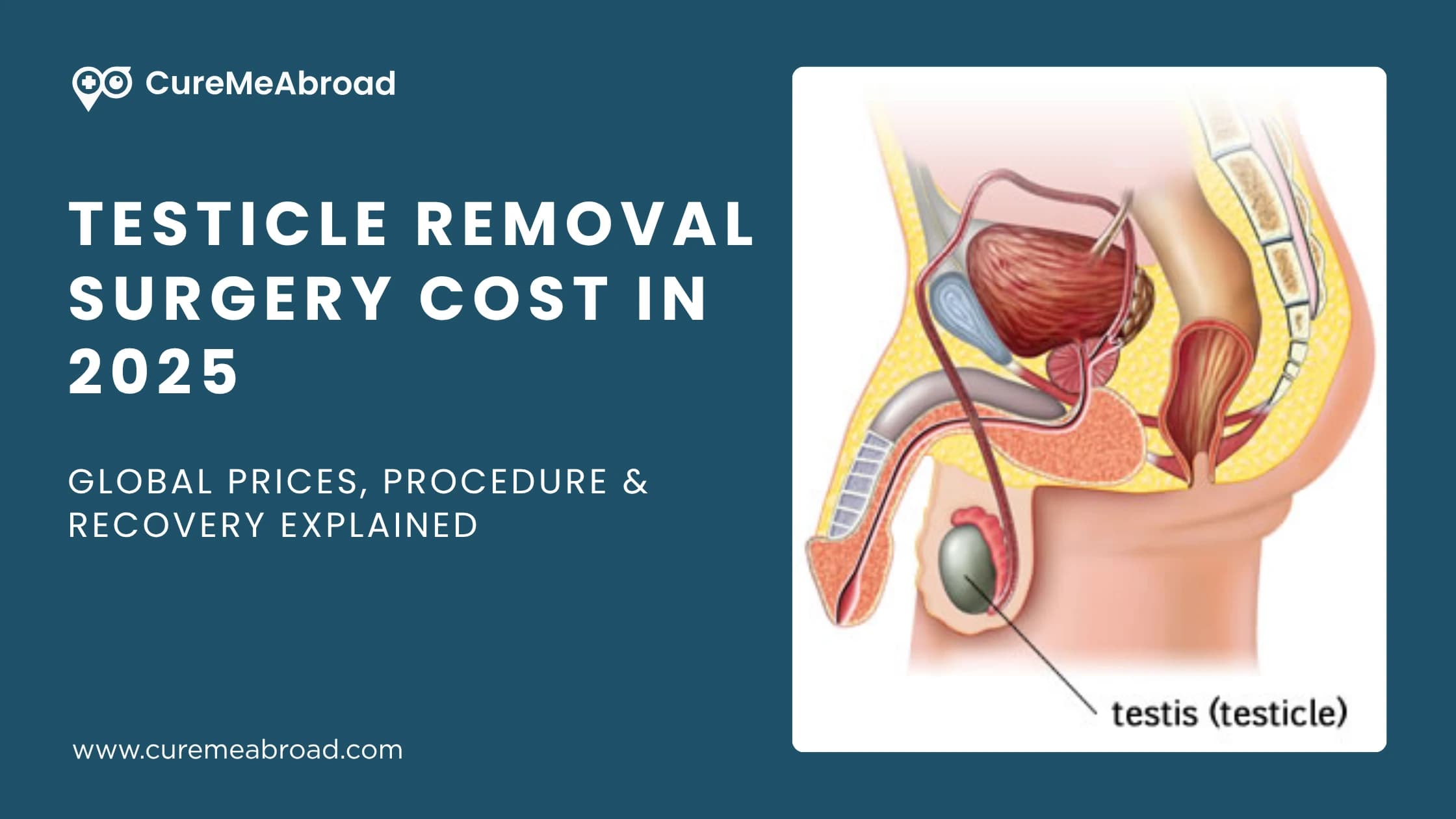
The testicles are two small organs hanging in a sac made of skin (scrotum) under the penis. Testicles (or testes) are responsible for the production of sperm and male hormones like testosterone. Normally, an orchiectomy is a minimally invasive procedure.
Why should you have your testicles removed?
You need to have this surgery:
- To establish a definitive diagnosis of testicular cancer
- To reduce chronic pain resistant to other treatments.
- To lower the levels of testosterone which fuels prostate cancer growth.
- As a part of male-to-female transition surgery
Types of Orchiectomy Procedure
Simple Orchidectomy: This technique involves the doctor removing the testicle through a small incision made in the scrotum.
Radical Inguinal Orchidectomy: The doctor removes the testicle along with the spermatic cord through an incision in the groin in this case which is also called high orchidectomy. Usually, this is the method of choice when cancer of the testicles is suspected.
Subcapsular Orchidectomy: In this instance, only the glandular tissue which is the lining of the testicles is taken out and the testicles are left intact. Sometimes it may be used to treat prostate cancer as it removes the tissue that produces testosterone without the ablation of the testicles.
Bilateral Orchidectomy: Both testicles are removed in this surgery which could be done through separate incisions or as a part of a single operation.
Testicular Removal Surgery cost
The price for an orchiectomy, which is the removal of the testicles, changes depending on numerous aspects such as the kind of operation and the place. The cost can still be different even if you have insurance.
Here is the cost of an orchiectomy in detail:
| Type of Procedure | Estimated cost (per testicle) |
|---|---|
| Simple Orchiectomy | $5,000 - $10,000 |
| Bilateral Orchiectomy | $10,000 - $15,000 |
| Radical Orchiectomy | $15,000 - $20,000 |
| Orchiectomy with prosthesis | $10,000 - $15,000 |
How Much Does Testicular Removal Surgery Cost Globally?
The costs of a testicle-removal operation differ greatly from one country to another. The US and Germany, as well, which are considered high-income countries, usually have the prices of the surgeries starting from $6,000 and going even beyond $10,000 USD.
On the other hand, some countries have become the cheapest medical tourism destinations for the same procedure; thus, the price in Thailand for a regular case might be starting at around $1,800-$4,000 USD.
In Turkey, the cost of a bundled package for an international patient with orchiectomy varies between €2,000-€4,000 ($2,000 - $4,500 USD) for a bilateral procedure.
Let us take a quick look at testicle removal surgery costs across different countries.
| Country | Estimated Average Cost |
|---|---|
| USA | $5,149 - $8,799 |
| India | $800 - $1,000 |
| Thailand | $2,500 - $3,000 |
| Turkey | $2,500 - $4,500 |
| Spain | $3,500 to $6,500 |
Factors Affecting Testicle Removal Surgery Cost
The costs may vary due to several factors such as insurance coverage of patients, facilities provided by healthcare, and the complexity of the surgery.
- Experience and reputation of the surgeon: Treatment cost may vary according to your urology surgeon's expertise and experience. A skilled and highly experienced surgeon can charge higher prices for quality and dedicated services.
- Improvement in hospital services: The reputation of your chosen hospital also plays a crucial role in influencing your orchidectomy cost. A globally accredited hospital with a reputation in the market may charge more than others.
- Types of Orchidectomy: The types of orchidectomy that you are going to receive also influence the overall cost. For example, a laparoscopic orchidectomy is more expensive than an open one.
- Anesthesia Charges: The type of anaesthesia administered for the surgery and the fee of the anesthesiologist can add to your treatment cost and influence the overall cost of orchidectomy.
- Pre and Post-operative Care: The pre-operative and post-operative care you need can add to your orchidectomy cost, too. In sensitive cases, proper pre and post-natal observation is necessary.
- Medications and medical supplies: The medical supplies and drugs that were used for your operation and treatment have contributed to the average cost of your orchidectomy.
- Time Spent in the Hospital: Your time in the hospital for the operation of an orchidectomy is also a very important factor in the total money required to be spent on your treatment. The extended period of your hospitalization will increase the expense of your treatment.
- Additional Expenses: Lastly, orchidectomy also has a number of additional costs that add up to the overall expense. These extra costs include pathological tests, blood transfusion, diagnosis tests among others.
Insurance Coverage
Since testicle removal surgeries are usually medically necessary and most medical insurance plans cover the cost of one.
Please note, however, that individual insurance companies or even individual policies might have their fine differences. Different amounts could be claimed based on the magnitude of surgery (simple/radical) or even the surgeon who undertakes it.
In the case where an orchidectomy is deemed non-essential to your health care plan, you might incur higher out-of-pocket expenses. Keep in mind that it is necessary to consult not only the doctor but also the insurance company regarding testicle removal factors to be aware of any costs.
Possible Risks
Typically, a surgical operation to remove the male organ is fairly safe, however, it is still similar to other surgeries, hence, it carries a risk of problematic situations and complications of some kind. Knowing about these possible effects is a way of being prepared:
- Infection and Bleeding: Even though very slight, the possibility of infection or bleeding is always present in any surgical intervention.
- Scrotal Swelling and Pain: The scrotum may become swollen and, thus, a certain degree of discomfort may be experienced.
- Impotency: When the two testicles are removed, i.e., a bilateral orchidectomy, the patient may become infertile because of no sperm production.
- Testosterone Related Symptoms: The lack of testosterone may lead to the occurrence of symptoms like the loss of energy, depression, hot flashes, weakened bones, low sexual desire, and the difficulty of achieving erection.
Orchiectomy is a safe and effective treatment that includes causes like testicular cancer, prostate cancer, and male breast cancer. Also, transgender women can decide to get an orchiectomy as part of their transition process from male to female.
Knowing the cost of an orchiectomy, insurance options, and price differences worldwide can make a patient’s journey less stressful financially and help plan well.
It does not matter if you are going for treatment that is less expensive abroad or for more specialized care in your country, be sure that safety, the surgeon’s skill, and the follow-up are there.
Remember that the cheapest surgery may not necessarily be the best, however, with proper research and medical advice, you can find some balance between cost and quality for the best outcome.
Frequently Asked Questions
What is the average cost of a testicular cyst removal?
The average cost for the removal of a testicle varies depending on factors such as the hospital, the location, the surgeon's fee, etc. In India, the average price of this operation may be around $800–$1,000 USD while in the USA it might be around $5,149–$8,799.
Is the pain bad during testicle removal surgery?
Inevitably with modern anesthesia, the pain is very minimal and the patient can easily take the prescribed medications for relief.
Can someone get fake testicles after the surgery?
Absolutely. Silicone testicular implants may be introduced either at the time of the main operation or sometime later for cosmetic purposes.
What is the proper care for oneself after orchidectomy surgery?
After the operation, doctors should be seen for regular check-ups, support garments should be worn and energetic activities including sexual intercourse should be avoided for faster recovery.
Is the surgery going to affect fertility and hormones?
Removal of a single testicle most probably will not lead to infertility. However, bilateral removal will result in no sperm production and the patient will be on testosterone therapy.
References
“Orchidectomy - Purpose, Procedure, Risks and Recovery.” Pristyn Care
www.pristyncare.com/treatment/orchidectomy“Orchiectomy Cost, Procedure & Recovery Time Explained.” urology, 15 July 2025
www.urologistflorida.com/orchiectomy-cost-procedure-recovery-time“Surgery for Testicular Cancer.” American Cancer Society
www.cancer.org/cancer/types/testicular-cancer/treating/surgery.htmlRemoving a Testicle (Orchidectomy) for Testicular Cancer
www.cancerresearchuk.org/about-cancer/testicular-cancer/treatment/surgery/removing-testicleEske, Jamie. What to Know About Orchiectomy. 17 Mar. 2021
www.medicalnewstoday.com/articles/orchiectomy#summary