

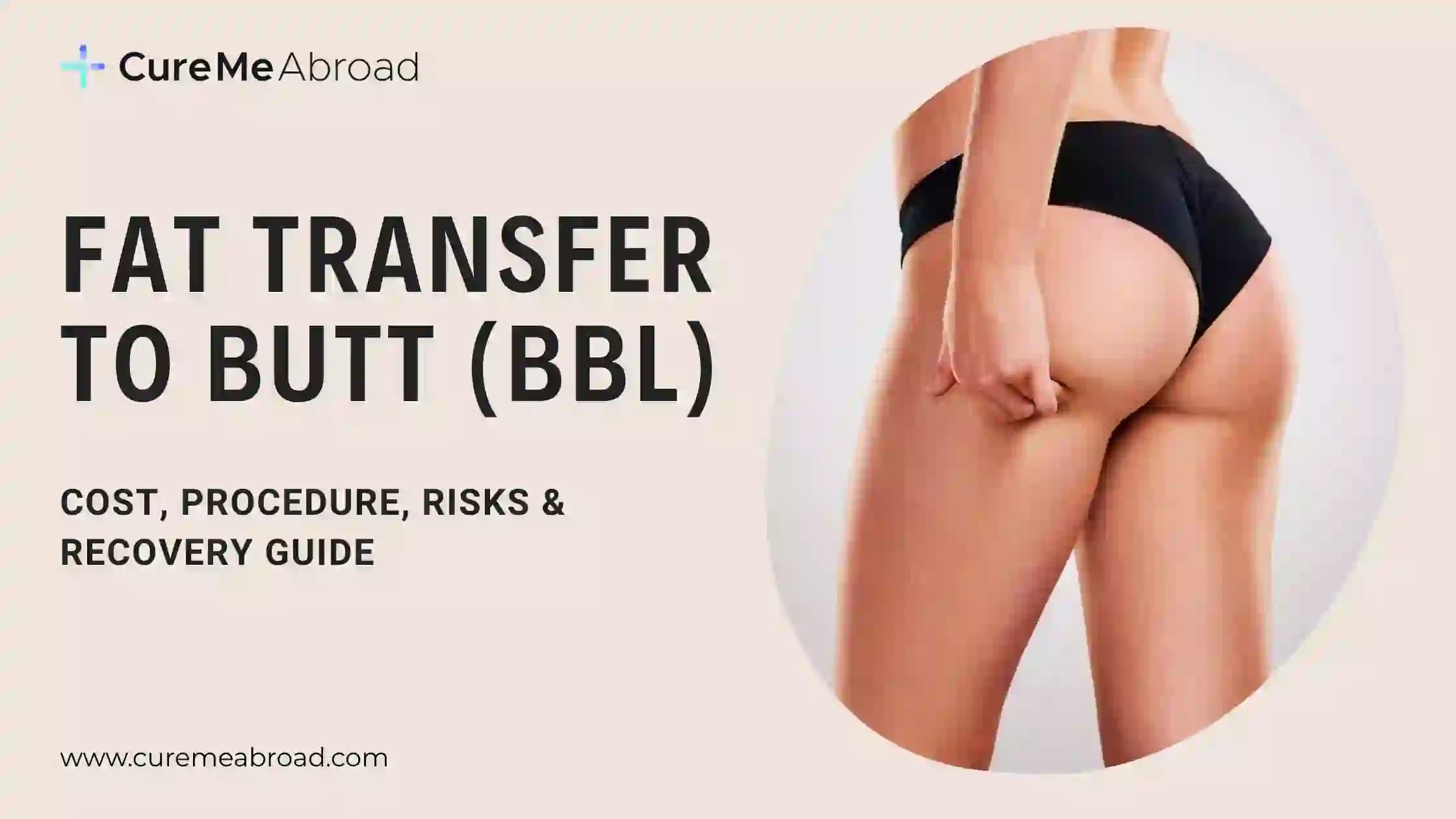
Fat transfer to the butt surgery, which is also referred to as the Brazilian Butt Lift (BBL) procedure, continues to be one of the top body shaping surgeries performed around the world in 2026. Many people researching the procedure often ask, “what does BBL mean?” BBL stands for Brazilian Butt Lift, a cosmetic surgery that enhances the shape and volume of the buttocks using the patient’s own body fat. In the fat transfer to butt surgery process, fat cells are removed from different parts of the body, such as the abdomen, sides, or legs, and injected into the buttocks to achieve a perfect shape. Unlike silicone implants, fat transfer to the butt offers a very realistic appearance since the augmentation substance used is organic.
In the past ten years, there has been a notable enhancement in fat transfer to butt surgery safety practices.
According to statistics, bum fat transfer surgery is relatively safer today, provided that it is conducted by qualified plastic surgeons using subcutaneous injection procedures. Continue reading to learn more about fat transfer to buttocks in 2026.
What Is Fat Transfer to the Butt (BBL)?
Fat transfer to the butt is an operation performed in two stages. First, the surgeon performs liposuction and takes fat deposits from different parts of the body, like the abdomen, back of the waist, flanks, inner thigh area, and arms. Next, the fat deposits extracted in the process are purified by either centrifugation or filtration and injected back into the gluteal region to provide the required shape and volume.
Thus, fat transfer to the butt provides a double effect since the recipient site becomes more voluminous while the donor area is toned and slimmed down. It explains why this method became so popular among patients. Bum fat transfer surgery allows them not only to reshape their buttocks but to distribute their body fat in a way that will make their figure more proportional.
It is necessary to mention that fat transfer to the butt is not a method for reducing the patient's weight. Thus, to undergo fat transfer to the butt, one needs to have extra fat tissue to be harvested, usually 1,000 - 1,500 ml. Moreover, a patient should not be overweight, meaning that he or she needs to be at the desirable weight.
Who Makes a Good Candidate for Fat Transfer to the Buttocks?
Not all patients interested in butt augmentation are good candidates for fat transfer to the butt. Several clinical and personal factors determine whether an individual qualifies for fat transfer to the buttocks.
These include the following:
- The individual should be healthy with no medical condition that cannot be managed, including diabetes
- The individual has realistic goals regarding what changes can be made with fat transfer to the buttocks
- The individual has sufficient fat for harvesting
- The individual does not smoke cigarettes or is ready to quit at least six weeks before and after the treatment
- The individual is within the weight bracket, preferably at least ten or fifteen pounds from the target weight
- The individual is not expecting or planning on pregnancy for up to twelve to eighteen months after the procedure
Those patients with exceptionally low body fat percentages or a previous history of significant liposuction may lack sufficient donor fat tissue required for fat transfer to the butt. For this reason, a common suggestion by most cosmetic surgeons is that the patient should undergo a combination procedure using a smaller butt implant alongside fat grafting.
Fat Transfer to the Butt - The Surgical Procedure In 2026
A lot has changed over the years regarding the techniques utilized during fat transfer to butt surgeries. The primary recommendation involved the fact that the cause of almost all the deaths associated with bum fat transfer was fat embolism. It occurred after fat got into the gluteal vasculature as a result of fat injection in the deep muscle layer. Therefore, in 2026, it is widely accepted among plastic surgeons that fat injection be limited only to the subcutaneous layer.
The steps involved in a normal bum fat transfer surgery include the following:
- Administration of anesthesia - general anesthesia or, in some instances, deep sedation along with local anesthesia in case of large quantities of liposuction.
- Liposuction - infiltration of tumescent fluid into donor sites and fat harvesting using small cannulas via inconspicuous incisions.
- Preparation of fat graft - the fat extracted from the liposuction process undergoes a centrifugation/ filtration process where only fat cells are separated from blood/oil/cellular matter.
- Fat grafting - injection of fat cells into gluteal muscle tissue using blunt cannulas in several small injections to ensure greater surface area.
- Wound closure - incision points are closed via stitches and application of compression garments
The time required for completion of fat transfer to butt surgery usually ranges from 2.5 to 4.5 hours.
How Much Transferred Fat is Retained?
Perhaps the question most frequently asked by patients contemplating a buttock fat graft is what percentage of transferred fat will be retained. The straightforward answer is that fat retention varies depending on technique, individual physiology, and post-procedure conduct, but can generally be estimated at 60% to 80% under optimal circumstances.
Immediately after surgery, a certain amount of fat resorption may be considered normal. The body will treat transplanted fat similarly to any type of graft, which means that it must revascularize in order to survive. If the fat cells are unable to revascularize, they will simply be absorbed over time following surgery.
Various elements affect the quantity of fat that survives during fat transfer to butt surgery:
- Fat injection technique: The small amount of injected fat will survive better than fat delivered in larger quantities
- No pressure on the buttocks: Sitting or lying on the fat transferred area within the first four to six weeks will pressurize the grafted fat before vascularization takes place
- Weight stability: Any significant weight loss post-fat transfer to the butt surgery will make the grafted fat shrink like any other natural fat tissue
- Recipient site blood flow: Previous surgeries or scars may decrease the blood flow capability at the recipient site
- Patient’s age and health: Young patients with good blood flow usually have higher fat survival percentages
As some degree of fat absorption is normal, most surgeons use overcorrection techniques in fat transfer to butt surgery. They inject slightly more fat than needed to compensate for fat absorption.
Fat Transfer to the Butt : Recovery Process
The recovery process after bum fat transfer is among the hardest parts of the procedure since patients are expected to avoid putting any pressure on their buttocks for a long period of time. It is not recommended just to make the patient feel comfortable; rather, this practice is required to ensure that nothing goes wrong during the recovery process. Sitting on the grafted part causes pressure and limits access to nutrients for the cells of the newly grafted tissue.
A special BBL pillow is usually provided by doctors to those patients who need to be able to sit without affecting the newly grafted tissue. Avoiding sitting is crucial in obtaining good results after a fat transfer procedure.
The average recovery period for bum fat transfer surgery is as follows:
- Weeks 1-2: Considerable swelling and bruising after fat transfer on both the donor site and recipient site. Compression garments should be worn at all times. Patients will likely require help in performing their daily activities. Drains are sometimes placed in case of liposuction with high-volume removal.
- Weeks 3-4: Swelling starts to decrease. Patients can get back to light work at their desks. No sitting restrictions apply. Patients will have increased energy but will not be able to perform physically demanding activities.
- Weeks 5-6: Most patients will have been allowed to sit gently using the BBL pillow. The final results start showing up after swelling subsides. Walking and light daily activities can now be performed.
- Months 2-3: Final shape starts to show. Swelling will continue to decrease. Light activities like walking are allowed during weeks 6-8.
- Months 3-6: Fat transfer to the butt surgery final results start showing after grafted fat stabilizes, and swelling has completely subsided. Physical activities involving lower-body workouts can be resumed after three months.
In recovery after buttock augmentation, compression clothing is used to reduce swelling and assist in the smooth contraction of the skin above the contoured area where the fat was extracted from. Doctors advise using them during the initial four weeks following surgery for about 22 to 24 hours a day.
Risks and Safety Issues in 2026
All surgical operations carry certain risks, including fat transfer to the buttocks. It is imperative that all possible risks are disclosed by the surgeon during the consultation, in order for the patient to give their informed consent.
The major risk factor involved in the fat transfer to the buttocks has always been the possibility of a fat embolism - a phenomenon wherein fat is introduced into the bloodstream and carried to other parts of the body, such as the lungs. This issue has been addressed through the use of the subcutaneous-only method, but it persists in some cases due to poorly trained doctors who perform the procedure in unaccredited facilities.
Additional dangers of fat transfer for butt augmentation include the following:
- Asymmetry: Fat differences in survival between two sides might cause an asymmetrical appearance of the buttocks, which would need revision
- Irregular contour: Presence of lumps, depressions, or unevenness on the donor or receiving area
- Seroma or Hematoma: Accumulation of liquid and blood under the skin, especially prevalent in areas of liposuction
- Infection: As with any other operation, it carries the risk of infection and is treated with preventive antibiotics
- Scar formation: Small scars in the area where liposuction is performed, usually unnoticeable and healing well over time
- Fat necrosis: The fat cells that die off might become hard or turn into liquid, rarely leading to complications
- Skin alteration: Temporary and permanent sensation change on donor areas of the body.
The best step one can take to ensure safety in the procedure is to consult only board-certified plastic surgeons working in approved facilities. Most of the complications and even deaths caused by the surgery were related to operations carried out in unapproved establishments or by professionals lacking appropriate skills in understanding gluteal anatomy.
Fat Transfer to Buttocks Surgery Costs in 2026
The price of a fat transfer to the buttocks can vary based on the skill of the surgeon, geographical location, amount of liposuction needed, and facility fees. For a full-fat transfer to buttocks procedure performed by a board-certified plastic surgeon in an urban area in the USA in 2026, the all-in price will range between $8,000-$16,000.
All-in prices usually include surgeon fees, anesthesia, facilities charges, compression clothes, and routine post-op follow-up appointments. It excludes any additional revisions, prescribed drugs, and travel or accommodation costs.
For procedures outside the USA, patients opt for countries such as Colombia, Mexico, Turkey, and Brazil, where surgery is about 30-60% cheaper. There are associated risks when opting for medical tourism for fat transfer to the buttocks. It includes limited post-surgery care, varying certification standards, and travel difficulties during recovery.
The following table gives a quick look at the average cost for the fat transfer to the butt surgery in different countries in 2026.
| Country | Average Cost (USD) |
|---|---|
| USA | $8,000 - $15,000 |
| UK | $7,000 - $12,000 |
| India | $3,000 - $5,500 |
| Mexico | $4,000 - $7,000 |
| Thailand | $3,500 - $6,500 |
| Turkey | $4,000 - $7,000 |
| Colombia | $3,800 - $6,500 |
| Brazil | $4,500 - $8,000 |
Results: What You Can Achieve With Fat Transfer to the Butt Surgery
If done by a skilled surgeon on the right candidate, fat transfer to the buttocks offers amazing and natural-looking improvements in the size, shape, and projection of the buttocks. However, unlike a non-invasive injectable treatment that can be reversed by simply dissolving its effects, fat transfer is irreversible yet not a permanent option for buttock enhancement compared to buttocks implants.
The reason is that since the fat tissue injected in the area is your own, it reacts similarly to other natural fat tissue and thus adjusts to drastic weight changes. This means that should you gain weight after surgery, the injected fat volume will grow. Conversely, losing weight causes the fat tissue to reduce in volume accordingly. Therefore, a stable weight is essential for maintaining the results of the fat transfer to the butt surgery.
For those who manage to keep their weight steady, following doctors' instructions post-operation, satisfaction levels regarding fat transfer to butt surgery tend to be very high after 1 year and even higher after 2 years.
Questions You Must Ask Your Surgeon
There are certain questions every patient should be able to ask their surgeon before committing to fat transfer to the butt surgery. This will give you a better idea as to whether or not the doctor or facility is right for you.
- Are you certified by the American Board of Plastic Surgery (national board)?
- How many fat transfer to butt procedures do you do per year?
- Do you use only subcutaneous injections? Tell me about your safety practices.
- What accreditation does your facility have?
- What is the revision rate of your fat transfer to butt procedure, and how does it work?
- Can I see some before-and-after pictures from patients similar in body type to myself?
- How much does my fat transfer to the butt procedure cost in total?
- What can I expect during each step of my recovery?
A surgeon who is able to answer these questions openly and honestly is a good thing. It shows that the doctor has nothing to hide and takes the process seriously.
The bum fat transfer process has been developed to the extent that it can now be regarded as a proven method which, if carried out properly, provides true transformation. The double benefit from the body shaping procedure by means of liposuction and enlargement of the buttocks with the help of natural fat injections has made fat transfer to the butt such an attractive option among other procedures.
As with all kinds of surgery, it requires some serious consideration. Choosing to get fat transferred to the butt means not only being fully aware of all possible risks but also preparing oneself to cope with them, being ready to recover for a longer period, knowing what the results can look like in reality, and most importantly, finding the right and experienced doctor.
Thus, if you are truly interested in the fat transfer to butt procedure, then your further steps should include scheduling consultations with at least two doctors who have received relevant board certification. You should evaluate their approaches and portfolios, take into account the safety standards observed during their practice, and determine whether you can trust yourself to them.
CureMeAbroad connects patients with trusted surgeons and cost-effective options for fat transfer to the butt, offering seamless medical travel support from consultation to recovery.
Frequently Asked Questions
What is fat transfer to the butt?
Fat transfer to the butt is a type of treatment that makes use of fat extracted from one’s own body to make the butt more aesthetically pleasing.
How long do the results of fat transfer to the butt last?
Fat transfer to the butt lasts for many years, since some part of the transferred fat gets integrated into the buttocks permanently.
Is Fat Transfer to the butt Safe?
Fat transfer to the butt is relatively safe as long as the treatment is carried out by a well-experienced surgeon.
How long is the recovery period after fat transfer to the butt?
The majority of people recover from this surgery after 2-3 weeks and enjoy their enhanced butt in about several months.
Who are the best candidates for fat transfer to the butt?
Those who have sufficient body fat and reasonable expectations can be considered good candidates for this procedure.
References
Güzey, S., & Şahin, A. E. (2024). Brazilian butt lift: An experience over 3000 patients. Aesthetic Plastic Surgery, 48(14), 2677-2693. https://doi.org/10.1007/s00266-024-03965-8
Bechar, J., Kidd, T., Chu, H., & Hardwicke, J. (2025). A systematic review and meta-analysis of autologous fat transfer: Fat transfer confers a 4.2% incidence of complications. Cureus, 17(11), e97063. https://doi.org/10.7759/cureus.97063
Cleveland Clinic. (2022). Brazilian butt lift: What to expect, surgery, recovery & risks. Retrieved 2026, from https://my.clevelandclinic.org/health/treatments/23308-brazilian-butt-lift
Elsaftawy, A., Bonczar, M., Jagosz, M., Bonczar, T., Stajniak, P., Główka, T., & Ostrowski, P. (2026). Gluteal augmentation with fat grafting: A systematic review and meta-analysis of complications and procedural factors. Plastic and Reconstructive Surgery, 157(3), 381e-393e. https://doi.org/10.1097/PRS.0000000000012437
American Society of Plastic Surgeons. (2022). Gluteal fat grafting: A joint safety statement. Retrieved 2026, from https://www.plasticsurgery.org/for-medical-professionals/publications/psn-extra/news/gluteal-fat-grafting-a-joint-safety-statement