

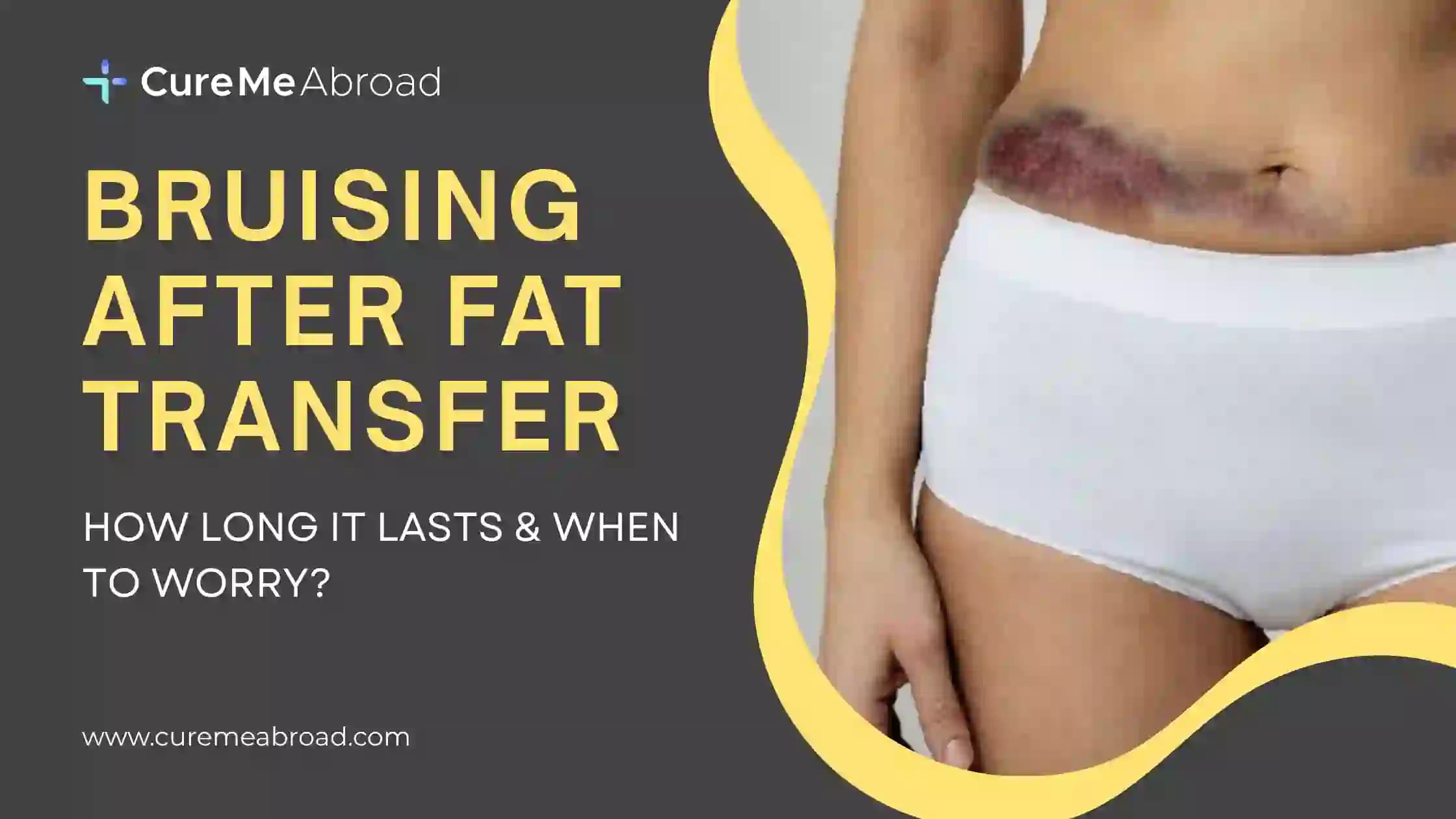
Bruising after fat transfer can be viewed as the most expected side effect that anyone will have after any form of autologous fat grafting treatment, which includes procedures like facial fat transfer, lip augmentation, breast augmentation, buttocks enhancement, and even hand fat transfer. It is hard to imagine finding someone who did not experience bruising at some point during the fat extraction and injection to other parts of the body process. If you understand the reason for these occurrences, the duration it takes to heal, and the time you should contact your doctor, your recuperation will go well.
This article will prepare you with all the necessary knowledge you require regarding the process, using medical facts about wounds, blood vessels, and surgery recovery.
What Causes Bruising After Fat Transfer?
In order to clarify how bruises occur during fat transfer, one must first understand what happens biologically when the bruising occurs. In performing a fat transfer procedure, two biological assaults are done to the body, which are the use of liposuction for fat extraction and the use of tiny needles for fat injection into the recipient area. This inevitably results in the destruction of capillaries as well as venules and leads to bleeding into the surrounding tissues.
Following this leakage of blood outside of the vessels, the pool of blood forms under the skin layer. Hemoglobin, the carrier of oxygen within red blood cells, starts to degenerate via a biochemical reaction that can be predicted. It is because of this degeneration that the colors visible after surgical procedures change with time, appearing as dark red, blue, green, and finally yellow.
The extent of the bruising after fat transfer varies depending on certain aspects such as skin color, amount of fat inserted into the body, techniques adopted by the doctor during the procedure, tendency to bruise easily, and consumption of anticoagulants prior to fat transfer surgery. Those who consume medicines such as aspirin, ibuprofen, fish oil, and vitamin E are easy victims of bruise formation.
How Long Does Bruising After Fat Transfer Last?
Most of the time, the bruises arising from fat transfer fade away with time, especially the ones that arise from the injection area. Bruises considered mild to moderate can be expected to heal within a span of two to three weeks. On the other hand, when the bruising happens on the donor area where liposuction has already taken place, then three to five weeks can be expected.
The amount of time required to recover varies from one individual to another. Some individuals may experience bruises that will start to fade away after ten days, while others might even be left with yellow bruises four to five weeks after the procedure, especially if they have light-colored skin. Nonetheless, these occurrences do not necessarily indicate any problem.
Different areas of the body heal at varying speeds when fat transfer is involved. Facial fat transfer, for example, results in noticeable bruising because of the thin nature of the skin in this area, but because of the abundant blood vessels in the face, the healing process usually takes less time than elsewhere on the body.
Bruising After Fat Transfer: Stage-by-Stage Colour Guide
The table below outlines the typical stages of bruising after fat transfer, with expected colours, underlying biological processes, and recommended actions at each stage.
| Stage | Timeframe | Colour | Action Required |
|---|---|---|---|
| Acute bruising | Days 1-3 | Deep red / purple | Rest, elevation, cold compresses (not on lips) |
| Early resolution | Days 4-7 | Purple to dark blue | Gentle activity only; continue elevation |
| Mid resolution | Days 7-14 | Green to yellow-green | Arnica gel, camouflage makeup is acceptable |
| Late resolution | Days 14-21 | Yellow to faint tan | Normal activity can resume; monitor for lingering firmness |
| Full resolution | Week 3-6 (most cases) | Skin tone returns to normal | Follow-up assessment with the surgeon if any induration remains |
| Prolonged bruising (flag) | Beyond 6 weeks | Persistent purple, brown, or expanding | Contact the surgeon immediately for evaluation |
Donor Site vs Recipient Site - What to Look Out For
Something that patients find quite surprising is that post-fat transfer bruising can be more pronounced at the donor site for the liposuction procedure than at the recipient site. This is largely due to the fact that even gentle liposuction with small cannulas causes more tissue disruption than the injection process.
Bruising at the donor site should involve:
- Considerable purplish-to-black bruising within the first three to five days
- Dark bruising accompanied by tenderness and tightness in the skin
- Possibility of bruising travelling downwards in a gravity-related direction; e.g., flank harvesting will result in bruising that travels to the hip/upper thigh region
- Complete fading of the bruising by weeks three to five in most instances
The recipient site (site of fat grafting) should involve:
- Localized bruising along with swelling at some sites
- Injury-related swelling, which can mask the bruises initially; the bruises becoming more evident once the swelling starts settling between days four and seven
- Quick bruise resolution in well-perfused areas like the face
- More persistent bruising in thick tissues
Factors That Influence How Long Bruising After Fat Transfer Lasts
Not all bruising associated with fat transfer procedures heals within the same timeframe. Multiple personal and procedure-related factors have a considerable impact:
Age
With older patients, bruising can be anticipated as a prolonged process due to thinning skin, fragile blood vessels, and reduced efficacy of the body's natural mechanism responsible for removing extravasated blood from tissues. Individuals aged above sixty years must be prepared for a bruising period longer than the average two to three weeks.
Medication and Supplements
Use of blood-thinning medication, such as prescription anticoagulants, NSAIDs, aspirin, fish oil, garlic, and vitamin E, can intensify both the severity and duration of bruising. Surgeons recommend stopping consumption of such drugs at least 10-14 days prior to the scheduled procedure.
Amount of Fat Grafted
The larger volume of transferred fat leads to a higher degree of tissue disruption. In comparison to the minor bruising expected from fat transfer to the face, Brazilian Butt Lift, with its massive volume of injected fat, results in significant bruising.
Surgical Technique
Surgeons working with advanced cannulae, suctioning fat under pressure, and utilizing gentle techniques minimize the amount of damage done to blood vessels. The surgical technique plays a crucial role here.
When to Seek Help: Symptoms of Complications Post-Fat Grafting
This is one of the most important parts of this article. Although some bruising is considered common after fat grafting surgery, there are certain cases where the presence of bruises is accompanied by other signs that point to a problem, necessitating the need for further treatment. Seek advice from your plastic surgeon or go to the emergency room if you notice any of these:
- Increasing bruise: This is evident by an increased size of the bruised area beyond 48 hours after fat grafting. Hematomas are a build-up of blood and usually feel hard and tender.
- Presence of fever and signs of heat: Presence of heat around the bruised area and fever above 38°C is an indication of an infection or inflammation.
- Decreased circulation: The formation of blisters, skin discoloration, loss of feeling in the skin, and skin breakdown.
- Unresolved bruising lasting six weeks: Any sort of unresolved bruising that lasts more than six weeks after a fat transfer procedure can mean fat necrosis or calcification. In such a case, you should consult a surgeon about it.
- Sudden onset of bruising despite having healed: If your bruises occur suddenly, without any cause, for example, getting injured after one week from surgery, this could be a sign of a late-onset hemorrhage and must be immediately brought to your surgeon’s notice.
To summarize, most bruises after a fat transfer operation are nothing out of the ordinary. Yet, knowing when to seek treatment can mean better chances of success.
Measures for Minimizing Bruising After Fat Transfer Procedures
Although some bruising after a fat transfer procedure cannot be avoided, there are scientifically sound measures one can adopt in order to mitigate the problem:
- Arnica montana: This can be taken in either tablet form or gel form. It can shorten the healing period in post-operative patients. The gel can be applied to the bruised areas of skin after day three.
- Elevation: Elevating the part of the body that was operated on by raising it up above the heart level for the first 48-72 hours is advisable in order to prevent fluid accumulation and vascular pressure.
- Cold compresses: For the first 24 to 48 hours after the procedure, cold application helps to reduce bleeding and swelling of the tissues. The ice pack must be wrapped in a cloth and not placed directly on the skin; do not use it if the area around the mouth and face is numb after surgery.
- Barring heat: Avoid hot showers, saunas, steam baths, and sunlight on bruised skin for at least three weeks.
What Are the Rules About Going Back to Your Regular Life?
Reverting back to your daily routine amidst the experience of bruising when fat transfer is concerned involves the need to balance activities because even though the fat cells are being grafted into the body, they are still trying to establish their own circulation. Physical activities can interfere with their survival and result in further bruising.
Basic rules to observe after having a fat transfer done:
- Light walking from the second to the third day to minimize clots
- Going back to desk work or other jobs that don’t involve physical labor, at about one to two weeks
- Staying away from gym exercise, jogging, cycling, and lifting objects for about three to four weeks
- Sexual intercourse must be cleared with your surgeon, depending on where you underwent fat transfer
- Wearing compression garments on the site where the fat is harvested from for about four to six weeks to help avoid bruises and swelling
- Camouflage makeup can now be used on the areas with bruised facial tissues from about the fifth to seventh days if the entry points in your skin have already healed
Bruising caused by the fat transfer surgery doesn't mean that anything went wrong. It is simply a result of the surgical procedure, which proves that your body is already starting to remodel the grafted tissues. Adhering strictly to all the recommendations concerning post-surgical recovery, you can expect bruises to fade away completely after two to four weeks, thus providing an opportunity to see your desired results of the fat grafting.
It is crucial to keep in mind that you may have some side effects of the procedure and not be in a hurry to compare your experiences with those that other patients have posted on the Internet. Bruising after fat transfer looks different on every patient, and your body's pace of healing is its own. Be patient and rely on your surgeon's expertise and recommendations.
At CureMeAbroad, patients receive guidance in choosing experienced surgeons and verified clinics, along with recovery support to help manage concerns like bruising after fat transfer.
Frequently Asked Questions
Is bruising after fat transfer normal?
The answer is yes, since there is some amount of bleeding in the process of fat harvesting as well as injection.
How long does bruising after fat transfer last?
In most cases, bruises will disappear after 7-14 days, but some mild color changes will last for several weeks.
Why do I get bruised after fat transfer?
Fat transfer causes bruises due to bleeding that occurs during liposuction and fat injection.
Can I avoid bruising after fat transfer?
There are certain ways to reduce bruising, such as cold compresses, elevation, avoiding blood thinners, etc.
When should I be concerned about bruises after fat transfer?
If there is severe pain or no improvement after two to three weeks, you need to contact your plastic surgeon immediately.
References
Cleveland Clinic. (2026). Fat transfer: Surgeries, results, risks & what to expect. Retrieved April 6, 2026, from https://my.clevelandclinic.org
RealSelf. (2026). Facial fat transfer recovery. Retrieved April 6, 2026, from https://www.realself.com
RealSelf. (2026). How long does bruising last after facial fat transfer? Retrieved April 6, 2026, from https://www.realself.com
Healthline. (2026). Liposuction recovery and bruising. Retrieved April 6, 2026, from https://www.healthline.com