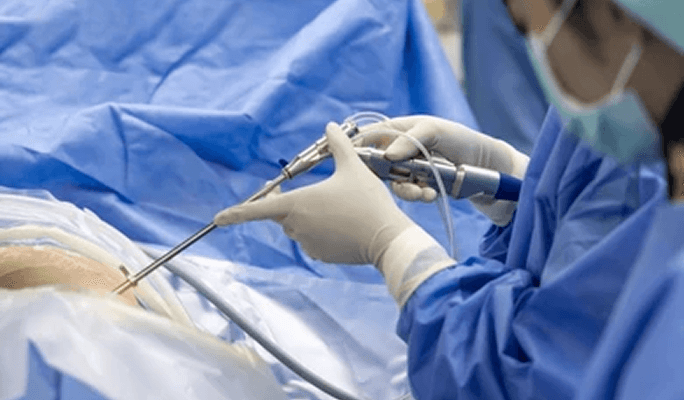
Discectomy
Discectomy removes disc material that has shifted out of place and is pushing into a spinal nerve. Running down the back is a column of small bones, each pair cushioned by a disc that sits between them. That disc has a firm outer wall and a softer filling, and it handles the force the spine absorbs during movement. When the outer wall cracks, through slow degeneration or one bad movement, the filling inside escapes through it. If it comes to rest against a nerve root, that nerve starts sending out the wrong signals. Pain runs along its course, usually down one leg when the lower back is the problem, or down the arm when the affected disc is in the neck. Numbness, tingling, and weakness in that limb tend to show up alongside it. Physiotherapy, anti-inflammatory tablets, nerve pain medication, and spinal injections are the steps that come before any surgical discussion. By the time an operation is being considered, the patient has usually spent months working through all of that. When it still hasn’t been enough, the surgeon sits with the imaging and the patient's history to decide whether going ahead makes clinical sense. Plenty of people reach that point and start thinking seriously about discectomy abroad as a way forward. CureMeAbroad is there for that search, bringing spine hospitals and surgeons from multiple countries into one place, with costs and accreditation information presented together.
Overview
Discectomy removes disc material that has shifted out of place and is pushing into a spinal nerve. Running down the back is a column of small bones, each pair cushioned by a disc that sits between them. That disc has a firm outer wall and a softer filling, and it handles the force the spine absorbs during movement. When the outer wall cracks, through slow degeneration or one bad movement, the filling inside escapes through it. If it comes to rest against a nerve root, that nerve starts sending out the wrong signals. Pain runs along its course, usually down one leg when the lower back is the problem, or down the arm when the affected disc is in the neck. Numbness, tingling, and weakness in that limb tend to show up alongside it. Physiotherapy, anti-inflammatory tablets, nerve pain medication, and spinal injections are the steps that come before any surgical discussion. By the time an operation is being considered, the patient has usually spent months working through all of that. When it still hasn’t been enough, the surgeon sits with the imaging and the patient's history to decide whether going ahead makes clinical sense. Plenty of people reach that point and start thinking seriously about discectomy abroad as a way forward. CureMeAbroad is there for that search, bringing spine hospitals and surgeons from multiple countries into one place, with costs and accreditation information presented together.
Procedure Time
1-2 hours covers most single-level cases. Add more time for operations on more than one disc level or for anatomy that makes the technical side of things harder.
Recovery Period
Walking the day after surgery is the norm for most patients. Getting back behind a desk usually takes a few weeks
Expected Results
Pain travelling down the leg or arm because a nerve is being squeezed is the symptom discectomy addresses most directly, and it tends to respond well.
Ideal Candidates
Someone with a structural disc problem confirmed on imaging, symptoms that line up with what the imaging shows, and a proper course of conservative treatment behind them that hasn’t worked is the right candidate for this procedure.
Affordable Care | Transparent Costs | Expert Guidance
Get best price with CureMeAbroad
Things to Check for Discectomy Abroad
- Put together a complete written list of every medication currently being taken and get it to the surgical team before any date is set. Blood thinners, anti-inflammatory tablets, and several supplements interfere with how the blood clots. Stopping them has to be done at the right time and with clinical guidance.
- Before any scans are booked, let the hospital know about every piece of metal hardware or implanted device in the body. Hip or knee replacements, old spinal metalwork, pacemakers, and similar devices change which imaging options the team can safely use.
- When surgery is being arranged at a hospital in another country, get a second specialist to look at the diagnosis and the proposed treatment plan independently. Surgeons can read the same images differently, and the plan on the table may not be the only reasonable one.
- Before putting a signature on consent paperwork, ask the surgeon to explain clearly which technique they intend to use for this specific case and what the reasoning behind that choice is. Recovery from open surgery and recovery from a minimally invasive procedure follow different paths.
- Travel dates shouldn’t be confirmed until the hospital has provided a written post-operative care plan. That plan should spell out exactly what follow-up the hospital will provide and what falls to the patient to sort out once they are back at home.
Risks And Complications of Discectomy Abroad
- Wound infection can follow any spinal operation, whether the incision was large or small. A temperature, pain at the wound that is increasing rather than easing, swelling, or discharge appearing in the days after surgery should go straight to the clinical team, not to a pharmacy.
- Anesthesia doesn’t affect every patient the same way. Nausea and grogginess are common and settle quickly. Serious reactions, including cardiovascular events or severe allergic responses, are uncommon but real. The anesthesiologist needs a full and accurate medical history before the operation, not a partial one.
- Injury to the nerve root at the level being operated on isn’t common, but it is on the list of recognized complications. New numbness, reduced strength in the limb, or a change in the character of existing symptoms may point to this.
- Bleeding at the operative site can happen during surgery or shortly after. The team watches for it during recovery. In a small number of cases, addressing it means going back to the operating room, which can affect the final lumbar discectomy cost depending on the facility.
- Some patients develop scar tissue around the nerve root over the weeks and months following surgery, a condition called epidural fibrosis. For those already dealing with nerve pain after spinal surgery, the symptoms it produces can be difficult to distinguish from the original complaint.
Do’s
- ✓Verify surgeon credentials (e.g. ISAPS, JPRAS)
- ✓Ask for before-after photos
- ✓Check language barriers
- ✓Review aftercare and follow-up options
- ✓Consider local laws on medical malpractice
Don'ts
- ✗Don't Choose a Clinic Based Only on Price
- ✗Don't Rely Solely on Social Media or Influencers
- ✗Don't Ignore Language Barriers
- ✗Don't Rush Into Surgery Without Research
- ✗Don't Assume You Can Fly Back Immediately
Under Spine Care/Surgery
Loading...
CureMeAbroadIs Absolutely Free
Just discovery so you can choose what's right for you!


World's No. 1 Medical Discovery Platform
Discectomy
This procedure involves specific medical techniques tailored to address particular health conditions. Your doctor will explain the detailed process based on your case.
Discectomy
Eligibility depends on your medical history, current condition, and treatment goals. A consultation and evaluation will determine if you are a suitable candidate.
Discectomy
Preparation may include lab tests, imaging, medication adjustments, fasting, or lifestyle recommendations. Your healthcare provider will give you personalized instructions.
What does this procedure involve?
Discectomy
This procedure involves specific medical techniques tailored to address particular health conditions. Your doctor will explain the detailed process based on your case.