Sleeve Gastrectomy Abroad
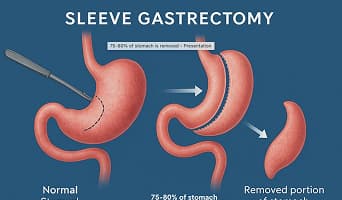
Surgeons remove 75-80 % of the stomach during sleeve gastrectomy. The tube-shaped section that stays behind fills up fast, holds a lot less food, and secretes less ghrelin, the hormone associated with hunger. For patients looking into sleeve gastrectomy abroad, hospitals in Asia, Eastern Europe, Latin America, and the Middle East carry out this operation regularly at costs that are often substantially lower than those charged by hospitals in the US or UK. Working through 4-5 small incisions, the surgical team operates laparoscopically under general anesthesia. The operation takes 60-90 minutes. The intestines are left completely alone, which is the fundamental difference from gastric bypass and the main reason recovery tends to go more smoothly. What is left of the stomach is about the size of a banana. It holds less, ghrelin output drops, and most patients see weight loss that sticks over time. VSG carries some of the highest case volumes of any weight loss surgery performed globally. Many patients choose sleeve gastrectomy abroad because the procedure is often available at a lower cost than in their home country. CureMeAbroad connects patients with accredited hospitals and verified bariatric surgeons across multiple countries so that options can be compared before any decision is reached.
Overview
Surgeons remove 75-80 % of the stomach during sleeve gastrectomy. The tube-shaped section that stays behind fills up fast, holds a lot less food, and secretes less ghrelin, the hormone associated with hunger. For patients looking into sleeve gastrectomy abroad, hospitals in Asia, Eastern Europe, Latin America, and the Middle East carry out this operation regularly at costs that are often substantially lower than those charged by hospitals in the US or UK. Working through 4-5 small incisions, the surgical team operates laparoscopically under general anesthesia. The operation takes 60-90 minutes. The intestines are left completely alone, which is the fundamental difference from gastric bypass and the main reason recovery tends to go more smoothly. What is left of the stomach is about the size of a banana. It holds less, ghrelin output drops, and most patients see weight loss that sticks over time. VSG carries some of the highest case volumes of any weight loss surgery performed globally. Many patients choose sleeve gastrectomy abroad because the procedure is often available at a lower cost than in their home country. CureMeAbroad connects patients with accredited hospitals and verified bariatric surgeons across multiple countries so that options can be compared before any decision is reached.
Procedure Time
The sleeve gastrectomy surgery typically takes between 60 and 90 minutes. It's performed laparoscopically through small incisions, with the patient under general anesthesia throughout.
Recovery Period
Most patients are discharged after spending 1-3 days in the hospital. For those traveling abroad for the procedure, surgeons generally advise remaining close to the treatment center for around 7-10 days, allowing the initial recovery phase to be monitored before making the journey home.
Expected Results
About 75-80% of the stomach is removed, leaving behind a smaller pouch that fills more quickly and produces lower levels of the hunger hormone. This naturally leads to reduced portion sizes, and patients who stick to the recommended dietary and lifestyle changes following surgery tend to see considerable, lasting weight loss.
Ideal Candidates
Sleeve gastrectomy is generally recommended for individuals with a BMI of 40 or above or 35 and above for those already living with conditions such as type 2 diabetes, high blood pressure, or sleep apnea. It's best suited to patients who are genuinely prepared to make long-term changes to their eating habits and commit to ongoing follow-up care.
Affordable Care | Transparent Costs | Expert Guidance
Get best price with CureMeAbroad
Things to Check for Sleeve Gastrectomy Abroad
- Nailing down hospital accreditation comes first. JCI or a nationally recognised equivalent is the floor, not the ceiling.
- Qualification questions go to the operating surgeon, not the coordinator. Board certification, professional registration, and personal sleeve gastrectomy case numbers should all come from the surgeon directly.
- Get every cost in writing and broken out separately. Pre-operative tests, anesthesia, ward stay, and follow-up visits each need their own line item to arrive at the real gastric sleeve cost.
- Post-discharge support for international patients needs written confirmation from the hospital. What a coordinator says over a call carries no clinical weight.
- The facility's written protocol for managing complications after surgery should be read before anything is signed.
- Medical visa requirements for the destination country must be checked before booking flights. Travel dates are built around the recovery window, not convenience.
- Confirm whether a bariatric dietitian is part of the program. Post-surgical nutrition is part of the medical treatment, not an optional extra.
Risks And Complications of Sleeve Gastrectomy Abroad
- A staple line leak spills stomach contents into the abdominal cavity. This is a surgical emergency requiring immediate operative intervention.
- Staple line bleeding can show up during or after the procedure and may send the patient back to the theater.
- Some patients develop a narrowing of the gastric sleeve in the months after surgery. This stenosis tends to present as ongoing vomiting and problems keeping food down.
- Reflux is a recognized complication. Existing GERD can worsen, and patients with no prior history can develop it following sleeve stomach surgery.
- Bariatric patients face a higher baseline risk of deep vein thrombosis and pulmonary embolism compared to the broader surgical population. Standard post-operative anticoagulation needs active clinical management.
- Without regular supplementation and blood tests, iron, vitamin B12, and vitamin D levels fall over time.
- Complications arising after the patient returns home require two clinical teams to coordinate. That arrangement must be in place before departure, not after a problem surfaces.
Do’s
- ✓Verify surgeon credentials (e.g. ISAPS, JPRAS)
- ✓Ask for before-after photos
- ✓Check language barriers
- ✓Review aftercare and follow-up options
- ✓Consider local laws on medical malpractice
Don'ts
- ✗Don't Choose a Clinic Based Only on Price
- ✗Don't Rely Solely on Social Media or Influencers
- ✗Don't Ignore Language Barriers
- ✗Don't Rush Into Surgery Without Research
- ✗Don't Assume You Can Fly Back Immediately
Under Obesity/Bariatric Surgery
Loading...
CureMeAbroadIs Absolutely Free
Just discovery so you can choose what's right for you!


World's No. 1 Medical Discovery Platform
Sleeve Gastrectomy
This procedure involves specific medical techniques tailored to address particular health conditions. Your doctor will explain the detailed process based on your case.
Sleeve Gastrectomy
Eligibility depends on your medical history, current condition, and treatment goals. A consultation and evaluation will determine if you are a suitable candidate.
Sleeve Gastrectomy
Preparation may include lab tests, imaging, medication adjustments, fasting, or lifestyle recommendations. Your healthcare provider will give you personalized instructions.
What does this procedure involve?
Sleeve Gastrectomy
This procedure involves specific medical techniques tailored to address particular health conditions. Your doctor will explain the detailed process based on your case.