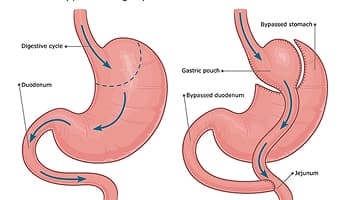
Gastric Bypass Revision
Gastric bypass revision is performed when a previous Roux-en-Y gastric bypass no longer delivers adequate weight loss, weight regain occurs, or complications develop. It is more complex than primary bariatric surgery due to scar tissue and anatomical changes from the first operation. Patients considering gastric bypass revision abroad should confirm the hospital has dedicated revisional bariatric experience and recognized accreditation A Roux-en-Y gastric bypass can stop working as intended years after it was performed. Pouch enlargement, a wider gastrojejunal junction, weight that has returned in spite of dietary effort, and nutritional deficiencies that supplements can no longer control are the situations that make revision necessary. The operation works on whatever the diagnostic assessment has found to be the problem, at the pouch, the bowel junction, or both. Scar tissue and adhesions left over from the first surgery are already in the abdomen when the revision takes place. They make the procedure harder to complete than the original operation was. Before any surgical plan is put forward, a bariatric specialist looks at each patient's findings on their own terms. For patients considering gastric bypass revision abroad, choosing a facility with a dedicated revision bariatric program and verified accreditation is an important first step before any consultation is arranged. CureMeAbroad allows patients to search and compare accredited hospitals and bariatric specialists across multiple countries in one place.
Overview
Gastric bypass revision is performed when a previous Roux-en-Y gastric bypass no longer delivers adequate weight loss, weight regain occurs, or complications develop. It is more complex than primary bariatric surgery due to scar tissue and anatomical changes from the first operation. Patients considering gastric bypass revision abroad should confirm the hospital has dedicated revisional bariatric experience and recognized accreditation A Roux-en-Y gastric bypass can stop working as intended years after it was performed. Pouch enlargement, a wider gastrojejunal junction, weight that has returned in spite of dietary effort, and nutritional deficiencies that supplements can no longer control are the situations that make revision necessary. The operation works on whatever the diagnostic assessment has found to be the problem, at the pouch, the bowel junction, or both. Scar tissue and adhesions left over from the first surgery are already in the abdomen when the revision takes place. They make the procedure harder to complete than the original operation was. Before any surgical plan is put forward, a bariatric specialist looks at each patient's findings on their own terms. For patients considering gastric bypass revision abroad, choosing a facility with a dedicated revision bariatric program and verified accreditation is an important first step before any consultation is arranged. CureMeAbroad allows patients to search and compare accredited hospitals and bariatric specialists across multiple countries in one place.
Procedure Time
Gastric bypass revision surgery typically takes 2-5 hours, although the exact duration depends on what needs to be corrected. Scar tissue and adhesions from the original surgery often make the procedure more complex than a first-time gastric bypass.
Recovery Period
Most patients spend 2-4 days in the hospital after surgery. Surgical teams generally recommend staying in the country for 7-14 days afterward before flying home.
Expected Results
Outcomes depend on what was driving the need for revision in the first place, whether that's pouch enlargement, a widened bowel junction, or weight regain despite dietary effort. Endoscopic options can sometimes correct a stretched pouch without full surgery, while more complex cases require a revisional bypass.
Ideal Candidates
Patients whose original Roux-en-Y gastric bypass has stopped delivering adequate weight loss, who've regained weight despite following dietary guidance, or who have nutritional deficiencies no longer controlled by supplements are typically considered. A clear diagnostic reason for why the first operation failed is established before any revision is agreed to.
Affordable Care | Transparent Costs | Expert Guidance
Get best price with CureMeAbroad
Things to Check for Gastric Bypass Revision Abroad
- Find out whether revision bariatric surgery is a regular feature of what the hospital does, not something carried out on an ad hoc basis.
- Ask the surgeon to be specific about how many revisions they do each year and what training they have that is directly relevant to this type of work.
- Look at what accreditation the hospital holds. JCI and ISO certification are the standards most widely used internationally to assess the quality of clinical facilities.
- Before committing, request a written breakdown of the revision bariatric operation cost covering investigations, surgery, admission, and post-operative appointments as individual items.
- Check that discharge paperwork and clinical notes will be written in a language the patient and their home doctor can both read and use.
- Ask what dietary input and nutritional monitoring patients receive during the recovery period while still admitted.
- Before traveling for gastric bypass revision abroad, find out what steps the hospital takes when a patient who has gone home raises a concern about a post-operative problem.
Risks And Complications of Gastric Bypass Revision Abroad
- Leaks at bowel connections occur more often after revision than after a first procedure, as surrounding tissue was already altered during the original surgery.
- Bleeding during or after surgery can require transfusion or a further operation to bring under control.
- Revision further reduces nutrient absorption, making iron, vitamin B12, calcium, and vitamin D deficiencies harder to prevent and manage than after the original bypass.
- The bowel junction can narrow in the weeks after surgery and usually needs endoscopic treatment to open it.
- Adhesions already in place from the first operation make bowel obstruction more likely to occur during or after revision surgery.
- Dumping syndrome often doesn’t go away after revision and can worsen, with nausea, cramping, and loose stools appearing in response to eating.
- Flying long distances too soon after the operation raises the risk of clots forming in the legs or lungs.
- If a complication develops after returning home, managing it is harder when the treating team is abroad. This is worth keeping in mind before pursuing gastric bypass revision abroad after a failed bypass procedure.
Do’s
- ✓Verify surgeon credentials (e.g. ISAPS, JPRAS)
- ✓Ask for before-after photos
- ✓Check language barriers
- ✓Review aftercare and follow-up options
- ✓Consider local laws on medical malpractice
Don'ts
- ✗Don't Choose a Clinic Based Only on Price
- ✗Don't Rely Solely on Social Media or Influencers
- ✗Don't Ignore Language Barriers
- ✗Don't Rush Into Surgery Without Research
- ✗Don't Assume You Can Fly Back Immediately
Under Obesity/Bariatric Surgery
Loading...
CureMeAbroadIs Absolutely Free
Just discovery so you can choose what's right for you!


World's No. 1 Medical Discovery Platform
Gastric Bypass Revision
This procedure involves specific medical techniques tailored to address particular health conditions. Your doctor will explain the detailed process based on your case.
Gastric Bypass Revision
Eligibility depends on your medical history, current condition, and treatment goals. A consultation and evaluation will determine if you are a suitable candidate.
Gastric Bypass Revision
Preparation may include lab tests, imaging, medication adjustments, fasting, or lifestyle recommendations. Your healthcare provider will give you personalized instructions.
What does this procedure involve?
Gastric Bypass Revision
This procedure involves specific medical techniques tailored to address particular health conditions. Your doctor will explain the detailed process based on your case.