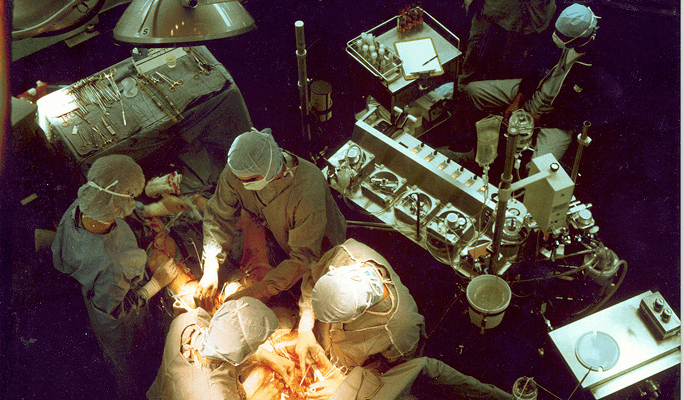
CABG (Coronary Artery Bypass Surgery)
Coronary arteries are small vessels that wrap around the outside of the heart and deliver oxygenated blood directly into its muscle. Without that supply, the muscle weakens and parts of it can die. The problem starts with plaque. Fatty deposits collect on the inner walls of these arteries over years, sometimes decades. The opening gets smaller, blood moves through more slowly, and the heart muscle it feeds begins to struggle. Symptoms aren’t the same in every patient. Some feel chest tightness during physical effort. Others have pain sitting still. A number have already had a heart attack before anyone puts a name to what is happening. In every case the artery is where the problem lives. Medication keeps symptoms under control and slows things down. It doesn’t clear a blocked vessel. A stent can open one up, but not in every patient and not for every type of blockage. When several arteries are involved, or when the anatomy simply doesn’t suit a stent, surgery is the option that remains. CABG gets to the root of it. A healthy vessel taken from the chest wall, inner leg, or forearm gets attached to the heart above and below the blockage. Blood takes this new path. The diseased section gets bypassed entirely. Hospitals across Asia, Europe, and the Middle East hold full international accreditation and carry out this operation at costs well below what patients face at home. That cost difference is what turns CABG (Coronary Artery Bypass Surgery) abroad from something patients consider into something they actually pursue. CureMeAbroad helps patients find accredited hospitals and experienced cardiac surgeons across multiple countries.
Overview
Coronary arteries are small vessels that wrap around the outside of the heart and deliver oxygenated blood directly into its muscle. Without that supply, the muscle weakens and parts of it can die. The problem starts with plaque. Fatty deposits collect on the inner walls of these arteries over years, sometimes decades. The opening gets smaller, blood moves through more slowly, and the heart muscle it feeds begins to struggle. Symptoms aren’t the same in every patient. Some feel chest tightness during physical effort. Others have pain sitting still. A number have already had a heart attack before anyone puts a name to what is happening. In every case the artery is where the problem lives. Medication keeps symptoms under control and slows things down. It doesn’t clear a blocked vessel. A stent can open one up, but not in every patient and not for every type of blockage. When several arteries are involved, or when the anatomy simply doesn’t suit a stent, surgery is the option that remains. CABG gets to the root of it. A healthy vessel taken from the chest wall, inner leg, or forearm gets attached to the heart above and below the blockage. Blood takes this new path. The diseased section gets bypassed entirely. Hospitals across Asia, Europe, and the Middle East hold full international accreditation and carry out this operation at costs well below what patients face at home. That cost difference is what turns CABG (Coronary Artery Bypass Surgery) abroad from something patients consider into something they actually pursue. CureMeAbroad helps patients find accredited hospitals and experienced cardiac surgeons across multiple countries.
Procedure Time
4-6 hours covers most cases. Anyone looking into coronary artery bypass abroad should factor in additional time if multiple grafts are needed.
Recovery Period
Normal daily activity returns within 2-4 weeks for the majority of patients while internal healing takes months.
Expected Results
Most patients see a considerable drop in chest pain and breathlessness following successful surgery. This outcome holds consistently across accredited centers, which is one reason bypass surgery cost abroad is weighed seriously by patients who need the procedure but face high costs or long waits at home.
Ideal Candidates
Adults with severe multi-vessel coronary disease, and those for whom medication or stenting hasn’t worked well enough. Many end up exploring CABG (Coronary Artery Bypass Surgery) abroad simply because what is available at home has either failed them or is out of reach.
Affordable Care | Transparent Costs | Expert Guidance
Get best price with CureMeAbroad
Things to Check for CABG (Coronary Artery Bypass Surgery) Abroad
- Choosing the right facility for CABG operation abroad takes more than a cost comparison. The following points cover what actually matters when evaluating hospitals and surgeons in another country.
- Hospital accreditation is the first thing to verify. JCI certification or a recognised national equivalent sets the minimum standard. Don’t move past this step until it is confirmed.
- CABG-specific surgical experience matters more than general cardiac credentials. Ask how many of these procedures the surgeon performs each year.
- Not every hospital with a cardiac surgery program has a dedicated cardiac ICU. Ask directly and a general recovery ward isn’t a substitute.
- Before agreeing to anything, get the full cost in writing. The estimate should cover the procedure itself, anesthesia, the entire inpatient stay, and every follow-up appointment. Open heart bypass cost varies between countries and facilities, and written confirmation removes any ambiguity later
- Post-discharge complications happen. What does this hospital do when a patient calls from another country with a problem? Get a straight answer to that question.
Risks And Complications of CABG (Coronary Artery Bypass Surgery) Abroad
- Blood loss is an inherent part of open-heart surgery. Some patients need a transfusion during or after the operation.
- Infection can develop at the chest incision or at the point where the graft vessel was removed. Patients with poorly controlled diabetes or reduced immune function are at higher risk.
- Irregular heartbeat in the first few days after surgery is something the majority of CABG patients experience to some degree. Medication manages it in most cases
- Stroke occurs in a small proportion of patients. It is most commonly linked to clot activity or hemodynamic changes that arise during surgery.
- Kidney output drops temporarily in some patients after major cardiac surgery. This is more pronounced in patients with pre-existing renal disease.
- Short-term cognitive problems, difficulty remembering things and trouble concentrating, are reported by a notable proportion of open-heart surgery patients. For most, these resolve within weeks to months.
Do’s
- ✓Verify surgeon credentials (e.g. ISAPS, JPRAS)
- ✓Ask for before-after photos
- ✓Check language barriers
- ✓Review aftercare and follow-up options
- ✓Consider local laws on medical malpractice
Don'ts
- ✗Don't Choose a Clinic Based Only on Price
- ✗Don't Rely Solely on Social Media or Influencers
- ✗Don't Ignore Language Barriers
- ✗Don't Rush Into Surgery Without Research
- ✗Don't Assume You Can Fly Back Immediately
Under Heart Care/Surgery
Loading...
CureMeAbroadIs Absolutely Free
Just discovery so you can choose what's right for you!


World's No. 1 Medical Discovery Platform
CABG (Coronary Artery Bypass Surgery)
This procedure involves specific medical techniques tailored to address particular health conditions. Your doctor will explain the detailed process based on your case.
CABG (Coronary Artery Bypass Surgery)
Eligibility depends on your medical history, current condition, and treatment goals. A consultation and evaluation will determine if you are a suitable candidate.
CABG (Coronary Artery Bypass Surgery)
Preparation may include lab tests, imaging, medication adjustments, fasting, or lifestyle recommendations. Your healthcare provider will give you personalized instructions.
What does this procedure involve?
CABG (Coronary Artery Bypass Surgery)
This procedure involves specific medical techniques tailored to address particular health conditions. Your doctor will explain the detailed process based on your case.