Cheek Augmentation
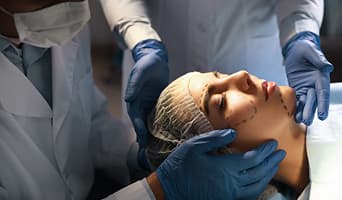
Cheek augmentation is performed to add volume and definition to cheeks that are flat, hollow, or naturally underdeveloped. The procedure uses solid implants placed over the cheekbone or fat taken from elsewhere on the body and transferred to the cheek area. Patients who seek this surgery include those who have lost facial volume with age and those whose cheek structure has been flat from early on. A number of patients now choose to have cheek augmentation abroad, where surgeons with relevant experience work within accredited facilities across a range of price points. The cheek augmentation procedure is carried out under general anesthesia or local anesthesia with sedation and takes 1-2 hours. To place the implant, the surgeon makes a small cut inside the mouth or just below the lower eyelid, then positions the implant directly over the cheekbone. Many cheek implant procedures use incisions placed inside the mouth, which avoids visible facial scarring. In some cases, a lower eyelid incision may be used. Where fat transfer is the chosen approach, fat is taken from a donor site on the body, prepared, and injected into the cheek. Fat transfer can provide a softer and more natural-looking enhancement, although a portion of the transferred fat is usually absorbed by the body over time, making long-term volume retention less predictable than with implants. Patients weighing cheek filler vs implants cost should note that fillers are non-surgical and temporary, while implants involve a single surgical procedure with a permanent outcome. Bruising and swelling are normal for the first 2 weeks. Most patients go back to their usual routine within 10-14 days. Full results aren’t visible until swelling has cleared completely, a process that can take several weeks. Patients considering cheek augmentation abroad can compare hospitals, surgeons, treatment options, and estimated costs through CureMeAbroad before deciding where to undergo treatment.
Overview
Cheek augmentation is performed to add volume and definition to cheeks that are flat, hollow, or naturally underdeveloped. The procedure uses solid implants placed over the cheekbone or fat taken from elsewhere on the body and transferred to the cheek area. Patients who seek this surgery include those who have lost facial volume with age and those whose cheek structure has been flat from early on. A number of patients now choose to have cheek augmentation abroad, where surgeons with relevant experience work within accredited facilities across a range of price points. The cheek augmentation procedure is carried out under general anesthesia or local anesthesia with sedation and takes 1-2 hours. To place the implant, the surgeon makes a small cut inside the mouth or just below the lower eyelid, then positions the implant directly over the cheekbone. Many cheek implant procedures use incisions placed inside the mouth, which avoids visible facial scarring. In some cases, a lower eyelid incision may be used. Where fat transfer is the chosen approach, fat is taken from a donor site on the body, prepared, and injected into the cheek. Fat transfer can provide a softer and more natural-looking enhancement, although a portion of the transferred fat is usually absorbed by the body over time, making long-term volume retention less predictable than with implants. Patients weighing cheek filler vs implants cost should note that fillers are non-surgical and temporary, while implants involve a single surgical procedure with a permanent outcome. Bruising and swelling are normal for the first 2 weeks. Most patients go back to their usual routine within 10-14 days. Full results aren’t visible until swelling has cleared completely, a process that can take several weeks. Patients considering cheek augmentation abroad can compare hospitals, surgeons, treatment options, and estimated costs through CureMeAbroad before deciding where to undergo treatment.
Procedure Scope
People with flat or hollow cheeks often look into augmentation to restore some fullness, either through implants or fat transfer. The right choice really comes down to what kind of results the person is after.
Recovery Timelin
Swelling and bruising are normal after surgery and usually die down within a week or two. Most people are back to their routine by days 10-14 with the final look coming together gradually.
Expected Results
Healed results leave the face looking fuller and more balanced through the mid-face area. Implants tend to stay consistent long-term, while fat transfer feels more natural but the volume retained can vary.
Ideal Candidates
This procedure works well for healthy adults who feel their cheeks lack volume and have a realistic idea of what surgery can do. Being genuinely committed to recovery plays a big role in how things turn out.
Affordable Care | Transparent Costs | Expert Guidance
Get best price with CureMeAbroad
Things to Check for Cheek Augmentation Abroad
- The surgeon must hold board certification in plastic or maxillofacial surgery and have hands-on experience in malar augmentation surgery, not just facial procedures in general.
- Check that the facility carries accreditation from a body such as JCI or a nationally recognised authority, as this is a basic standard to look for when choosing a provider for cheekbone enhancement abroad.
- The implant brand, what it is made from, and its approval under FDA or CE frameworks should all be put in writing before any procedure date is set.
- Have you had any recent dental work or mouth infections that could impact the procedure?
- Ask for a detailed itemised quote that covers the surgical fee, anesthesia, hospital stay, follow-up appointments, and revision surgery, as cheek implants cost tends to differ quite a bit depending on where the procedure is carried out.
- Before booking any flights, check with the facility how long the patient is required to stay before flying is permitted.
- Find out whether post-operative care items are part of the price quoted or whether they will be invoiced on top before signing anything.
- A clear plan for what happens if complications develop after the patient is back home should be sorted out with the clinical team before cheek implant surgery goes ahead.
- Rather than going by general ratings, look at photographs of actual results from patients who have had cheek augmentation abroad at that specific facility.
Risks And Complications of Cheek Augmentation Abroad
- Once placed, the implant can move from its position over the cheekbone and alter the look of the face as a result
- Most incision site infections are brought under control with antibiotics. Cases that don’t respond to treatment may require the implant to be taken out.
- A degree of numbness or changed feeling in the cheek following malar augmentation surgery is fairly common in the weeks after the procedure and settles without treatment in most patients.
- Healing that progresses at a different rate on each side of the face can leave the cheeks looking uneven once swelling has gone down.
- In capsular contracture, fibrous tissue builds up around the implant over time, gradually tightening and distorting its shape.
- Nerves that run close to the area worked on during surgery can be disturbed, and in some patients the change in sensation across the cheek doesn’t fully go away.
- When fat transfer is used, the body takes up the transferred fat unevenly in some cases, producing an irregular contour that needs further correction and adds to the cheek implants cost.
- A blood clot risk comes with general anesthesia, and taking a long-haul flight not long after cheekbone enhancement abroad pushes that risk higher.
- Complications can be more difficult to address if a patient returns home too soon after cheek augmentation abroad.
Do’s
- ✓Verify surgeon credentials (e.g. ISAPS, JPRAS)
- ✓Ask for before-after photos
- ✓Check language barriers
- ✓Review aftercare and follow-up options
- ✓Consider local laws on medical malpractice
Don'ts
- ✗Don't Choose a Clinic Based Only on Price
- ✗Don't Rely Solely on Social Media or Influencers
- ✗Don't Ignore Language Barriers
- ✗Don't Rush Into Surgery Without Research
- ✗Don't Assume You Can Fly Back Immediately

cheek lift
Doctor: Pablo Ramirez
Under Cosmetic/Plastic Surgery
Loading...
CureMeAbroadIs Absolutely Free
Just discovery so you can choose what's right for you!


World's No. 1 Medical Discovery Platform
Cheek Augmentation
This procedure involves specific medical techniques tailored to address particular health conditions. Your doctor will explain the detailed process based on your case.
Cheek Augmentation
Eligibility depends on your medical history, current condition, and treatment goals. A consultation and evaluation will determine if you are a suitable candidate.
Cheek Augmentation
Preparation may include lab tests, imaging, medication adjustments, fasting, or lifestyle recommendations. Your healthcare provider will give you personalized instructions.
What does this procedure involve?
Cheek Augmentation
This procedure involves specific medical techniques tailored to address particular health conditions. Your doctor will explain the detailed process based on your case.