





CureMeAbroad

Is Abdominoplasty Safe? Risks, Scarring & Safe Techniques

Thinking about an abdominoplasty is exciting, but it's normal to worry about the scar. Most abdominoplasty scarring problems come down to two things: poor blood supply to the skin flap, or too much tension on the closure. Knowing what causes them can help you decide if the procedure is right for you.

Price With CureMeAbroad
Save up to 33%

$4,000–$9,000

Price without CureMeAbroad

$6,000–$13,500

1,500+ partner hospitals38+ destinations20,000+ patient experiencesUN Global Compact participant
Get Personalized Estimate
Is Abdominoplasty Safe? Risks, Scarring & Safe Techniques
Global Healthcare Accreditation (GHA) Medical Travel Facilitator CertificationMedical Tourism Moonshot
Rated4.8
Google Reviews, rated 4.8
Trustpilot, TrustScore 4.7
TrustScore 4.7
3100+Hospitals
13600+Doctors
71+Countries

Where The Real Risk Comes From

Tension and blood supply are the reason abdominoplasty scarring behaves differently from the scar you'd get after, say, having your appendix out.

Macroscopic Fat Embolism

To close the gap after tissue is removed, the flap gets separated from the abdominal wall and slid downward. The further it slides, the thinner its blood supply gets and the harder it pulls against the incision edges. That's where almost every serious abdominoplasty scarring problem begins. You might see skin edges turn dusky or lose feeling within days. Stitches can cut through under the strain. The wound can also open before it has had time to build any strength.

What is now recommended

  • Progressive tension sutures. They tie the flap down to the muscle fascia so the skin closure isn't taking all the load. Studies report fewer seromas and less dehiscence than with skin tension alone.
  • Keeping Scarpa's fascia intact while the flap is lifted. This has been linked to less seroma and shorter drain time.
  • Undermining only as much as needed, and planning the closure around how loose your skin actually is instead of using a set incision length.

The rest, which any fat transfer carries

  • Infection at the incision or in a fluid pocket under it
  • Seroma, which is the most common complication after abdominoplasty in published series
  • Dehiscence (the wound opening), more likely where tension is highest
  • Hypertrophic or widened abdominoplasty scarring while the wound remodels over the following year
  • Numbness along and below the incision, which is usually temporary
  • Dog ears, where extra skin bunches at the ends of the incision
  • DVT or pulmonary embolism. That one comes from the length of the operation and how little you move afterward. It has nothing to do with the incision.

What Can Actually Go Wrong

Among body-contouring operations, abdominoplasty sits near the top for complications. Published series report an overall rate of about 32% to 37%, mostly seroma and slow wound healing. Below are the risks that affect abdominoplasty scarring and healing, listed by how serious the outcome can get rather than how common it is.

Threatening

Threatening

Flap Necrosis

Skin that has lost its blood supply dies. It happens most often at the point on the flap furthest from a direct vessel, usually the midline just above the pubic area. Limited undermining, not smoking before or after surgery and a closure without tension all bring the risk down.

Avoid smoking around surgery and follow your surgeon's wound-care and recovery instructions.

Full-Thickness Wound Dehiscence

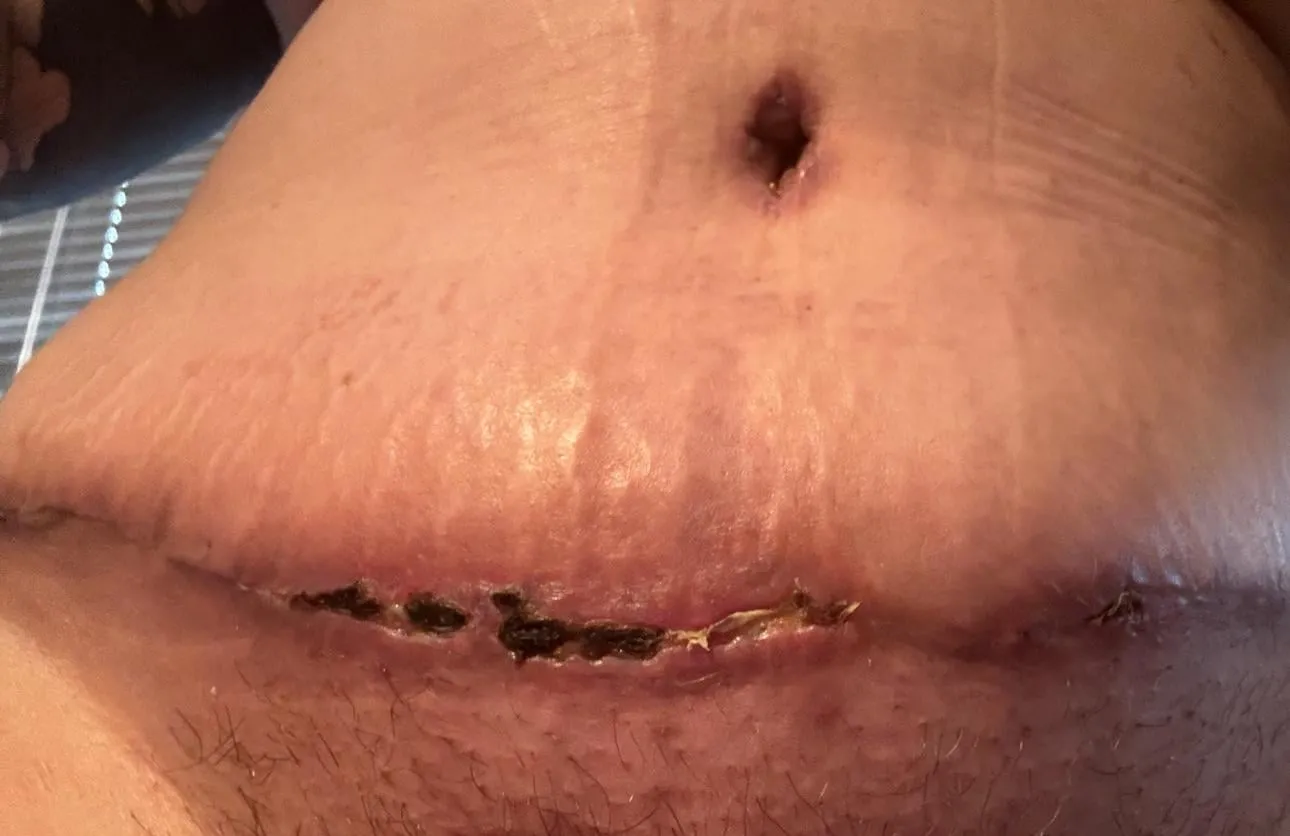
Here the incision opens right down to the fascia, typically where tension is worst. One case series on a botched operation abroad described a wound that needed two months of corrective treatment before it closed. Follow your activity restrictions exactly. Sitting fully upright or bending over too early pulls on the incision and can push it apart.

Follow activity restrictions carefully and avoid excessive bending or sitting upright too early.

DVT or Pulmonary Embolism

Long operations and lying around afterward make clots more likely. If one reaches the lungs, that's a pulmonary embolism. Your clinic should have a clot-prevention routine, such as compression devices, walking early and blood thinners when prescribed. Stick to it.

Follow the clinic's clot-prevention plan, including early movement, compression devices, or prescribed blood thinners.

Serious

Serious

Wound Infection

Bacteria get into the incision or a fluid pocket under it. You'd notice redness, warmth and drainage, and it needs antibiotics or sometimes a return to theatre. Pick an accredited facility with documented infection control and go to every follow-up.

Contact your surgeon promptly if you notice signs of infection and attend all scheduled follow-ups.

Seroma

Fluid gathers under the flap after the drains come out. It's the complication reported most often in the abdominoplasty literature, with figures of roughly 5% to 15% depending on technique and BMI. Keeping Scarpa's fascia and managing drains well lowers the odds. A seroma that won't go away gets aspirated or treated with a small revision.

Follow your surgeon's drain and follow-up instructions; persistent seromas may require drainage or further treatment.

Fat Necrosis

Fat at the flap edge, the part furthest from the blood supply, can die and form firm lumps under the scar line. They tend to settle or get removed later and rarely cause danger by themselves.

Have persistent or concerning lumps assessed by your surgeon.

Common

Common

Hypertrophic Scarring

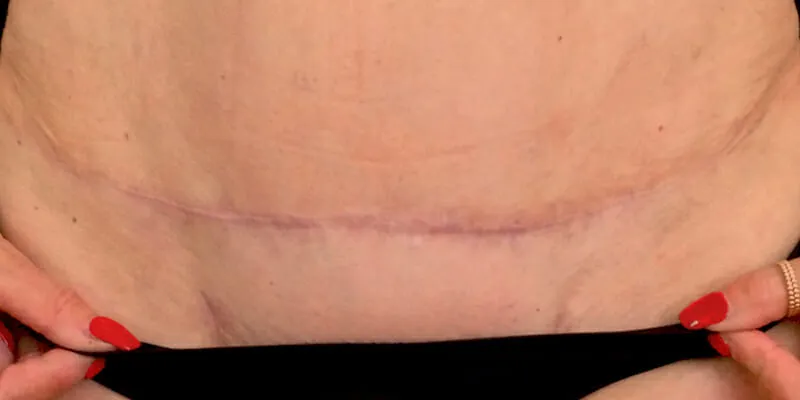
Abdominoplasty scarring sometimes heals raised, red and thick instead of flattening, and it's likelier where tension was highest during closure. Silicone sheeting, steroid injections and time are the usual first steps. Most scars soften over 12 to 18 months.

Silicone treatments and other scar therapies may help, but use them only as advised by your surgeon.

Altered or Lost Sensation

Nerve endings get cut when the flap is lifted, so numbness or tingling below and along the incision is common. Most people notice it improving over months, up to a year. Permanent numbness happens, though not often.

Sensation often improves gradually over the following months, although some changes can persist.

Dog Ears

Skin bunches at the ends of the incision by the hips when the closure can't flatten it fully. Many settle as the swelling goes down. If one doesn't, a short revision under local anaesthetic fixes it.

Some improve as swelling settles, while persistent dog ears can sometimes be corrected with a minor revision.

Prolonged Swelling and Firmness

Above and around the scar you may stay swollen or firm for months while the tissue settles. Compression garments and time usually do the job.

Follow your surgeon's compression and recovery instructions and allow adequate time for healing.

What Poor Abdominoplasty Results Can Look Like

Abdominoplasty Scars That Sit Too High

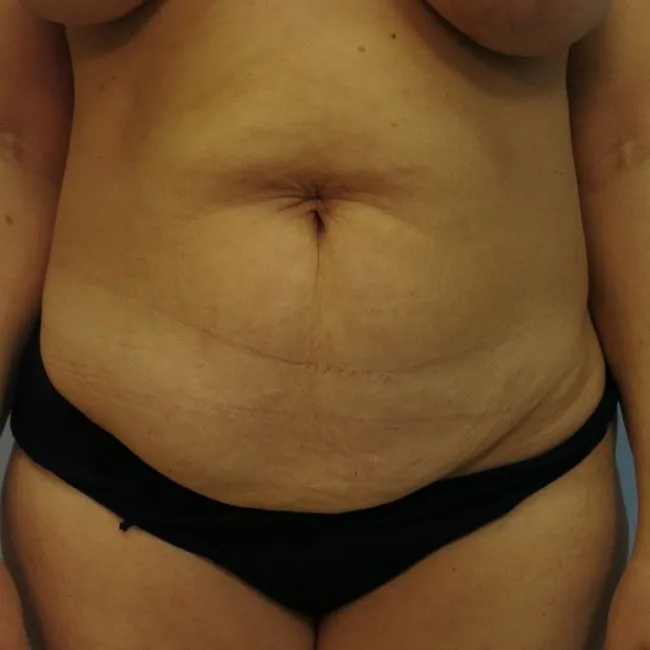
Sometimes the scar heals higher on the abdomen than expected. This can make it easier to see above underwear or swimwear. If the scar has fully healed in a position that causes concern, further treatment may be needed.

Uneven Abdominal Shape

The stomach may not look exactly the same on both sides after surgery. Swelling, the way the tissues heal, and natural differences between the two sides can all affect the final shape.

Dog Ears at the Ends of the Scar

Small folds of skin can form at either end of the tummy tuck scar, usually near the hips. Some become less noticeable as the swelling goes down, while others may need a small revision procedure.

Wrinkled or Puckered Skin

The skin around the stomach can sometimes heal with wrinkles, puckering, or small uneven areas. These changes may settle with time, but some can remain after healing is complete.

Firm Lumps Under the Skin

Some patients notice areas that feel hard or lumpy after surgery. This can happen because of scar tissue or changes in the fat beneath the skin. Any lump that remains should be checked by the surgeon.

Scar That Stays Thick or Raised

Some scars remain red, thick, or raised instead of becoming flat and pale. This can happen because of the way a person's body forms scar tissue and may sometimes need additional scar treatment.

Real Patients, Real Stories

Marissa Cole

Marissa Cole, 41

Austin, Texas • Full Abdominoplasty in Cancun

“I'd read every horror story about scarring before I booked. My surgeon spent longer talking me through incision placement than the rest of the consult combined, and a year on the line sits low enough that I forget it's there.”

Treatment estimate, paid$4,200
Flights$650
Hotel$980
Transfers, garments, extras $350
Total actually spent$6,180

Priya Nathan

Priya Nathan, 35

London, UK • Mini Tummy Tuck in Istanbul

“The scar tension was my biggest worry, not the surgery itself. My coordinator checked in daily through the first two weeks, and the wound care instructions were specific enough that I never felt like I was guessing. ”

Treatment estimate, paid$3,100
Flights$520
Hotel $720
Transfers, garments, extras $280
Total actually spent$4,620
Danielle Osei

Danielle Osei, 38

Toronto, Canada • Extended Abdominoplasty in Bangkok

“Month one, the scar was angry and I panicked. By month nine it had flattened out completely. I wish someone had shown me a real timeline going in instead of just before-and-after photos. ”

Treatment estimate, paid $5,400
Flights $1,850
Hotel$1,200
Transfers, garments, extras$420
Total actually spent$8,870

Frequently Asked Questions About Abdominoplasty

Hip to hip, low on the abdomen. If it's planned well, underwear or swimwear covers it. How long it is and exactly where it sits depends on how much skin is removed and on your own anatomy.

Help Me Plan
My Treatment Abroad

End-to-End Treatment Planning, specifically curated to your needs. Just a call away

Plan your treatment abroad with CureMeAbroad