Multiple Myeloma (MM)
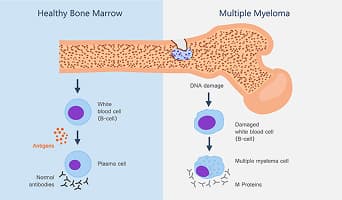
Multiple myeloma is a cancer that starts in plasma cells, white blood cells that the bone marrow produces. When these cells turn malignant they stop following normal rules, divide constantly, and get in the way of the bone marrow making healthy blood cells. The disease doesn’t stay in one place and is active across several body sites at once. Most patients can’t reach a permanent cure even with treatment available. Anyone thinking about multiple myeloma treatment abroad owes it to themselves to get a proper understanding of what this disease involves before starting to look at care options elsewhere. Multiple myeloma accounts for roughly 10% of blood cancer cases and is picked up most often in patients who are 60 or older. Malignant plasma cells collect in the bone marrow, force out normal blood cells, and release proteins that do organ damage over time. The kidneys are the organ that gets hit most regularly. Bone pain, lasting tiredness, repeated infections, and raised blood calcium are the complaints that come up most consistently. In certain cases the disease sits quietly for years and only comes to attention when a blood test done for something else returns a reading that doesn’t add up. Treatment has moved forward quite a bit over the past two decades and many patients today stay in remission for long periods using multi-drug combinations. For patients researching multiple myeloma treatment abroad, CureMeAbroad makes it possible to find and connect with accredited hospitals and specialists across medical destinations worldwide.
Overview
Multiple myeloma is a cancer that starts in plasma cells, white blood cells that the bone marrow produces. When these cells turn malignant they stop following normal rules, divide constantly, and get in the way of the bone marrow making healthy blood cells. The disease doesn’t stay in one place and is active across several body sites at once. Most patients can’t reach a permanent cure even with treatment available. Anyone thinking about multiple myeloma treatment abroad owes it to themselves to get a proper understanding of what this disease involves before starting to look at care options elsewhere. Multiple myeloma accounts for roughly 10% of blood cancer cases and is picked up most often in patients who are 60 or older. Malignant plasma cells collect in the bone marrow, force out normal blood cells, and release proteins that do organ damage over time. The kidneys are the organ that gets hit most regularly. Bone pain, lasting tiredness, repeated infections, and raised blood calcium are the complaints that come up most consistently. In certain cases the disease sits quietly for years and only comes to attention when a blood test done for something else returns a reading that doesn’t add up. Treatment has moved forward quite a bit over the past two decades and many patients today stay in remission for long periods using multi-drug combinations. For patients researching multiple myeloma treatment abroad, CureMeAbroad makes it possible to find and connect with accredited hospitals and specialists across medical destinations worldwide.
Procedure Time
Drug therapy runs on weekly or monthly cycles. A stem cell transplant calls for a hospital stay of 2-4 weeks.
Recovery Period
Between cycles, most patients are back to their normal routine in a few weeks. After a stem cell transplant full recovery takes somewhere between 3 and 6 months.
Expected Results
Treatment works toward remission, a drop in abnormal blood proteins, and a slower disease course so the patient can get on with daily life.
Ideal Candidates
Patients in reasonable health are looked at for intensive treatment while those with organ complications go on lower-intensity drug therapy. Anyone considering multiple myeloma treatment abroad should go over their health profile with the treating team before anything else.
Affordable Care | Transparent Costs | Expert Guidance
Get best price with CureMeAbroad
Things to Check for Multiple Myeloma (MM) Abroad
- The hospital should carry a recognized international accreditation such as JCI showing it meets accepted cancer care standards.
- Check that the treating hematologist or oncologist has documented qualifications and manages myeloma cases regularly in clinical practice.
- Find out if the hospital has a bone marrow transplant unit running with a confirmed record of completed cases.
- Confirm bone marrow biopsy, cytogenetic analysis, and serum protein electrophoresis are all done within the hospital.
- The hospital should be cleared to prescribe current myeloma drug categories, including proteasome inhibitors, immunomodulatory agents, and monoclonal antibodies.
- A team covering hematology, nephrology, radiology, and supportive care should be actively working together on each patient.
- Ask how the hospital manages ongoing follow-up for international patients after they return home.
- Get a written cost breakdown covering every consultation, test, drug, procedure, and inpatient charge before any arrangement is made.
- Language interpreters or dedicated international patient coordinators should be available throughout treatment.
- The hospital must provide complete clinical records, including discharge summaries and treatment reports in a format usable within the patient's home health system.
Risks And Complications of Multiple Myeloma (MM) Abroad
- Myeloma treatment cuts immune function considerably, which makes serious infections more likely when specialist support isn’t close by.
- After a stem cell transplant, graft failure or slow engraftment can push the hospital stay well past the original schedule.
- Drug regimens in myeloma care consistently bring on tiredness, nausea, peripheral nerve damage, and low blood counts.
- Patients who go into treatment with already reduced kidney function can see it fall further and need close watching throughout.
- When clinical records don’t get passed on properly to the home physician, follow-up care quality drops.
- Some drugs or experimental treatments at the treating facility simply may not be available back home once treatment is done.
- Several myeloma drug protocols push up clotting risk and a long-haul flight close to active treatment makes this worse.
- Differences in record formats and language between countries can cause clinical details to be lost or read incorrectly when files are moved.
- When the first treatment course used approaches local doctors don’t know, handling a relapse at home gets complicated.
- Spending months in treatment far from home and without familiar people around can leave a real mark on a patient's mental health.
- Checking the credentials and setup of any multiple myeloma hospital abroad before committing is critical since standards of care and drug availability differ considerably between facilities.
Do’s
- ✓Verify surgeon credentials (e.g. ISAPS, JPRAS)
- ✓Ask for before-after photos
- ✓Check language barriers
- ✓Review aftercare and follow-up options
- ✓Consider local laws on medical malpractice
Don'ts
- ✗Don't Choose a Clinic Based Only on Price
- ✗Don't Rely Solely on Social Media or Influencers
- ✗Don't Ignore Language Barriers
- ✗Don't Rush Into Surgery Without Research
- ✗Don't Assume You Can Fly Back Immediately
Under CAR-T Cell Therapy
Loading...
CureMeAbroadIs Absolutely Free
Just discovery so you can choose what's right for you!


World's No. 1 Medical Discovery Platform
Multiple Myeloma (MM)
This procedure involves specific medical techniques tailored to address particular health conditions. Your doctor will explain the detailed process based on your case.
Multiple Myeloma (MM)
Eligibility depends on your medical history, current condition, and treatment goals. A consultation and evaluation will determine if you are a suitable candidate.
Multiple Myeloma (MM)
Preparation may include lab tests, imaging, medication adjustments, fasting, or lifestyle recommendations. Your healthcare provider will give you personalized instructions.
What does this procedure involve?
Multiple Myeloma (MM)
This procedure involves specific medical techniques tailored to address particular health conditions. Your doctor will explain the detailed process based on your case.