




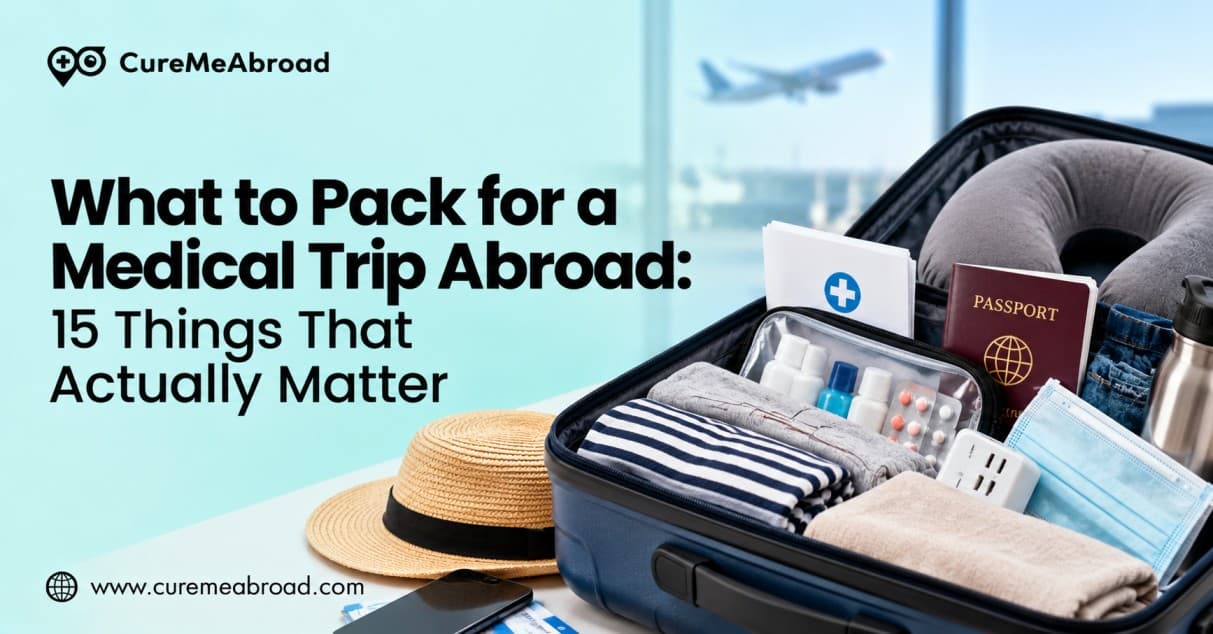
What to Pack for a Medical Trip Abroad: 15 Things That Actually Matter
Packing for a medical trip is not the same as packing for a holiday. The priorities are different. The stakes are different. And the things most people forget aren't sunscreen, they're documentation and recovery supplies that turn out to matter a lot when you actually need them.
Here's the list. Practical, not padded.
1. Your Complete Medical Records Package
Everything relevant to the procedure: blood work, imaging (CT, MRI, X-ray, ultrasound), pathology reports, specialist letters, full medication list with dosages. Both digital (USB drive or cloud-accessible) and physical copies. Don't assume the clinic has received and filed everything you sent electronically. Bring it yourself.
2. Insurance Documents
Your medical tourism insurance policy number, emergency contact line, and claims reference. Your standard travel insurance policy. Keep these accessible, not buried at the bottom of a bag because if you need them, speed matters.
3. More Medication Than You Think You Need
Double the expected trip duration. Some medications face import restrictions; check this before you travel and carry medications in the original pharmacy packaging with labels intact. A letter from your prescribing physician confirming what you take and why clears most customs questions before they become problems.
4. A Written Medication and Supplement List
Every medication. Every supplement. Including over-the-counter items and herbal products. Some supplements interact with anaesthesia and anticoagulants in ways that matter. Your surgical team needs this list before you go into the operating theatre.
5. Emergency Contact Cards
A physical card, several actually, along with your name, procedure, treating hospital and surgeon's direct contact, your emergency contact at home, blood type, and known allergies. One in your wallet. One in your carry-on. One is left with whoever you trust at home.
6. A Travel Companion (Arrange Before You Go)
Not something to pack, but something to arrange before you leave. Most serious international clinics require or strongly recommend a companion for major procedures. The first 48 hours post-surgery are significantly better, physically and emotionally, with someone present. Don't go alone to major surgery.
7. Post-Op Clothing
Loose. Front-opening. Nothing that requires pulling over your head if you've had upper body work. Nothing with tight waistbands after abdominal procedures. Zip-up hoodies are underrated. Slip-on shoes you won't want to bend over to tie laces. This sounds minor. It's not minor on day two post-op.
8. Compression Garments (If Your Procedure Requires Them)
Some clinics provide them. Many don't, or provide generic sizes. Ask in advance. If they're not included, bring your own size to fit. Compression garments that don't fit properly are worse than useless for many procedures, as they affect the outcome.
9. A Basic Wound Care Kit
Sterile gauze, medical tape, saline solution for wound irrigation, and non-adherent dressings. Your clinic handles initial post-op supplies. For the days you're in recovery accommodation between clinic visits, having your own supplies avoids unnecessary panic over minor things that are easily managed.
10. Noise-Cancelling Headphones or Earplugs
Hospital environments are not quiet. Recovery accommodation is variable. Sleep is when healing happens. Protect it.
11. A Heating Pad or Portable Massager
For managing discomfort, improving local circulation, and general comfort during recovery. Lightweight. Worth the bag space by day three.
12. High-Protein Snacks
Protein is how your body repairs tissue. Hospital food quality varies. Post-surgical appetite is often suppressed. Having accessible high-protein snacks like protein bars, nuts, and jerky means you're not dependent on whatever happens to be available when you need it.
13. A Single, Detailed Itinerary Document
One document with everything: flight details, hotel address and direct number, hospital address and main number, surgeon name and direct line, clinic 24-hour emergency line, travel insurance emergency number, nearest pharmacy to your accommodation, and your home emergency contact. Give a copy to someone at home.
14. Power Adapter and Chargers
Yes, this is obvious. It's on this list because people forget it with remarkable frequency. Check the plug type for your destination country. Charge everything before you fly.
15. A Recovery Journal or Notes App
A daily log: pain levels, temperature, any swelling changes, medications taken, and food intake. It sounds tedious until you're trying to describe to your medical team exactly what developed and when. A symptom timeline is also what your home physician needs at follow-up. Start it from day one.
One More Thing
Bring physical copies of everything critical. Not just digital. Phones die. Cloud access fails on bad WiFi. Documents get lost. The 20 minutes you spend printing and organising physical copies before you leave is the best insurance you have against a stressful situation getting worse.
Pack like a patient. The trip is the secondary thing. The outcome is what matters.