

In recent years, natural tear drop tits have become one of the most admired breast shapes within aesthetic discussions and cosmetic surgery circles. It is their soft, sloping contour, full lower pole, and naturally lifted appearance that creates a youthful, balanced silhouette of the body. Whether someone is exploring body aesthetics, researching implant shapes, or considering nonsurgical sculpting methods, understanding of this breast shape has become key.
This guide breaks down everything you need to know, from what natural tear drop tits look like, why they are so popular, how they compare to other shapes, and the best ways to enhance or support this profile naturally or surgically.
Tear drop breast augmentation is considered a surgical operation to enhance breast size and contour using implants that more closely resemble the tear drop shape of natural breast tissue to achieve natural tear drop tits. The advantage of this surgery includes the fact that it tends to appear more inconspicuous and more natural than various alternative breast augmentation surgeries. In addition to an aesthetically more pleasing appearance of the breasts, tear drop breast augmentation can be combined with surgery for a simultaneous breast lift to give the breasts a more attractive shape and positioning.
What Is the Natural Tear Drop Breast Shape? Anatomy Explained
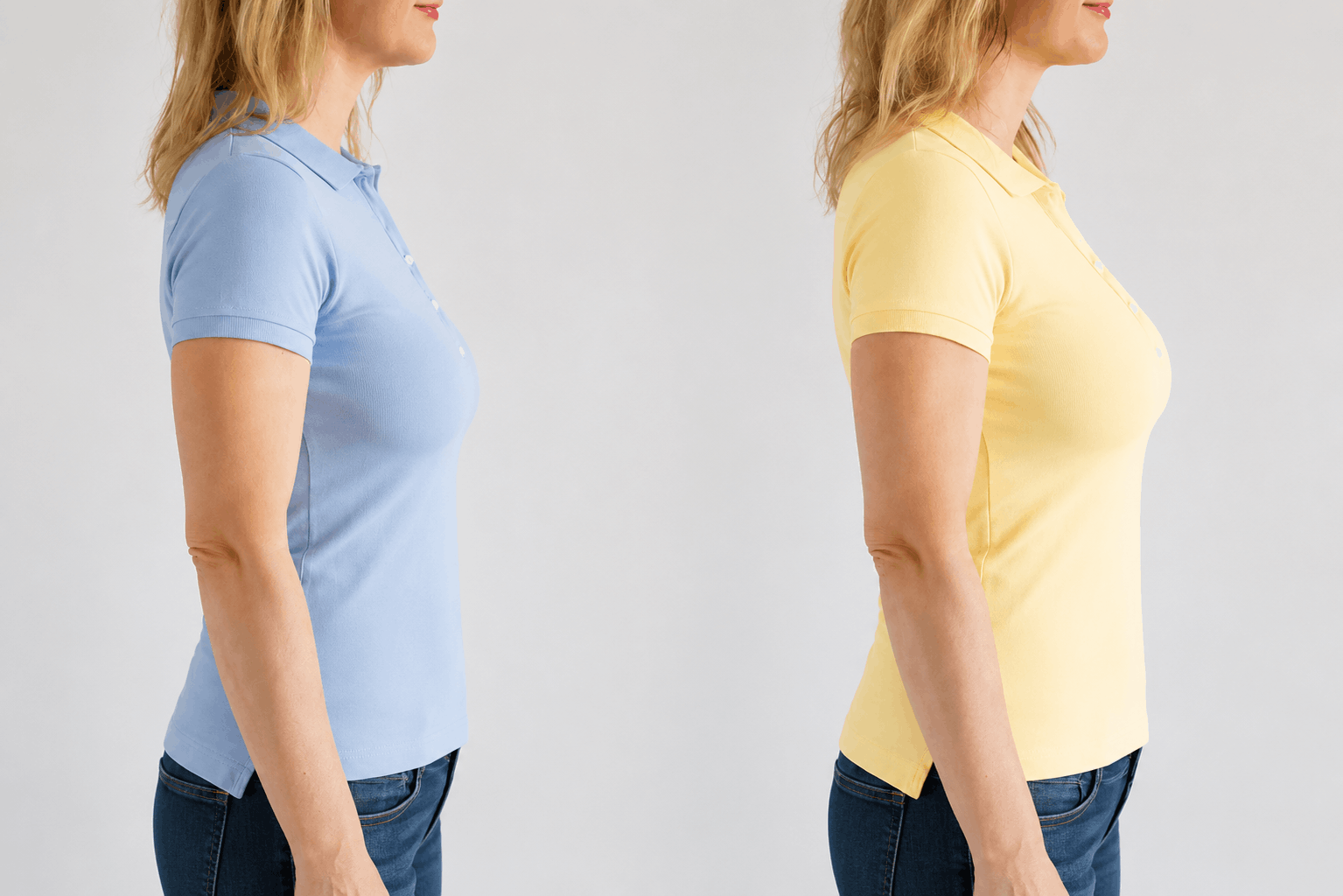
The natural tear drop breast shape is widely considered the closest representation of how breasts look in their anatomically ideal form. Characterised by a fuller, rounder lower half that gently tapers into a softer, flatter upper half, the silhouette resembles an inverted water droplet broader at the base, narrowing toward the top. This shape is the result of natural fat distribution, tissue density, and the constant downward pull of gravity working over time.
To understand why this shape forms and changes, it helps to know the two key anatomical zones that plastic surgeons use:
• Upper pole — the area of the breast above the nipple. In a natural tear drop shape, this area is noticeably less full, creating a gentle, sloping surface rather than a pronounced roundness.
• Lower pole — the area below the nipple. This is where the majority of breast volume naturally sits, giving the tear drop its characteristic fullness and projection.
Holding the breast in position is a network of fibrous connective tissue known as Cooper's ligaments. These ligaments attach the breast tissue to the overlying skin and the chest wall, acting as internal scaffolding. When Cooper's ligaments are firm and well-supported, the breast maintains its lifted tear drop profile. As the ligaments stretch due to ageing, weight fluctuations, pregnancy, or simply the passage of time the lower pole drops further and upper pole fullness diminishes, leading to a change in silhouette.
The tear drop shape is also heavily influenced by the ratio of glandular tissue to fatty tissue. Women with a higher proportion of glandular tissue tend to have firmer, more defined breast shapes, while a higher fat composition creates a softer, more fluid silhouette. Both can produce the tear drop profile, but the texture and mobility differ.
Understanding this anatomy is the foundation for everything else in this guide whether you are exploring how to identify your natural shape, considering enhancement options, or simply trying to find the right bra.
What Causes Natural Tear Drop Tits to Lose its Shape?
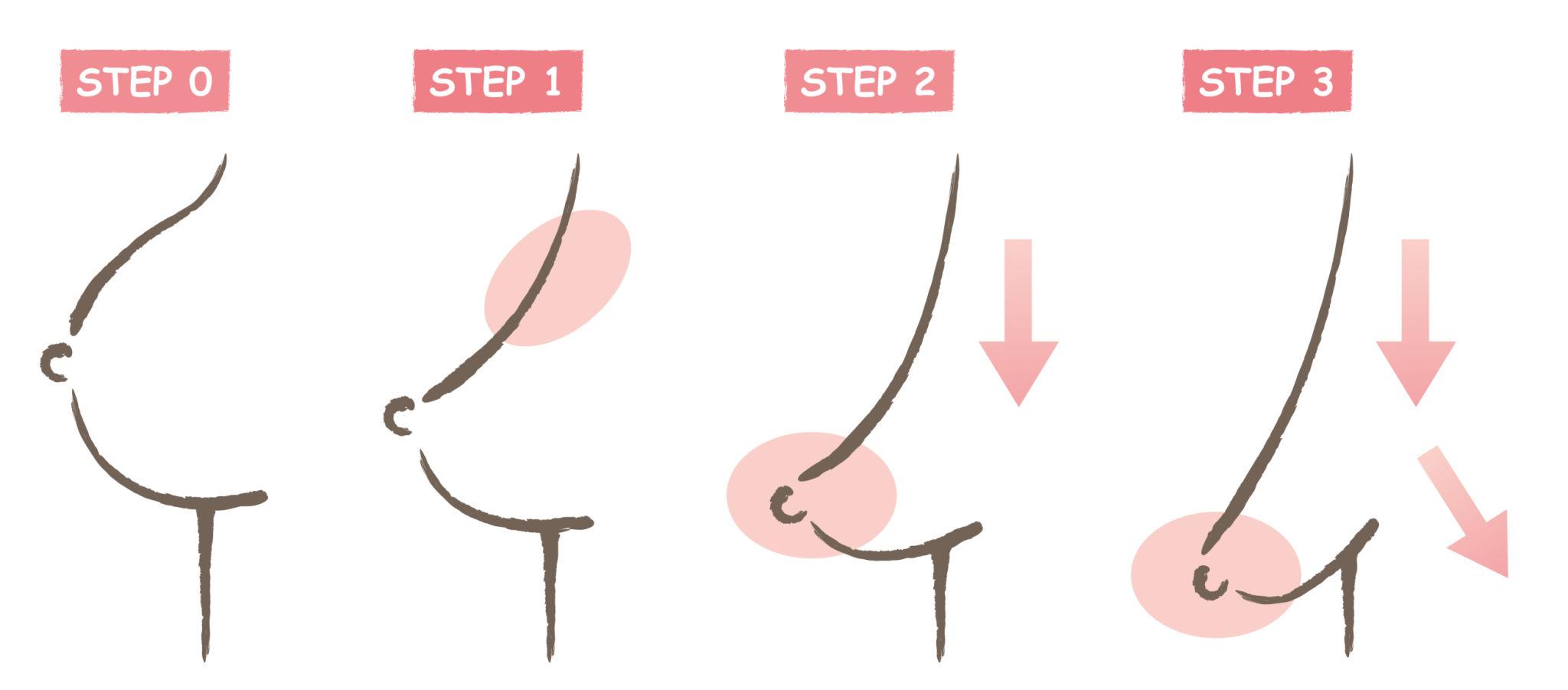
The various factors contributing to this natural process are:
- Ageing: This is the most common cause. As the age goes up, skin loses its elasticity naturally and the connective tissues become weak, therefore breasts are made to hang under the continuous force of gravity.
- Gravity: The force of gravity, which is inexorable, along with the effect of a lifetime of constant pulling, expands Cooper's ligaments-the structures that support the breasts, especially in women with larger or heavier breasts.
- Pregnancy and Hormonal Changes: Breasts get bigger and become heavier due to the growth of milk glands during pregnancy, which is a result of hormonal changes. The repeated expansion in each pregnancy and contraction, as well as the hormonal changes, for example, the drop of estrogen during menopause, which lowers collagen production, can stretch the skin and ligaments. There is a myth that breastfeeding is a major cause of sagging. It has been confirmed that this is not really the case.
- Weight: In situations where there is a massive amount of weight gain and loss, the skin can be stretched beyond its ability to return to its original state. As breasts are mostly made up of fat cells, when that fat is lost, the stretched skin may not be able to retract, and this may lead to sagging or a deflated appearance.
Tear Drop Implants
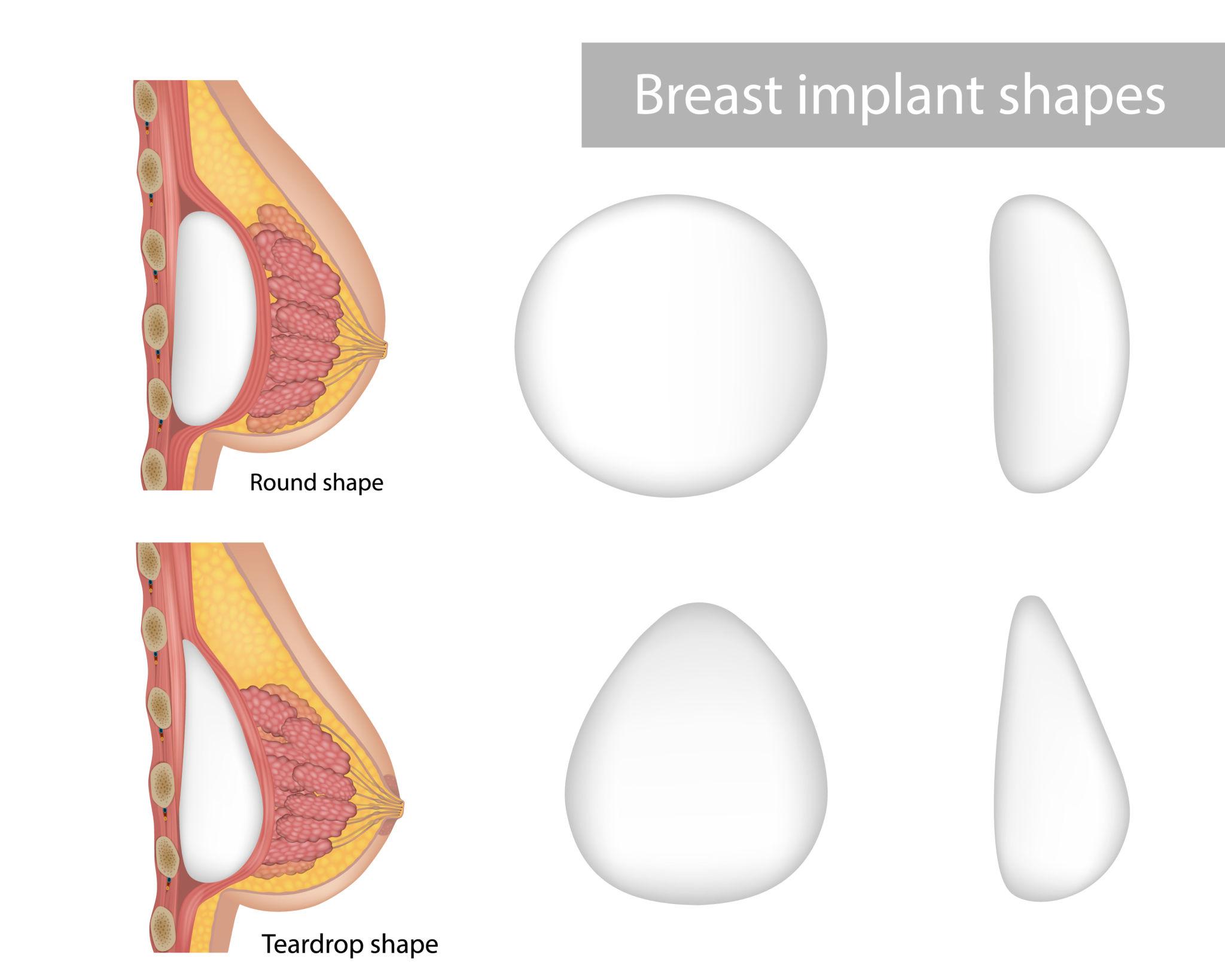
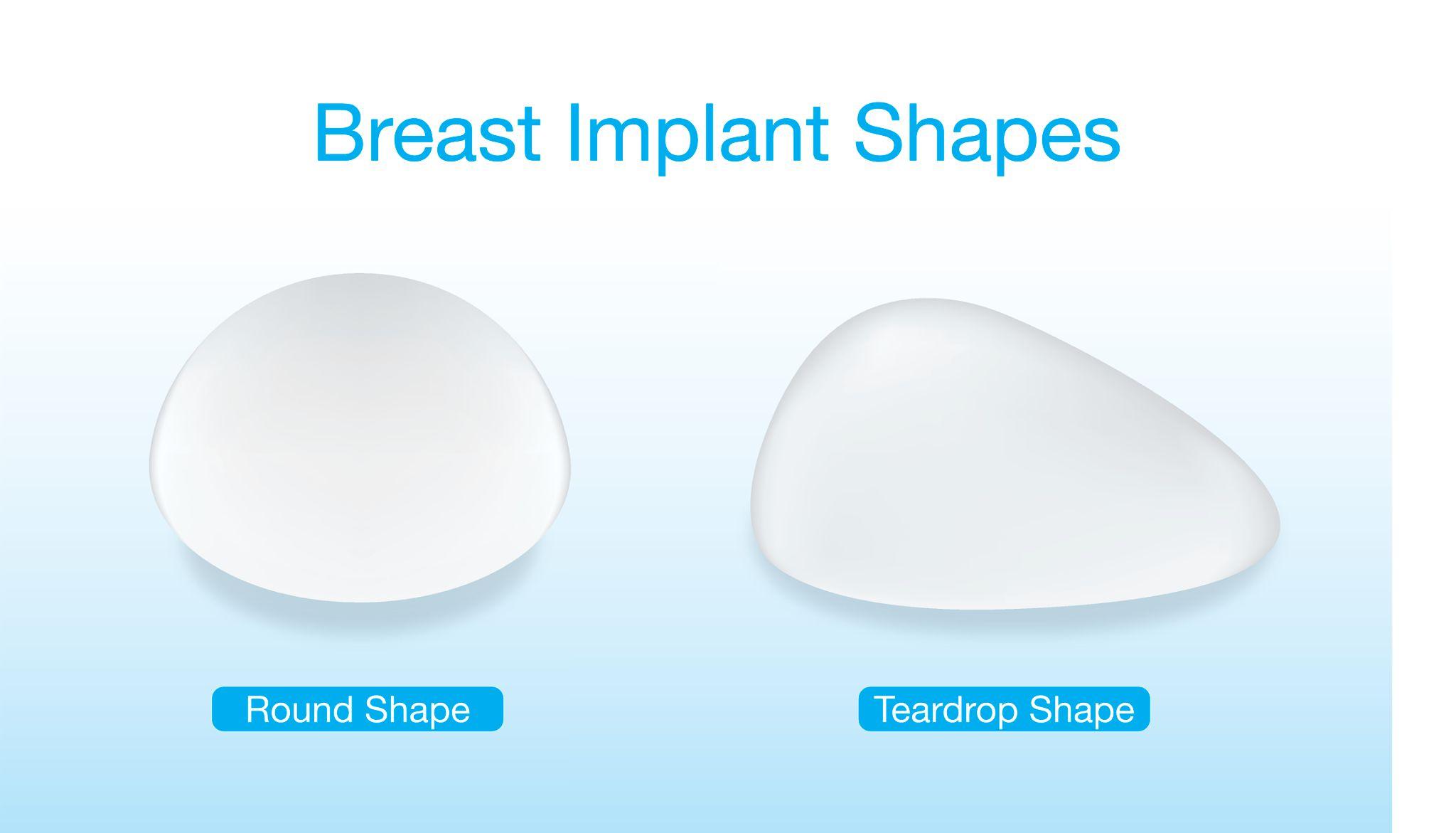
Tear drop breast implants have an asymmetrical shape, which means there is a “right way” and a “wrong way” for them to be inserted into place. Because tear drop implants must be placed a certain way, this means tear drop implants cannot rotate while inside your body either.
It is not always easy to prevent tear drop implants from rotating, so the surface of tear drop breast implants has been made very slightly textured by the manufacturers. This texture helps prevent tear drop breast implants from rotating or otherwise shifting position.
Advantages of Tear Drop Breast Implants
- Natural Appearance: The shape closely resembles a human breast.
- Reduced Upper Fullness: Perfect for women wanting a less prominent upper chest profile.
- Surety: The implant will not easily be shifted inside the breast pocket.
Disadvantages of Tear Drop Implants
- Higher Cost: Usually, tear drop implants cost more than round implants.
- Rotation Risk: Any turning of an implant may cause the shape of the breast to look unnatural.
- More Complex Surgical Method: Due to the need for more accurate placement, the operation for tear drop implants is somewhat complicated and may be a little cumbersome.
Non-Surgical Ways to Enhance Natural Tear Drop Tits (Breasts)
There are a few treatments that claim to lift breasts without surgery:
Injectable Treatments
Dermal Fillers and Anti-Ageing Injections are injectable treatments used to improve the appearance of skin that has lost volume through ageing or weight loss, as the collagen that previously helped to shape and support it has broken down. They are primarily used on the face, including areas such as the lips, forehead, and cheeks, and are also an effective treatment for ageing hands.
Vampire Breast Lift
This treatment uses platelet-rich plasma that is extracted from the patient’s blood. While it might slightly lift the bust for a temporary period, this will not cure sagging breasts and is also not a treatment recommended for pregnant or lactating women, and even those with a history of breast cancer.
Threads
This treatment involves the use of small barbed threads to pull up the skin of the breasts. However, like all other non-surgical treatments, it is only a temporary solution to the problem of drooping breasts and is no substitute for Breast Lift surgery.
Chest Exercises
The best exercises for a natural boob lift essentially target the chest muscles; there are several recommended exercises to lift your breasts. While there isn't any muscle in the breast itself, the pectoral muscles, located behind the breasts, can be toned and strengthened, thus providing, in turn, a natural lift to the breasts.
Upper Fullness vs. Lower Fullness: What's the Difference and Why It Matters
When it comes to breast shape and enhancement, one of the most important yet frequently misunderstood distinctions is between upper pole fullness and lower pole fullness. Understanding where volume sits in the breast is the key to appreciating why the tear drop shape looks so natural, and why getting this balance right matters so much in surgical planning.
What Is Upper Fullness?
Upper fullness refers to the volume and projection that sits above the nipple line, in the upper portion of the breast. A breast with high upper fullness has a pronounced, rounded top often described as the "enhanced" or "augmented" look. This is the profile associated with round implants placed above the muscle, which push tissue forward and create a prominent, dome-like upper chest.
While some patients specifically desire this look, high upper fullness is what most surgeons and patients seeking natural tear drop results are trying to avoid. It reads as visibly surgical in most clothing and particularly in swimwear.
What Is Lower Fullness?
Lower fullness refers to the concentration of volume below the nipple, in the inferior pole of the breast. This is the defining characteristic of natural tear drop breasts a gentle slope from the upper chest that gradually increases in projection toward the lower curve. The result is a breast that mimics how natural breast tissue is distributed by gravity, which is why it looks authentic and proportionate in almost any position, whether standing, lying down, or leaning forward.
Why Tear Drop Shape Prioritises Lower Fullness
The tear drop profile is essentially a masterclass in lower pole dominance. The upper slope is soft and gradual there is no abrupt shelf or sudden projection at the top while the fullness builds naturally toward the base. This is precisely why anatomical (tear drop) implants were developed: to replicate the way fatty breast tissue naturally settles.
Here is a direct comparison of how each profile behaves:
| Feature | Upper Fullness | Lower Fullness (Tear Drop) |
|---|---|---|
| Appearance | Round, prominent top, dome-like | Soft slope at top, full at base |
| Natural look | Less — visible in clothing | High — mimics natural breast tissue |
| Projection | Centralised or upper-biased | Concentrated in lower pole |
| Associated implant | Round implants | Anatomical/tear drop implants |
| Best for | Those wanting obvious augmentation | Those seeking natural enhancement |
| Appearance lying down | Stays projected and round | Shifts naturally like real tissue |
Can You Have Both?
Yes, and many patients do. A moderate degree of upper fullness combined with a fuller lower pole can create a full but natural result. This balance is often achieved through careful implant selection (size, projection, and base width), precise pocket placement, and in some cases combining an implant with a small fat transfer to the upper pole to soften any harsh transition. The goal is always a smooth, continuous curve, never an abrupt ledge at the top of the breast.
A skilled plastic surgeon will assess your existing breast tissue, chest wall shape, and skin elasticity to determine how much lower fullness is achievable and whether any upper pole enhancement is needed to maintain proportion.
Fat Transfer vs. Implants for Natural Tear Drop Breasts
Two of the most commonly compared approaches to achieving natural tear drop breast shape are fat transfer (also called autologous fat grafting or lipofilling) and anatomical implants. Both can achieve beautiful results, but they work differently, suit different patients, and come with their own trade-offs. Here is a detailed breakdown to help you understand which may be right for your goals.
What Is Fat Transfer for Breasts?
Fat transfer involves harvesting fat from another area of your body typically the abdomen, flanks, thighs, or back via liposuction, processing it, and then carefully injecting it into the breasts. Because it uses your own tissue, there are no implants, no foreign materials, and no implant-related risks. The result is a subtle, soft enhancement with natural feel and movement.
What Are Tear Drop Implants?
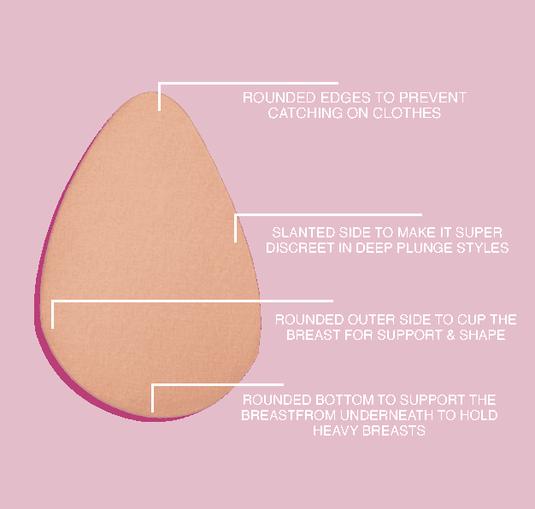
Anatomical or tear drop implants are silicone devices specifically shaped to mimic natural breast contour narrower at the top and fuller at the base. They are typically cohesive gel ("gummy bear") implants, meaning the silicone holds its shape even if the shell is compromised. They are placed either under the breast tissue (subglandular) or beneath the pectoral muscle (submuscular), depending on the patient's anatomy and surgeon preference.
Side-by-Side Comparison
| Factor | Fat Transfer | Tear Drop Implants |
|---|---|---|
| Size increase possible | Modest — typically 0.5 to 1 cup size | Significant — 1 to 3+ cup sizes |
| Feel | Very natural — own tissue | Very natural — especially gummy bear |
| Movement | Natural | Natural with anatomical implants |
| Scarring | Minimal — tiny liposuction and injection sites | Small incisions (inframammary, periareolar, or axillary) |
| Recovery time | 1–2 weeks | 2–4 weeks |
| Longevity | 60–80% of fat survives long term | 10–20 years (implant lifespan) |
| Revision risk | Low | Moderate (rotation, rupture, capsular contracture) |
| Dual benefit | Yes — liposuction slims donor area | No additional body contouring |
| Best for | Subtle enhancement, upper pole softening | Significant volume increase, defined shape |
| Cost | Generally lower overall | Higher — implant cost + surgical complexity |
| Not suitable if | Low body fat, wanting 1+ cup increase | Very thin skin, active breastfeeding plans |
When Fat Transfer Works Best for Tear Drop Shape
Fat transfer is particularly effective for patients who:
- Want a subtle, one-cup-size increase without implants
- Are happy with their overall breast shape but want to soften the upper pole or correct mild asymmetry
- Have a natural tear drop shape they want to restore after weight loss or post-pregnancy volume loss
- Prefer to avoid any foreign material in the body
- Have sufficient donor fat available for harvest
It is important to understand that fat transfer cannot replicate the structural projection or volume increase that implants provide. If your goal is a dramatic size change while maintaining a natural tear drop contour, implants remain the more effective route.
When Tear Drop Implants Are the Better Choice
Anatomical implants are the preferred option when:
- A patient wants a significant, lasting increase in size and projection
- The existing breast tissue is minimal and there is not enough natural volume to shape into a tear drop profile
- The patient wants a defined, consistent shape rather than just volume
- Fat donor sites are limited or the patient does not want liposuction
The Combined Approach: Fat + Implants
An increasingly popular technique is hybrid breast augmentation placing a tear drop implant for primary volume and projection, then layering a small amount of fat transfer over the upper pole to soften the transition and eliminate any implant edge visibility. This is particularly effective in thin patients with little natural tissue coverage, and produces some of the most natural-looking tear drop results currently achievable in plastic surgery.
Best Candidates for Tear Drop Breast Enhancement
Not everyone will achieve the same results from tear drop breast enhancement, and not every patient is suited to the same technique. Understanding whether you are a strong candidate and which approach fits your anatomy and goals is the first step to a successful outcome.
Ideal Candidates for Tear Drop Implants
Patients with naturally deflated or underdeveloped breasts
Those with mild to moderate hypoplasia (underdeveloped breast tissue) often benefit most from anatomical implants, as there is insufficient natural tissue to create the tear drop profile through fat transfer alone. The implant provides the structural foundation, while existing tissue drapes naturally over it.
Patients with a natural tear drop shape they want to maintain
For patients who already have natural tear drop proportions but want more volume, anatomical implants allow surgeons to preserve the existing shape and simply scale it up. Round implants in the same patient may disrupt the natural lower-pole dominance they already have.
Patients with mild skin laxity
A small amount of skin laxity (looseness) actually works in favour of tear drop implants, as the skin can drape naturally over the implant and soften the result. However, significant sagging (ptosis) typically requires a breast lift (mastopexy) combined with augmentation, rather than an implant alone.
Patients seeking natural aesthetics over dramatic augmentation
Patients whose priority is looking natural rather than noticeably augmented are ideal candidates. Tear drop implants are a poor match for those wanting a high, prominent round look that outcome requires round implants with high projection.
Best Countries to Get Natural Tear Drop Tits
These countries are ranked in terms of skill if someone wants to have a surgery for natural tear drop tits:
- South Korea: Highly accurate cosmetic methods, emphasis on natural appearance
- Turkey: Cheap, high implant surgery volume
- Thailand: Skill with anatomical implants, a popular destination for medical tourism
- Mexico: Affordable and highly qualified surgeons
How to Tell If You Have a Natural Tear Drop Breast Shape
Identifying your breast shape is simpler than it sounds, and getting it right makes a significant difference when choosing bras, clothing styles, and enhancement options. Many women live for years in bras that do not suit their shape simply because no one has explained what shape they actually have.
Here is a straightforward way to check.
The Mirror Test
Stand in front of a full-length mirror without a bra, with your arms relaxed at your sides and your posture natural not forced upright. Look at the silhouette of each breast from the front, and then turn to the side.
Ask yourself the following questions:
- Is the majority of the breast volume sitting below the nipple rather than above it?
- Does the upper half of the breast appear softer and less projected compared to the lower half?
- Does the overall shape form a gentle slope from the collarbone downward, becoming fuller as it reaches the base?
- Are the nipples pointing slightly upward or forward, rather than downward?
- When viewed from the side, does the breast look heavier and rounder at the bottom than at the top?
If you answered yes to most of these, you very likely have a natural tear drop shape.
How Tear Drop Differs from Similar Shapes
The shape most commonly confused with the tear drop is the bell shape. Both have more fullness at the lower pole, but the key distinction is that bell-shaped breasts have a noticeably slimmer upper portion and the nipple can sit lower sometimes pointing downward. Tear drop breasts tend to have the bulk of the tissue just below the nipple, with nipples that face forward rather than downward.
Round breasts have a much more even distribution of volume between the upper and lower poles. When you look at them from the side, both the top and the bottom of the breast project roughly equally from the chest wall. If the upper and lower halves look symmetrical, you are more likely to have round breasts than tear drop.
Side-set breasts sit further apart on the chest and may have a gap between them. The tear drop shape can coexist with side-set placement these two descriptors refer to different characteristics and are not mutually exclusive.
It is also worth noting that perfectly symmetrical breasts are rare. Most women have one breast that is marginally different in shape, size, or position from the other, and this is entirely normal. Identifying your dominant or more clearly defined breast can make the mirror test easier to interpret.
Tear Drop vs. Round Breast Implants: Which Is Right for You?
When planning breast augmentation surgery, one of the most consequential decisions you will make is choosing between tear drop (anatomical) implants and round implants. There is no universally correct answer the right choice depends on your existing anatomy, the result you are trying to achieve, and the specific recommendations of your surgeon. What follows is a clear, honest comparison of both options.
The core difference in shape
Tear drop implants are asymmetrical by design. They are narrower and flatter across the top, with volume concentrated in the lower portion mirroring the way natural breast tissue is distributed. This creates a subtle, gradually sloping upper pole and a fuller, rounder lower pole.
Round implants are symmetrical from all angles. They provide equal projection at the top and the bottom, which creates a more pronounced upper pole fullness and more visible cleavage. Because they are the same shape from every orientation, rotation does not affect their appearance.
Side-by-side comparison
| Feature | Tear Drop Implants | Round Implants |
|---|---|---|
| Shape | Fuller at bottom, tapered at top | Even fullness top and bottom |
| Natural appearance | Closely mimics natural breast | More pronounced, augmented look |
| Upper pole | Soft, gentle slope | Fuller, more projected |
| Cleavage | More subtle | More defined and pronounced |
| Rotation risk | Yes, can cause visible distortion | No, symmetrical shape |
| Surface texture | Must be textured (or specific smooth options) | Can be smooth or textured |
| Cost | Generally higher | Generally lower |
| Feel | Slightly firmer due to cohesive gel | Softer, more mobile |
| Best for | Natural look, slim/athletic frames, less existing tissue | Fullness, cleavage, larger size increases |
| Complexity of surgery | More precise placement required | Technically simpler to place |
Who tends to suit tear drop implants
Tear drop implants are particularly well-suited to women who:
- Have very little natural breast tissue and want a result that looks as if the breast has grown naturally rather than been augmented
- Have a slim or athletic build where excessive upper pole fullness would look disproportionate
- Are undergoing breast reconstruction following mastectomy
- Want a subtle, moderate size increase rather than a dramatic change
- Have mild to moderate sagging and want to avoid an additional breast lift procedure, as tear drop implants can correct mild ptosis through their lower pole projection
Who tends to suit round implants
Round implants may be a better match for women who:
- Prioritise visible cleavage and defined upper fullness as part of their aesthetic goal
- Are happy with a more noticeably augmented appearance
- Have more existing breast tissue, which softens the look of the fuller upper pole
- Want a less expensive option with a simpler surgical technique
- Prefer an implant that can be smooth-surfaced, reducing certain texture-related risks (discussed in the next section)
Ultimately, the most important factor is an honest consultation with a board-certified plastic surgeon who can assess your chest anatomy, skin quality, and tissue coverage before making a recommendation. Photographs of your desired outcome are a helpful tool to bring to that conversation.
The BIA-ALCL risk associated with textured implants
This is a safety consideration that every patient considering tear drop implants must understand before making a decision. Breast implant-associated anaplastic large cell lymphoma (BIA-ALCL) is a rare type of immune system cancer that has been found predominantly in patients with textured surface implants and specifically in the scar tissue and fluid surrounding the implant rather than in the breast tissue itself.
The full details are covered in the dedicated section below, but the key point here is that the BIA-ALCL risk is directly relevant to surface texture, not to implant shape. Because tear drop implants traditionally require texturing to prevent rotation, patients considering them need to have an informed discussion about this risk with their surgeon.
Smooth-shell alternatives for tear drop shape
Advances in implant technology have produced a small but growing category of smooth-shell implants that are designed to behave like tear drop implants without relying on surface texture for stability. The most notable example is the Motiva Ergonomix², which uses a highly responsive cohesive gel and a patented SmoothSilk® surface to adapt its shape dynamically to body position. When upright, the gel flows toward the lower pole, mimicking the tear drop silhouette. When lying down, it redistributes more evenly similar to natural breast tissue.
These smooth-shell options eliminate the texture-related BIA-ALCL risk while still producing an anatomical shape. They are not yet universally available and may carry a higher cost, but they represent an important development for patients who want the natural tear drop aesthetic without the textured implant risk profile. Ask your surgeon specifically about smooth anatomical options available in your destination country.
BIA-ALCL and Tear Drop Implants: What the FDA Says
Breast implant-associated anaplastic large cell lymphoma known as BIA-ALCL is a topic that every patient considering implants must understand. While it is rare, it is a serious condition, and its association with textured breast implants makes it directly relevant to anyone exploring tear drop augmentation.
What is BIA-ALCL?
BIA-ALCL is not breast cancer. It is a rare form of non-Hodgkin's lymphoma a cancer of the immune system that develops in the scar tissue capsule and fluid that forms around a breast implant. As of June 30, 2024, the FDA has reviewed 1,380 Medical Device Reports related to BIA-ALCL globally. The median age at diagnosis is 53 years, with a latency period typically around eight to nine years post-implantation.
When caught early, BIA-ALCL is generally treatable often through surgical removal of the implant and surrounding capsule. However, in advanced cases it can spread beyond the capsule, and a total of 64 deaths have been linked to BIA-ALCL, though incomplete data may mean the actual number is higher.
Who is at risk?
The risk is not evenly distributed. The risk of BIA-ALCL is higher for textured surface implants versus smooth surface implants. BIA-ALCL occurs most frequently in patients who have breast implants with textured surfaces, and to date there have not been any confirmed BIA-ALCL cases that involve only a smooth implant.
86% of BIA-ALCL cases reported were associated with Allergan textured implants specifically the BIOCELL macro-textured range, which was voluntarily recalled from global markets in 2019. However, it is important to note that the association extends to textured implants more broadly, not exclusively to this one brand.
The estimated incidence rates range widely, from as high as 1 per 3,817 patients to as low as 1 per 30,000, reflecting differences in implant type, patient population, and reporting completeness. The absolute risk for an individual patient is low but it is not zero, and patients deserve to make decisions with full information.
What the FDA recommends
Given that the occurrence of BIA-ALCL is uncommon, prophylactic removal of textured implants is not recommended in asymptomatic patients. If you currently have textured implants and have no symptoms, there is no immediate clinical urgency to have them removed. The recommendation is to remain vigilant and to seek medical evaluation promptly if you notice any of the warning signs below.
Symptoms to watch for
Contact your surgeon or doctor without delay if you experience:
- Sudden or progressive swelling of one or both breasts
- Pain, hardness, or a lump around the implant
- Fluid accumulation in the breast (seroma) that develops more than one year after surgery
- Changes in breast shape that are not explained by normal healing
These symptoms do not confirm BIA-ALCL, but they warrant investigation typically through ultrasound and fluid analysis before any other explanation is assumed.
What this means if you are planning surgery
If you are considering tear drop implants and this information gives you pause, you have a legitimate and important option: ask your surgeon specifically about smooth-shell anatomical implants such as Motiva Ergonomix², which achieve the tear drop profile without the surface texture that has been associated with BIA-ALCL risk. These options are not available in every country or from every surgeon, but they are increasingly accessible through specialist medical tourism providers.
You are entitled to a full, unhurried conversation about implant surface and associated risks before consenting to surgery. Any reputable surgeon will welcome this conversation rather than discourage it.
Common Bra Problems and Solutions for Natural Tear Drop Tits
| Problem | Cause (Unique to Tear Drop Shape) | Solution |
|---|---|---|
| Cup Gapping | More fleshy at the bottom with less volume on top. | Use a lower-cut bra or a demi bra style. |
| Strap Slippage | Common issue for many women, including those with this shape. | Use a bra with racerback or T-back straps that narrow in the back. |
| Underwire Fit | Breasts are bottom-heavy, requiring careful support placement. | Ensure wires are properly fitted and positioned closely under each breast to lift the tissue. |
Natural tear drop tits continue to be one of the most coveted shapes of breasts in 2026 due to their soft, natural contours and proportionate look. Whether a person chooses to keep them natural, enhance them with exercises, wear supportive bras, or even choose cosmetic treatments for them, the tear-drop shape nonetheless continues to exude elegance, proportion, and timeless beauty.
From comprehension of anatomy and enhancement options to everyday maintenance and fashion tips, this guide provides a comprehensive overview aimed at making you appreciate and elevate the aesthetic with confidence and clarity.
Who May Not Be a Good Candidate
| Situation | Why It May Be a Concern |
|---|---|
| Active smoker | Impairs healing and increases complication risk |
| Active breastfeeding or planning pregnancy soon | Can alter results significantly; surgery is better after family is complete |
| Significant breast ptosis (sagging) | Augmentation alone will not correct drooping; a lift is needed |
| Very thin skin with little tissue coverage | Implant edges more visible; hybrid approach or tissue expanders may be needed |
| Unrealistic expectations | Tear drop enhancement is a natural-looking result; patients expecting a dramatic, round augmented look may be disappointed |
| BMI over 30–35 | Increases anaesthesia and healing risk; weight stabilisation is usually recommended first |
| Active breast conditions | Any unresolved lumps, cysts, or abnormal mammogram findings must be cleared before surgery |
The Importance of Breast Shape Assessment Before Surgery
A thorough pre-surgical assessment by a qualified plastic surgeon will evaluate your:
- Existing breast tissue volume and skin quality
- Chest wall shape and width which determines the maximum implant base diameter that can be placed safely
- Nipple position and areola size which affects whether a lift is needed alongside augmentation
- Skin elasticity which influences how the breast will settle post-operatively
- Degree of natural ptosis graded on a scale to determine if augmentation alone is sufficient
No two patients have the same anatomy, which is why candidacy for tear drop breast enhancement is always assessed individually. The best results come not from choosing the most popular implant or the largest size, but from matching the technique and the implant dimensions precisely to what your body can support and what your goals genuinely require.
Frequently Asked Questions About Natural Tear Drop Tits
What are natural tear drop tits?
Tear drop-shaped breasts are the ones that have more volume at the bottom, are gently sloped at the top, and basically look like the shape of a tear drop.
Are natural tear drop tits better than round ones?
Neither one is “better” as it is totally up to personal preference. Tear drop shaped breasts give a more natural impression, whereas round ones look more like an augmentation.
Can you have natural tear drop tits without plastic surgery?
Definitely. One can achieve the desired look with no implant by wearing the right bras, improving posture, doing chest workouts, and fat transfer.
What kind of implants produce natural tear drop breasts?
Anatomical or “gummy bear” implants are the ones that have a certain shape to resemble natural tear drop tits.
Do natural tear drop tits lose their firmness quickly?
Not quite. Taking proper support, having a stable weight, and maintaining healthy skin will go a long way in keeping the shape intact.
References
“What Is a Non-Surgical Breast Lift?” Cadogan Clinic, 24 July 2025, www.cadoganclinic.com/ask-the-expert/body-and-breast/what-is-a-non-surgical-breast-lift.
Surgery, Hr Plastic. “Teardrop Breast Implants Vs Round Implants: Choosing the Right Option.” HR Plastic Surgery, 19 Sept. 2025, hrplasticsurgery.com/breast-augmentation/teardrop-vs-round-implants-choosing-the-right-option.
Gesualdi, Maeve. “Teardrop Breast Shaped Breasts Guide: Learn Which Bras Work Best.” Glamorise, 2 Feb. 2021, glamorise.com/blogs/news/understanding-tear-drop-boobs-and-other-breast-shapes.
Gupta, Rajat. “Teardrop Vs. Round Breast Implants – a Complete Guide.” Dr Rajat Gupta, 24 July 2025, drrajatgupta.com/teardrop-vs-round-breast-implants-a-complete-guide.
“Teardrop Breast Augmentation | Sieber Plastic Surgery.” Best Plastic Surgeon San Francisco Bay Area, 23 Oct. 2025, www.sieberplasticsurgery.com/articles/what-is-teardrop-breast-augmentation.