




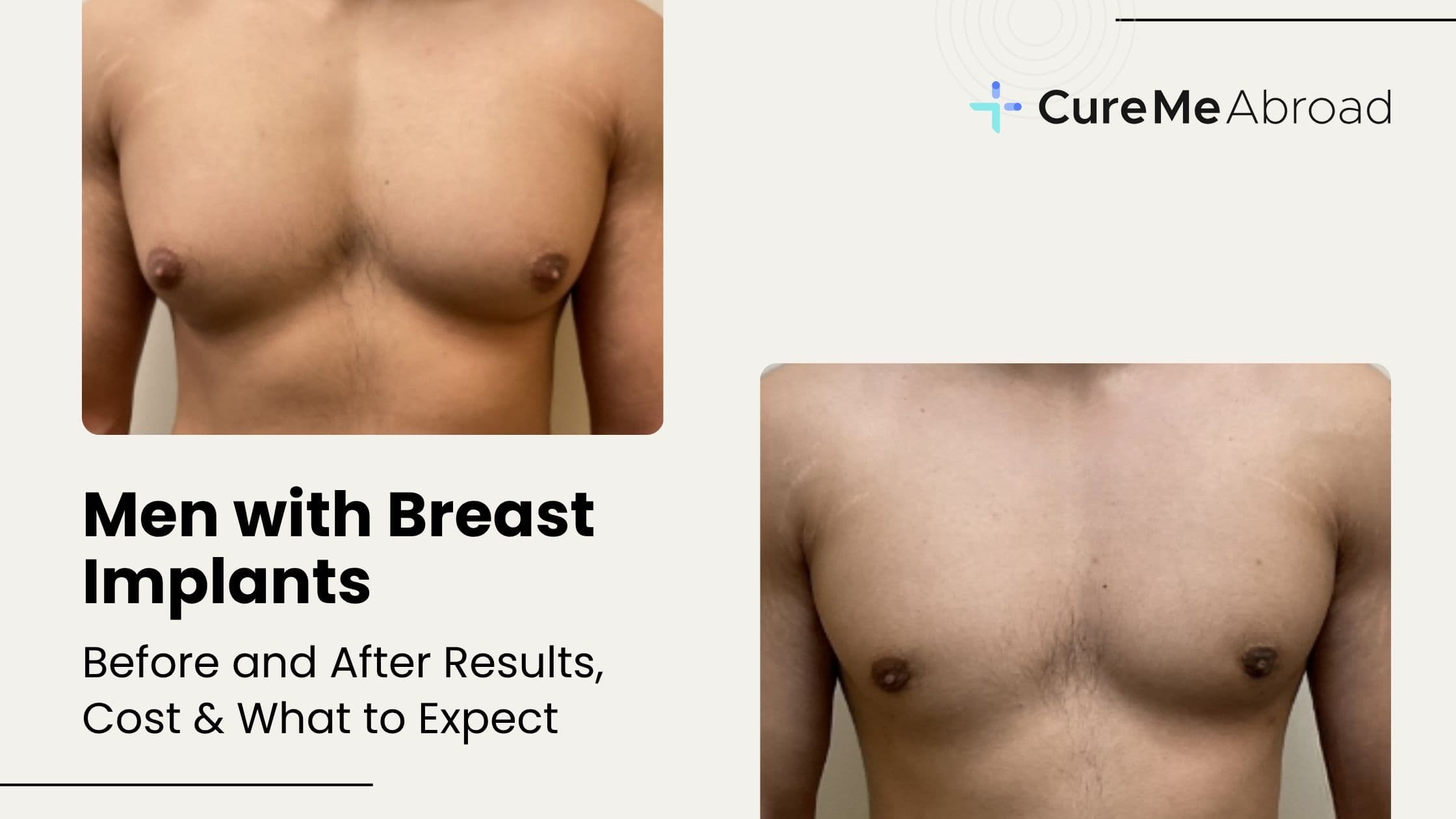
Nobody talks about this; plenty of men with breast implants in the US have had this surgery. The guy at your gym with a chest that looks almost too perfect? He may not have gotten there through the bench press alone. A transgender woman finally feeling like herself after years of waiting? That story plays out every single day in clinics across the country.
Some grew up with a chest condition that knocked their confidence for years. Some trained hard and never got the chest their genetics refused to give them. Some are transgender women who needed this surgery to feel complete.
In this blog you’ll learn what types of breast implants exist for men, why men get them, what before and after results actually look like, how much it really costs, what surgery and recovery involve, the risks you should know about, and how to find a surgeon you can trust.
What Is Male Chest Augmentation Surgery?
Two procedures fall under this topic and they serve completely different purposes.
Pectoral Implants (for cisgender men)
It involves a solid silicone shaped like a pectoral muscle. There’s no liquid inside so nothing can leak. It goes under the chest muscle through a small cut in the armpit. Scarring is barely noticeable and the chest feels firm like actual muscle.
Breast Implants for Transgender Women (MTF)
It involves saline or silicone gel implants, same as standard female breast surgery. It goes above or below the pectoral muscle based on the patient's body and what the surgeon recommends.
| Feature | Pectoral Implants (Cisgender Men) | Breast Implants (MTF / Transgender Women) |
|---|---|---|
| Material | Solid silicone (no liquid) | Saline or silicone gel |
| Goal | Muscular chest appearance | Feminine breast development |
| Placement | Beneath pectoral muscle | Above or below pectoral muscle |
| Risk of Rupture | None | Possible over time |
| Average US Cost | $5,000-$10,000 | $6,000-$15,000 |
| Typical Candidates | Fit men with underdeveloped chest | Transgender women |
Implant Brands and Product Options for Male Chest Surgery
Mentor, Allergan, and Sientra are the main FDA approved manufacturers. Ask your surgeon which brand they use and why before agreeing to anything.
Why Do Men Get Breast Implants?
- Trained for years and the chest just never came, purely down to genetics
- One side noticeably bigger or more developed than the other
- Born with Poland Syndrome, one side of the chest wall never fully grew
- Rebuilding after an injury, accident, or cancer-related chest surgery
- Transgender women whose body doesn't reflect who they actually are
- A chest the gym will never build no matter how many years go by
ASPS has put pectoral augmentation on the list of recognized procedures for men with breast implants who have actual structural chest conditions. Not just guys who want a bigger chest for the mirror. Insurance sometimes partially covers it in those cases.
Psychological and Mental Health Impact of Male Chest Surgery
The mental side rarely gets discussed until someone is already in it. Body image struggles and managing expectations matter before anything physical happens. Surgery isn’t always the right answer and a surgeon worth trusting will say that directly.
Men with Breast Implants Before and After: Real Results & What to Expect
Real patient photos from actual surgeons are the most useful research tool you have. Looking through a few different galleries gives an actual idea of what results look like across different body types.
After pectoral augmentation, most men report the following:
- Chest looks fuller even just standing there doing nothing
- Both sides sitting evenly for the first time
- Fitted clothes and shirtless situations feel a lot less loaded
- People see a built chest, not an obvious implant
- The armpit incision heals down to almost nothing visible
After MTF breast augmentation, patients typically notice:
- Breast shape and volume that suits their frame
- A chest that feels more aligned with their identity
- A natural feel, especially with silicone implants
- Real reduction in gender dysphoria and better daily comfort
The actual result takes months to appear. Swelling after surgery distorts how things look early on. Give it 3-6 months before forming any opinion. That’s when implants settle and the chest shows its real long-term shape.
How Hormone Therapy Affects MTF Breast Implant Outcomes
Wait at least 1-2 years on estrogen before surgery. Natural development during that time directly shapes implant sizing. Going too early usually means a worse result.
Men with Breast Implants vs Gynecomastia Surgery: Key Differences
These two aren’t the same thing at all. One removes tissue while the other adds it.
| Factor | Pectoral Implants | Gynecomastia Surgery |
|---|---|---|
| Purpose | Add chest volume and definition | Remove excess breast tissue |
| Ideal Candidate | Lean men with underdeveloped chest | Men with enlarged or feminized breast tissue |
| Cause Addressed | Genetics, asymmetry | Hormonal imbalance, weight, medications |
| Technique | Implant placed under pectoral muscle | Liposuction and/or tissue excision |
| Average US Cost | $5,000-$10,000 | $4,000-$8,000 |
| Insurance Coverage | Rarely, except for deformities | Sometimes, if medically necessary |
| Recovery Time | 4-6 weeks | 2-4 weeks |
Some men need both. Underdeveloped pecs and excess glandular tissue can exist at the same time and only a good surgeon can handle both in one procedure.
Male Breast Augmentation Cost: How Much Does It Really Cost?
For men with breast implants, what gets advertised is usually just the surgeon's fee.
Pectoral Implants: Full Cost Breakdown
| Cost Component | Estimated Range |
|---|---|
| Surgeon's Fee | $3,000-$6,500 |
| Anesthesia | $800-$1,500 |
| Operating Room / Facility Fee | $1,000-$2,500 |
| Implants (per pair) | $500-$1,500 |
| Pre-op Lab Work and Consultations | $200-$600 |
| Post-op Garments and Medications | $150-$400 |
| Total Estimated Range | $5,000-$12,000+ |
ASPS puts the average surgeon fee around $3,800. That’s just one part of what you will actually pay.
MTF Breast Augmentation: Full Cost Breakdown by US City
| Cost Component | Estimated Range |
|---|---|
| Surgeon's Fee | $4,000-$8,000 |
| Anesthesia | $800-$1,800 |
| Facility Fee | $1,000-$3,000 |
| Implants | $1,000-$2,500 |
| Follow-up Care | $300-$800 |
| Total Estimated Range | $6,000-$15,000+ |
| City | Approximate Total Cost |
|---|---|
| New York City, NY | $9,000-$15,000+ |
| Los Angeles, CA | $8,000-$14,000 |
| Miami, FL | $6,000-$11,000 |
| Houston, TX | $5,500-$9,500 |
| Chicago, IL | $6,000-$10,000 |
| Smaller US Markets | $5,000-$8,000 |
Insurance skips cosmetic pectoral surgery. Reconstructive cases like Poland Syndrome sometimes get partial coverage. For transgender patients, it depends on the state, plan, and insurer. So call and ask before writing it off. Financing through CareCredit or PatientFi is available at many practices for people who need to split payments.
Insurance and Legal Navigation for Male Chest Surgery
Cosmetic surgery isn’t covered. Reconstructive cases like Poland Syndrome sometimes qualify so call your insurer before assuming. Transgender patients should appeal denials with a letter of medical necessity. California, New York, and Colorado have stronger coverage mandates. CareCredit and PatientFi are available at many practices for financing.
Men with Breast Implants Abroad: Medical Tourism and Cost Savings
US surgery runs $5,000-$15,000. Turkey, Thailand, and Mexico often come in 40-60 % lower at accredited clinics. Check surgeon credentials, facility accreditation, implant brands used, and post-surgery follow-up before booking anything.
Am I a Good Candidate for Male Breast Augmentation?
Not everybody is in the right place for this surgery yet. For pectoral augmentation, here’re the people who tend to walk away with the best results:
- Are at a stable, healthy weight
- Have trained consistently but cannot build chest mass due to genetics
- Have visible asymmetry between both sides of the chest
- Were born with a structural condition like Poland Syndrome
- Are non-smokers or willing to quit well before surgery
- Are in good overall health with no conditions that complicate healing
MTF breast augmentation works a bit differently. It tends to suit transgender women who:
- Have been on hormone therapy for at least a year with limited natural breast development
- Are at a stable weight and don’t smoke
- Have realistic expectations about what surgery can achieve given their body frame
These aren’t hard rules. Think of them as a rough guide and sitting down with a surgeon for even half an hour will tell you far more than any list on a webpage.
Procedure Explained: What to Expect Before, During & After Surgery
Before Surgery
- Consultation covering goals, anatomy, and implant sizing
- Blood work and medical history review
- No blood thinners or aspirin for at least 2 weeks beforehand
- No smoking for at least 4 weeks since it makes healing worse
- Someone to drive you home and stay the first couple of days
During Surgery
Pectoral implant surgery takes 60-90 minutes under general anesthesia. A cut in the armpit, a pocket created below the chest muscle, an implant placed, and sutures close it up.
MTF breast augmentation follows the same structure as standard female surgery. Incision in the breast fold, around the areola, or in the armpit. Silicone is the most common choice for transgender patients since it feels more natural when existing breast tissue is minimal.
After Surgery
- Compression garment applied straight after
- Home same day since it is outpatient
- Pain medication for the first several days
- Drains placed in some cases and removed within one to two weeks
- No intense activity or heavy lifting for 4-6 weeks
Male Breast Augmentation Recovery Timeline: Week by Week
| Timeframe | What to Expect |
|---|---|
| Days 1-3 | Sore, limited arm movement, mostly resting |
| Days 4-7 | Swelling peaks then slowly drops; short walks fine |
| Weeks 2-3 | Back to desk work, drains removed; showering allowed |
| Weeks 4-6 | Light exercise returns, compression still worn during movement |
| Months 2-3 | Upper body training gradually back, implants settling |
| Months 3-6 | Final result visible, scars fading |
Everyone's body runs on its own clock when it comes to healing. Whatever your surgeon says goes. So ignore the recovery timelines strangers post online.
Clothing, Sports, and Daily Life After Male Chest Surgery
- Fitted clothing tends to sit better after surgery
- Compression garments worn for several weeks post-surgery
- Contact sports and heavy training need 3-6 months off minimum
- Intimacy generally fine after 3-4 weeks
- No permanent lifestyle restrictions for most men long term
Risks, Side Effects & Long-Term Safety
Short-Term Side Effects (Very Common)
- Swelling, bruising, and chest soreness
- Tightness or heaviness across the chest
- Fatigue for several days
- Temporary shifts in nipple sensitivity
Less Common but Serious Risks
- Infection needing antibiotics or, in rare cases implant removal
- Hematoma or seroma, blood or fluid pooling under the skin that needs draining
- Implant shifting or sitting unevenly
- Capsular contracture, where scar tissue tightens around the implant, more common with gel than solid silicone
For MTF patients, rupture is possible over time and the FDA recommends imaging starting around 5-6 years post-surgery.
Smoking pushes every risk higher. Most surgeons won't operate on anyone who hasn’t quit at least a month before.
Revision Surgery for Men with Breast Implants
More common than most expect. Shifting, capsular contracture, and size dissatisfaction are the usual triggers. Cost runs $3,000-$8,000 depending on what needs fixing. Recovery is usually shorter than the first surgery.
Long-Term Maintenance and Implant Lifespan
Solid silicone pectoral implants have no replacement schedule. Gel implants used in MTF surgery need an MRI around 5-6 years post-surgery and every 2-3 years after. Many men go 15-20 years without needing anything done.
Do Breast Implants Look Natural on Men?
Pectoral Implants
Yes, when sized right. It’s built to copy the pectoral muscle shape so results read as natural chest development. In lean men the difference is hard to spot even up close. Feels firm, not soft.
MTF Breast Implants
Silicone gel gives the most natural result, especially with limited existing breast tissue. Some surgeons add fat grafting to smooth edges and fill the shape more naturally. How it turns out comes down to two things: How it was sized and who did the surgery.
Real Patient Experiences and Community Resources
RealSelf has years of documented male chest results. Reddit communities like r/plasticsurgery and r/asktransgender have honest threads on recovery and surgeon recommendations from people who actually went through it. Both are worth reading before making any decisions.
Pros and Cons of Breast Implants for Men
| Pros | Cons |
|---|---|
| Visible chest improvement right away | Surgery carries inherent risks |
| Results last many years with no maintenance | Costs are high and mostly out of pocket |
| Fixes congenital defects and asymmetry | 4-6 weeks of restricted activity |
| Solid pectoral implants cannot rupture or leak | Result depends heavily on surgeon skill |
| Meaningful boost to confidence and self-image | May need revision surgery eventually |
| Looks natural when properly sized | Not suitable for smokers or certain health conditions |
Alternatives to Breast Implants for Men
| Alternative | Description | Best For | Approximate Cost |
|---|---|---|---|
| Pectoral Etching | Lipo technique that carves chest definition | Men with muscle but poor definition | $3,500-$6,000 |
| Fat Transfer | Harvested fat injected into chest area | Men wanting volume without implants | $4,000-$8,000 |
| Gynecomastia Surgery | Removes breast and fat tissue | Men with puffy or enlarged chest | $4,000-$8,000 |
| Hormone Therapy (MTF) | Estrogen builds natural breast tissue over time | Transgender women early in transition | Ongoing costs |
| Weight Training | Targeted chest work | Men with no medical limitations | Gym membership |
How to Choose a Board-Certified Plastic Surgeon in the US
Key Criteria to Look For
- Board certification through the American Board of Plastic Surgery (ABPS)
- Membership in ASPS or The Aesthetic Society
- Real experience with male chest procedures; specifically, ask how many they have done
- A before and after gallery with actual male patients
- Surgery in an accredited facility, AAAHC or AAAASF certified
- Fully itemized pricing with nothing vague
- Genuine reviews on RealSelf, Google, or Healthgrades
- A surgeon who listens and gives you room to decide without pressure
If you walk out of a consultation feeling pushed or uncomfortable, that surgeon isn’t for you. The right one always answers your questions and lets you think.
How to Vet a Surgeon Before Booking Male Chest Surgery
- Verify board certification yourself at certificationmatters.org
- Ask how many male chest procedures they have done specifically
- Look through before-and-after photos across different body types, not just their best results
- Ask what happens if something goes wrong after you leave
- If they rush you or dodge direct questions, find someone else
Conclusion
Some men with breast implants spent years doing every chest exercise they could find and still had nothing to show for it. Some hid their bodies at the beach, at the pool, and in changing rooms their whole lives because of something they were born with. Some are transgender women who scraped together the money, did the research, and got here on their own terms. Every single one of them had a different reason. The desire to feel normal in their own body is where they all meet.
A good result doesn’t happen just because you showed up. Look at photos of real patients, not the hand-picked gallery on a website. Talk to a few different surgeons before you pick one. Walk into every consultation with a clear idea of what you want. Ask everything, even the stuff that feels silly. A surgeon who is worth it will sit with your questions and answer them properly.
If anyone makes you feel like a number or tries to close the deal before you are ready, walk out. That isn’t the right place.
If you're exploring options but feel unsure where to start, platforms like CureMeAbroad can make the process easier. They connect patients with verified, board-certified surgeons in the US and internationally, help compare treatment costs, and guide you through consultations without the usual confusion. For many people considering procedures like this, having that extra support can make decision-making a lot less overwhelming.
FAQs
1. Does getting pectoral implants hurt?
Nothing during surgery since you are fully under anesthesia. Waking up is a different story. The chest feels sore, tight and heavy for the first few days. Pain medication takes the edge off and most guys are back to feeling okay within a couple of weeks.
2. Will people be able to tell I have implants?
Honestly, no. Pectoral implants move with the muscle so they behave like the real thing. On a lean body the result blends in well. Day to day, at work, at the gym, nobody is picking up on anything.
3. Can the implant shift inside my chest?
Most men with breast implants never deal with this at all. It sits inside a specific pocket carved under the muscle. Problems happen when that pocket isn’t made properly or when someone goes back to heavy activity before the body has healed. Good surgeon, proper recovery, and the chances of shifting are very small.
4. What if I gain or lose weight after surgery?
The implant stays the same no matter what. Your body tissue is what changes around it. Put on a lot of weight and the chest definition softens. Lose a lot and the implant may sit more noticeably. Stable weight gives the most consistent result over time.
5. Is there a non-surgical option that gets similar results?
Pectoral etching uses liposuction to cut definition into the chest. Works well if there’s already some muscle underneath to work with. The problem is it adds no volume at all. A flat or underdeveloped chest needs more than etching can offer. Think of it as a detail tool, not a fix for lack of muscle.
How much does top surgery cost for men with breast implants?
People researching male chest enhancement procedures often ask, how much does top surgery cost when comparing different cosmetic and gender-affirming surgeries. The cost can vary widely depending on the surgeon’s expertise, implant type, hospital facility, anesthesia fees, and the country where the procedure is performed. In many cases, international destinations may offer significantly lower prices compared to Western countries.
References
- American Society of Plastic Surgeons (ASPS): Pectoral Implants and Breast Augmentation Cost Statistics : American Society of Plastic Surgeons https://www.plasticsurgery.org/cosmetic-procedures/breast-augmentation/cost
- WebMD: Breast Implants: Types, Cost, Problems, and Recovery : WebMD https://www.webmd.com/beauty/cosmetic-procedures-breast-augmentation
- National Institutes of Health / PubMed Central (PMC): Breast Augmentation for Transfeminine Patients: Methods, Complications, and Outcomes: PMC / US National Library of Medicine
https://pmc.ncbi.nlm.nih.gov/articles/PMC7347817/ - AEDIT: Pectoral Implants Overview: Cost, Recovery, Before and After: AEDIT https://aedit.com/procedure/pectoral-implants
- The Aesthetic Society : Gynecomastia and Pectoral Implants Procedure Information: The Aesthetic Society (American Society for Aesthetic Plastic Surgery) https://www.theaestheticsociety.org/procedures/breast/gynecomastia