





Thousands of people search for neck lift cost, neck lift price guide, neck lift surgery price, how much does a neck lift cost, and non-surgical neck lift options. There are various reasons why someone may have sagging or banding skin and a weak jawline; ageing, changing weight, genetics, and sun damage are just some possible causes. The neck lift procedure can solve these problems.
This article will help you learn everything there is to know about the neck lift cost, recovery, candidacy, benefits, risks, and alternatives in 2026.
What Is a Neck Lift?
The neck lift procedure is a surgery that helps to improve the appearance of the neck by removing any extra skin, muscle tightening, and removal of any fat deposits in the area. Those who are looking for the cost of neck lift surgery generally suffer from problems like “turkey neck” and a double chin.
Neck lift surgery can help to achieve:
- Improved jawline contour
- Sagging skin reduction
- Tightening of neck muscles
- More youthful look
- Long-term effects
- Proper balance of face shape
This list of advantages accounts for the reason why the neck lift cost is worth paying for. As everyone’s case is different, the cost of neck lifts will not be the same for all patients.
Who Is a Good Candidate?
The ideal candidates include those who are healthy individuals with excessive creases in their necks, fat under their chins, neckbands, or loose skin around their jaws. The patients must know what to expect from this operation and its pros and cons.

What's Included in the Total Cost of Neck Lift Surgery?
When surgeons quote a price, they're often referring to their professional fee alone. The total cost of a neck lift adds up across several components:
Surgeon's Fee
The costliest component is usually between $4,000–$7,000 for a board-certified plastic surgeon. An especially popular one in metropolitan areas will likely charge even $10,000 and more for their fee alone.
Anaesthesia
Almost all neck lift surgeries require general anaesthesia or IV sedation. Anaesthesia fee can be expected to range from $1,000–$1,800.
Surgical Facility Fee
Regardless of whether the surgery is going to be conducted in a hospital or in an independent surgical facility, expect to pay an additional $800–$2,500 as the surgery facility fee.
Pre-operative Tests
Pre-operative medical tests such as blood work, ECG, or others might cost you between $200–$500.
Post-operative Garments and Medications
Post-surgery clothing (compression garments), drugs for pain relief, antibiotics, and other medications will add up to $100–$300.
Follow-up Visits
If the surgeon does not provide this service for free, anticipate spending an extra amount, which is usually needed for 3–5 post-operative appointments within the first six months.
Revision Surgery (Optional)
A revision surgery in case something goes wrong will likely cost between $2,000-$5,000+.
Factors that Contribute to the Neck Lift Cost
When trying to determine the cost of a neck lift, one should consider the particular factors involved. They include the following:
Surgeon Expertise and Qualifications
A certified specialist who is either a board-certified plastic surgeon (ABPS) in the United States or a fellow of the Royal College of Surgeons elsewhere will be more expensive compared to an uncertified general or cosmetic surgeon. This additional fee should not be underestimated; it could save your life and money.
Complexity of Treatment
A client suffering from moderate or severe platysmal banding and excessive skin laxity needs more complicated treatment, which means additional expenses.
Combined Procedures
Neck lift surgeries are often accompanied by procedures like face lift, brow lift, and blepharoplasty. While it may mean higher total expenses, such a combination reduces individual treatment prices.
Type of Anaesthesia
Surgical treatment under local anaesthesia and intravenous sedation is cheaper than the procedure under general anaesthesia. Some mini neck lifts can be done using local anaesthesia.
Surgical vs. Non-Surgical Neck Lift Procedure: Which Option Is Best For You?
It is not necessary to undergo surgical treatment, which has been a major issue to consider in 2026, as many different non-surgical methods of neck lifting have become possible.
Methods of Non-Surgical Neck Lift
Non-surgical neck lift involves the use of energy devices, injections, or threads to enhance the contour of the neck. This procedure is recommended for those people who experience some degree of skin laxity without requiring invasive intervention.
Popular non-surgical neck lift options include:
- Radiofrequency skin tightening
- Ultrasound treatments
- Thread lifts
- Dermal fillers
- Neuromodulators
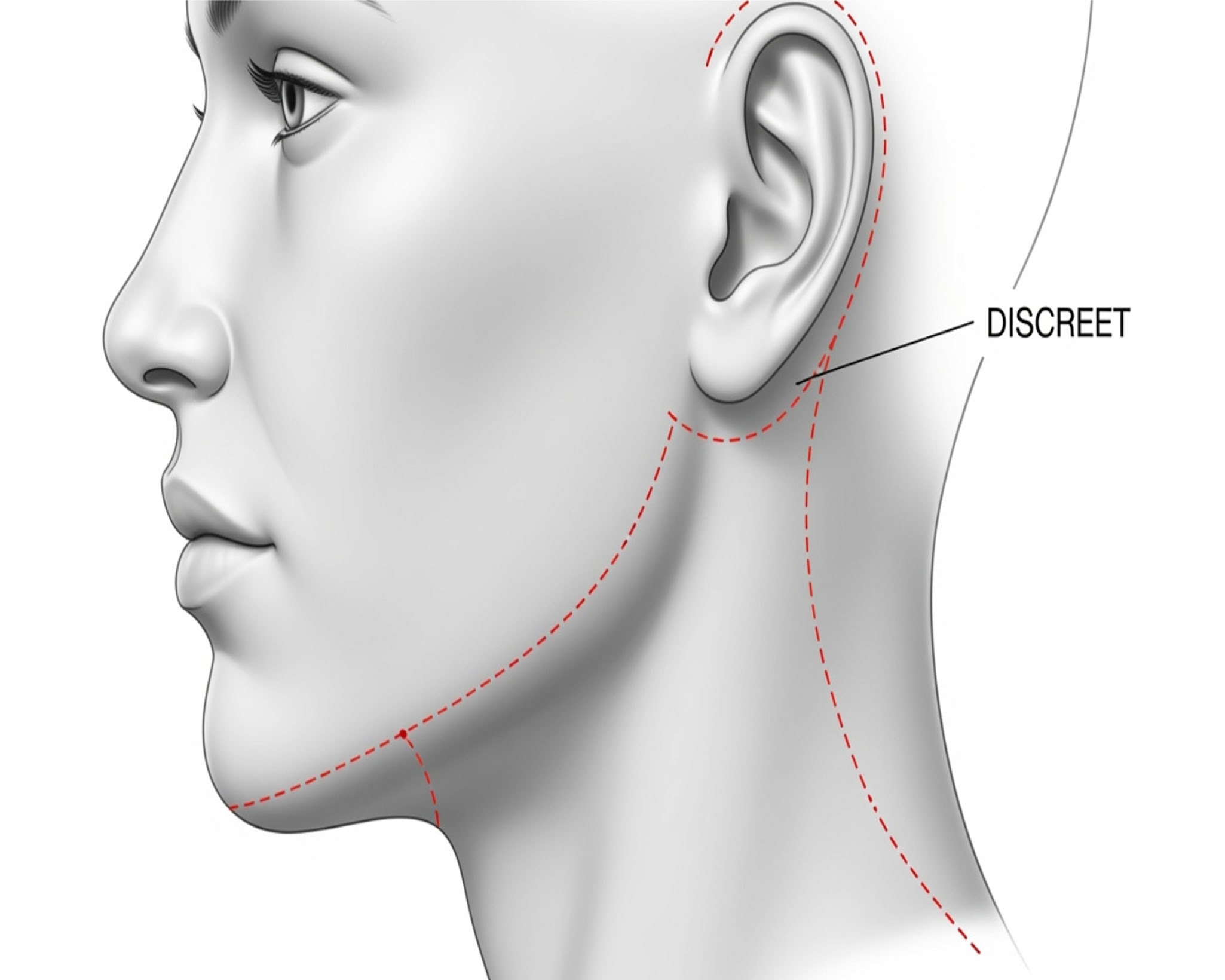
Drawbacks of Non-Surgical Treatments
Although a non-surgical neck lift is capable of delivering noticeable results, the effects cannot equal the outcomes achieved after a surgical procedure, especially in cases of excessive tissue sagging or banding of muscles. Non-surgical treatments usually provide effects lasting for up to one-two years and require repeated appointments.
The Bottom Line
In case you are in your early forties and notice subtle changes, a non-surgical neck lift might be your first step. However, for those people who experience moderate to severe laxity or have visible muscle bands, surgical procedures are much more efficient.
What to Expect in Recovery
Recovery may be considered one of the most underrated processes in neck lift surgery. Although the operation can be completed within just a few hours, the recovery process will take some time. The key to smooth and successful recovery lies in knowing what to expect and what measures need to be taken.
First Week After Surgery
The first week after the procedure is considered the most difficult period for many people. Swelling, bruising, and tightness around the neck usually reach its peak by this time. The vast majority of patients have to wear special garments continuously throughout this period to aid recovery. Pain is normally controlled using prescribed pain relievers. Adequate rest is necessary, and patients have to avoid physical activities like bending or lifting heavy objects. On average, most people take 7–10 days off from work.
Week 2 – 3
By the end of the second and third weeks, most of the bruising and swelling will have started to ease. Non-dissolvable sutures should be taken out in 7 to 10 days after the operation. Patients may feel comfortable enough going back to work at the desk. However, elevating the head while resting should still be observed as a means of reducing swelling.
Week 4 – 6
Recovery should be much easier for the patient during weeks four to six. Most of the swelling would already have subsided by this time, and the new contouring of the neck and jawline should now be apparent. Patients can go back to doing some light exercises and follow a schedule according to the doctor’s advice.
Week 8-12
By around two or three months after surgery, the majority of the effects will be visible in the range of 70-80%. The patient’s neck will appear much refined, while all the swelling will have subsided. While some people may experience numbness or tingling sensations in the treated region, this too tends to disappear over time. By now, the patient will be very confident of his decision.
Month 6-12
This is the last stage when the healing process is going on between six months and a year following the procedure. By this time, all effects of the surgery are completely visible with an improvement in the neck contouring and jaw definition. There is no swelling left and scars are still fading and softening.
Neck Lift Cost by Country (2026)
| Country | Average Neck Lift Cost (USD equivalent) |
|---|---|
| United States | $7,500 – $15,000 |
| United Kingdom | $6,000 – $12,000 |
| Australia | $7,000 – $13,000 |
| Canada | $6,500 – $11,000 |
| Mexico | $3,000 – $5,500 |
| Turkey | $2,500 – $5,000 |
| Thailand | $3,000 – $5,500 |
| India | $2,000 – $4,500 |
Is a Neck Lift Covered by Insurance?
Not normally. A neck lift operation falls under elective cosmetic surgery and is therefore excluded from being reimbursed by both private health insurance policies and government plans such as Medicare (US), the National Health Service (NHS, UK), and Medicare (Australia).
Exceptions to this include:
- Reduction of the neck skin as a result of substantial weight loss (can be seen as reconstructive)
- Treatment of scars and deformities caused by trauma
Risks and Factors to Consider
Surgery always comes with risks. Some of the possible risks are infections, bleeding, scarring, asymmetry, slow healing, numbness, and reactions to anaesthesia. It is always prudent to select a reputable doctor for any form of surgery.