



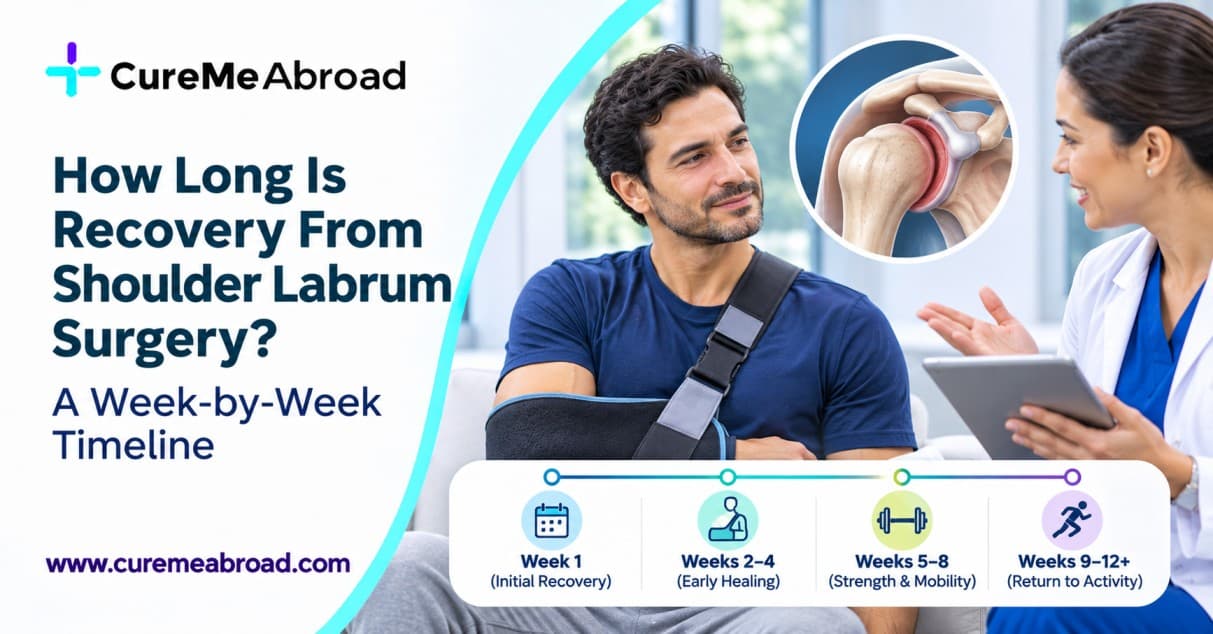
How Long Is Recovery From Shoulder Labrum Surgery? A Week-by-Week Timeline
Shoulder labrum surgery usually takes less than 2 hours, but getting back to your usual routine can take several months. You may wake up with your arm in a sling and go home later that day. Although the operation is over, your shoulder still needs time to heal. If you are wondering how long is recovery from shoulder labrum surgery, it depends on the type of tear, the repair your surgeon performs, and your progress with physical therapy.
In this guide, you'll find a week-by-week look at what recovery may involve. We'll also cover when you might be able to return to everyday activities, go back to work, and start playing sports again.
How Long Does It Take to Recover From Shoulder Labrum Surgery?
The labrum needs about 4-6 weeks to heal back onto the bone. After that, the shoulder takes another 4-6 weeks to regain strength and movement. So the initial healing period usually lasts 2-3 months.
Many people regain most of their everyday shoulder function within 4-6 months. That is when activities like lifting groceries or reaching overhead may start feeling easier. Athletes often need longer, sometimes 6 months to a year or more, since throwing and swimming put greater demands on the repair.
Even after your shoulder feels normal, the tissue inside may still be maturing. That process can continue for up to a year. Recovery also happens in stages, so it helps to understand what your shoulder is working on at each one. If you are wondering how long is recovery from shoulder labrum surgery, remember that feeling better and completing the healing process aren’t always the same thing.
Shoulder Labrum Surgery Recovery Timeline: Week by Week
Every shoulder heals at its own speed, but most people move through similar stages in a general order. This shoulder labrum surgery recovery timeline shows what usually happens and when. Your surgeon’s protocol always comes first.
| Week/Phase | What’s Happening | Key Goals & Activities |
|---|---|---|
| Weeks 1-2 | The shoulder is swollen and sore. The nerve block wears off in the first day or two. | Keep the sling on as instructed, including at night if advised. Use ice and move only your hand, wrist, and elbow as directed. Gentle pendulum swings may be allowed. |
| Weeks 3-4 | Pain slowly settles. The labrum is still attaching to the bone. | The sling usually stays on. Physical therapy may begin around this time, although some surgeons start it sooner or later. |
| Weeks 5-6 | The repair is still healing, so movement remains limited. | Your therapist may move your arm for you. Avoid lifting or moving it independently unless your surgeon or therapist allows it. |
| Weeks 7-10 | The shoulder may gradually begin moving more freely. | The sling may be discontinued around this stage, depending on healing and your surgeon's instructions. Guided exercises may progress to help restore movement. |
| Weeks 10-12 | Movement improves, and the shoulder gradually starts feeling stronger. | The goal is to restore comfortable movement. Exercises for the muscles around the shoulder blade may be added. |
| Months 3-4 | The strengthening stage progresses. | Your therapist may add more resistance. Some people may be cleared for light gym activities. |
| Months 4-6 | Most daily tasks may become easier. | Non-contact sports practice and selected overhead movements may be allowed after assessment. |
| Months 6-12+ | Strength and function continue improving. | Competitive sports and heavy physical work may be cleared during this period. Overhead athletes may need closer to a year or longer. |
Recovery Time for Different Types of Shoulder Labrum Repairs
Recovery looks different depending on which part of the labrum was torn and how the surgeon repaired it. Two people who undergo surgery during the same week can end up on very different schedules. Even with the same type of repair, the location of the tear and the surgical technique can affect how long it takes to recover from labrum surgery.
Bankart Repair (Anterior Labrum)
This repair treats a tear at the front of the shoulder, which commonly occurs after a dislocation. Some patients have experienced more than one dislocation before undergoing surgery. The sling generally stays on for 4-6 weeks, although the exact period depends on the repair. Physical therapy may start in the first week, depending on your surgeon's protocol. Athletes in football, lacrosse, wrestling, and hockey may return around 6 months. The shoulder needs to regain sufficient strength and stability first because contact puts considerable force on the repair.
SLAP Tear Repair (Superior Labrum)
This tear sits at the top of the socket, where the biceps tendon attaches. Many people need around 4-6 months to regain everyday function. Returning to full sport can take up to a year or longer. Pitchers and other overhead athletes tend to wait longest because each throw places stress on the repaired area.
Posterior Labrum Repair
A tear at the back of the shoulder is less common. It can develop from repeated strain over time or from an injury. Some patients wear a sling for about 6 weeks. Strength work may begin somewhere between weeks 8 and 12, depending on the repair and rehabilitation plan. Many people may return to sport at roughly 6 months, although individual timelines vary.
Open vs. Arthroscopic Surgery
The surgical method also plays a part. Arthroscopic surgery uses a few small incisions to repair the labrum. Open surgery involves a larger incision and may require a different rehabilitation approach. Recovery can vary depending on the extent of the injury and the procedure performed. Your surgeon can explain which method is appropriate for your tear and what it means for your recovery.
Physical Therapy and Rehabilitation After Labrum Repair
Physical therapy is an important part of recovery after labrum repair. The operation fixes the tear, but rehabilitation helps restore shoulder movement, strength, and function. Start dates differ from one surgeon to the next. Some patients begin within a few days, while others wait a couple of weeks.
The Three Rehab Phases
Phase 1: Protect and Heal (Weeks 1-6)
The labrum is still attaching to the bone, so the repair can’t handle significant load. Your therapist aims to protect the repair while preventing unnecessary stiffness. The exercises are small. You may do pendulum swings, bend your elbow, and squeeze your hand. These movements may seem simple, but they help maintain movement in the areas that are safe to exercise while the repair heals.
Phase 2: Restore Motion and Begin Strengthening (Weeks 6-12)
Now the goal is to gradually restore your shoulder movement. Many people work towards regaining comfortable motion during this period. Light resistance exercises for the rotator cuff may begin when your therapist considers them safe. Your therapist may also work on the muscles around the shoulder blade because they help support the shoulder joint.
Phase 3: Build Strength and Return to Activity (Months 3-6 and Beyond)
This is where the sessions become more challenging. You may gradually lift heavier weights, move faster, and practice activities related to your sport or job. Some people feel better around month 4 and are tempted to push too far. Let your therapist decide when you are ready to progress.
Many patients attend therapy 2-3 times a week for about 3-4 months, although the frequency and duration vary. You will also have home exercises for the other days. Following the prescribed routine helps you make steady progress without placing unnecessary stress on the repair. Consistent rehabilitation is an important part of how long is recovery from shoulder labrum surgery because it helps you regain function safely without rushing the healing tissue.
Returning to Daily Activities: Driving, Working, and Sleeping
Once you are home, the small things become the real challenge. Getting dressed, sleeping through the night, and driving to the store all look different with one arm out of action.
| Activity | Expected Return Timeline | Key Considerations |
|---|---|---|
| Bathing and dressing | 2-4 weeks | Wear shirts that button up the front and shoes you can slip on. Both can make daily activities easier. |
| Light desk work | 1-2 weeks after surgery | You may be able to type with your other hand, but the sling stays on as instructed. Don’t lift, push, or pull with the operated arm unless cleared. |
| Sleeping flat | 4-6 weeks | A recliner may be more comfortable at first. Rest the arm on pillows and avoid lying on the operated shoulder. |
| Driving | Often around 6-8 weeks, depending on recovery | You need to be off opioid pain medication and able to control the vehicle safely. Your surgeon must clear you before you drive. |
| Physical labor or overhead work | At least 3-4 months | You need your surgeon’s clearance. How soon you return depends on the physical demands of your job. |
Sleep is the part that wears people down. Lying on the operated side puts pressure on the repair, so many surgeons recommend avoiding it for the first 4-6 weeks or longer. Plenty of patients find a recliner more comfortable during this period. Others sleep on their back with a pillow under the arm to support it.
Driving varies from person to person. You shouldn’t drive while wearing a sling if it prevents you from controlling the vehicle safely. You also need to be off opioid pain medication and have enough strength and movement to respond safely. Some people may meet these conditions earlier than others, but many surgeons recommend waiting until the sling is discontinued. Check with your surgeon before getting behind the wheel.
Returning to Exercise and Sports After Labrum Repair
Getting back to the gym or the field is the part most people look forward to, and it is also where they tend to rush. The timeline below is a general guide, and your surgeon may adjust it based on your repair.
| Activity / Sport | Approximate Return Timeline |
|---|---|
| Light gym work and stationary bike | 3-4 months |
| Easy swimming for fitness | 4-5 months |
| Non-contact sport practice | 4-6 months |
| Contact sports such as football, wrestling, and hockey | Around 6 months or later |
Your sport makes a big difference. Runners, cyclists, and people who lift for fun may get back to selected training activities at around 4 months. Swimming and overhead lifting usually come later because they place greater demands on the shoulder. Throwers often face the longest wait. One study of baseball players found that it took about 5.9 months on average to start throwing again and about 11.3 months to return to competition.
Keep in mind that the calendar alone doesn’t decide when you return to sports after labrum repair. Your surgeon and therapist will check whether your shoulder has regained enough strength, movement, and stability before clearing you. If it passes those checks, you may be ready. If it doesn’t, a few more weeks of rehabilitation can help protect the repair.
Factors That Affect Shoulder Labrum Surgery Recovery Time
Your surgeon can give you a ballpark figure, but the real timeline comes down to a mix of things. Some you can’t change, and some you can. If you are asking how long the recovery from shoulder labrum surgery will take, the location and severity of your tear, the type of repair performed, and your shoulder strength before surgery all matter.
Type and location of the tear: A small tear may require a less extensive repair. A bigger one can need additional anchors and stitches, which may affect the amount of tissue that needs to heal. If your shoulder has dislocated several times, the repair may be more complex.
Arthroscopic or open surgery: The surgical approach can influence your recovery. The extent of the injury and the procedure performed also affect how quickly you progress through rehabilitation.
Age and general health: Age, overall health, and tissue quality can influence healing. Bone and tissue quality matter because the labrum needs a suitable surface to heal against.
Shoulder strength before surgery: Your shoulder condition before surgery may affect how easily you progress through rehabilitation. If your surgeon gives you exercises to do beforehand, follow their instructions.
Which arm was operated on: Surgery on your dominant arm may make daily activities more challenging. You eat, write, and reach with that side all day, so every restriction can stand out. Overhead athletes may notice this most.
How well you follow rehab: Missing sessions or returning to sport too early can interfere with your progress. Keep in mind that the labrum has a limited blood supply, so it can take time to heal even when you follow your rehabilitation plan.
Smoking and nutrition: Smoking can interfere with tissue healing. Adequate protein and a balanced diet support the body's general healing process.
Possible Complications and Warning Signs During Recovery
Not every twinge after surgery is a problem. Most are just part of healing, but a few symptoms deserve attention. It helps to know what to watch for before you need to act.
Shoulder Stiffness
Tightness can occur during recovery. The shoulder may feel stiff after a period of limited movement. Physical therapy helps restore movement gradually. If your shoulder becomes increasingly stiff or movement gets worse instead of improving, mention it to your surgeon. Frozen shoulder, known medically as adhesive capsulitis, may be one possible cause.
Infection
It’s uncommon, but this isn’t one to wait on. Whenever the dressing comes off, take a look at each incision. A fever is an important warning sign. So are increasing heat or swelling around a cut, spreading redness, and any fluid seeping out. If you notice these symptoms, contact your surgical team promptly.
Repair Failure or Re-Tear
Anchors and stitches can loosen, which may allow the labrum to separate from the bone. You may feel a pop, experience sharp pain after an injury or notice that the joint feels unstable. These symptoms don’t necessarily mean the repair has failed, but you should tell your surgeon about them.
Nerve Irritation
Tingling or numbness in the hand can occur in the first few days. The nerve block or swelling may contribute to these symptoms, and they often settle. Contact your surgical team if numbness persists, spreads up the arm or is accompanied by weakness in your grip.
Blood Clots
Blood clots are uncommon after shoulder surgery, but they can be dangerous. Follow your surgeon's instructions for preventing them. These may include early movement and other preventive measures based on your individual risk. A leg that becomes swollen, sore, and warm needs prompt medical attention. Chest pain or sudden breathlessness requires emergency medical care.
Ongoing Shoulder Instability
Later on, the main concern is a shoulder that keeps slipping out or feeling unstable. Completing your physical therapy and following your surgeon's activity restrictions can help protect the repair. If the joint still feels shaky after rehabilitation, ask your surgeon to examine it again.
Conclusion
The surgery may be over in a few hours, but your shoulder won't be back to normal overnight. It takes time to rebuild strength and get comfortable with everyday movements again. Physical therapy is a big part of that process. Even if you feel better, don't rush into activities your shoulder may not be ready for. Stick to the recovery plan given by your surgeon.
If you are asking how long is recovery from shoulder labrum surgery, the answer depends on your injury and the repair you had. Your progress during rehabilitation also makes a difference. Some people get back to their usual routine sooner, while others need more time. Listen to your body and keep your follow-up appointments.
If you are looking into treatment abroad, CureMeAbroad can help you connect with experienced healthcare providers and accredited hospitals to discuss your shoulder labrum surgery options.
Frequently Asked Questions
1. Can supplements speed up labrum healing after shoulder surgery?
There is currently no strong clinical evidence that supplements can speed up labrum healing after surgery. Adequate protein and a balanced diet support general tissue healing. If you are considering collagen peptides, vitamin C, or other supplements, ask your surgeon first. Some products can interfere with medication, so it is important to check before taking them.
2. Does the number of anchors used in the repair affect recovery time?
It may. A repair that needs several anchors can involve a more extensive injury or repair. Your surgeon might adjust your sling period or progress your strengthening exercises at a gentler pace. Anchor count is only one factor, though. The operative report lists exactly what was done, and your surgeon can explain how it affects your recovery.
3. Does a history of shoulder dislocations change recovery?
It can. A shoulder that has popped out many times may have lost some bone along the edge of the socket. That can make the repair more complex and sometimes calls for additional stabilizing procedures. In those cases, recovery from shoulder labrum surgery may take longer, and clearance for sport may come later. Your scans can help identify whether bone loss is part of your injury, so it is worth discussing this with your surgeon.
4. How long is recovery from shoulder labrum surgery before I can return to work?
It depends on the physical demands of your job. People with desk jobs may return within 1-2 weeks if they can work comfortably without using the operated arm. Jobs involving lifting, pushing, pulling, or overhead movements may require 3-4 months or longer. Your surgeon will assess your shoulder function before clearing you to resume physically demanding work.
5. How long is recovery from shoulder labrum surgery for athletes?
Athletes generally need 6 months to a year or longer to return to their full sporting activities. Contact sports may be possible around 6 months, while baseball pitchers and other overhead athletes often need 9-12 months. The final decision depends on strength, stability, range of motion, and sport-specific testing rather than time alone.
References:
- Labrum Surgery Recovery: What to Expect: Arizona Sports & Orthopedic Doctors (ASODocs): 2021 https://www.asodocs.com/labrum-surgery-recovery-what-to-expect/
- Shoulder Labrum Tear (Labral Tear of the Shoulder): Hospital for Special Surgery (HSS): 2025 https://hss.edu/health-library/conditions-and-treatments/shoulder-labrum-tear
- Bankart Lesion / Glenoid Labrum Tear: Cleveland Clinic: 2023 https://my.clevelandclinic.org/health/diseases/bankart-lesion-glenoid-labrum-tear
- The Ultimate Guide to Labrum Repair Surgery (Shoulder): Commons Clinic: 2024 https://commonsclinic.com/the-ultimate-guide-to-labrum-repair-surgery-shoulder/
- Labrum Surgery Recovery Time: Week-by-Week Athlete Guide: Rehabletics NJ: 2026
https://rehableticsnj.com/labrum-surgery-recovery-time/ - What to Expect After Your Shoulder Arthroscopy and Labral Repair: Gombera MD: 2023 https://www.gomberamd.com/blog/shoulder-arthroscopy-and-labral-repair-recovery.html