

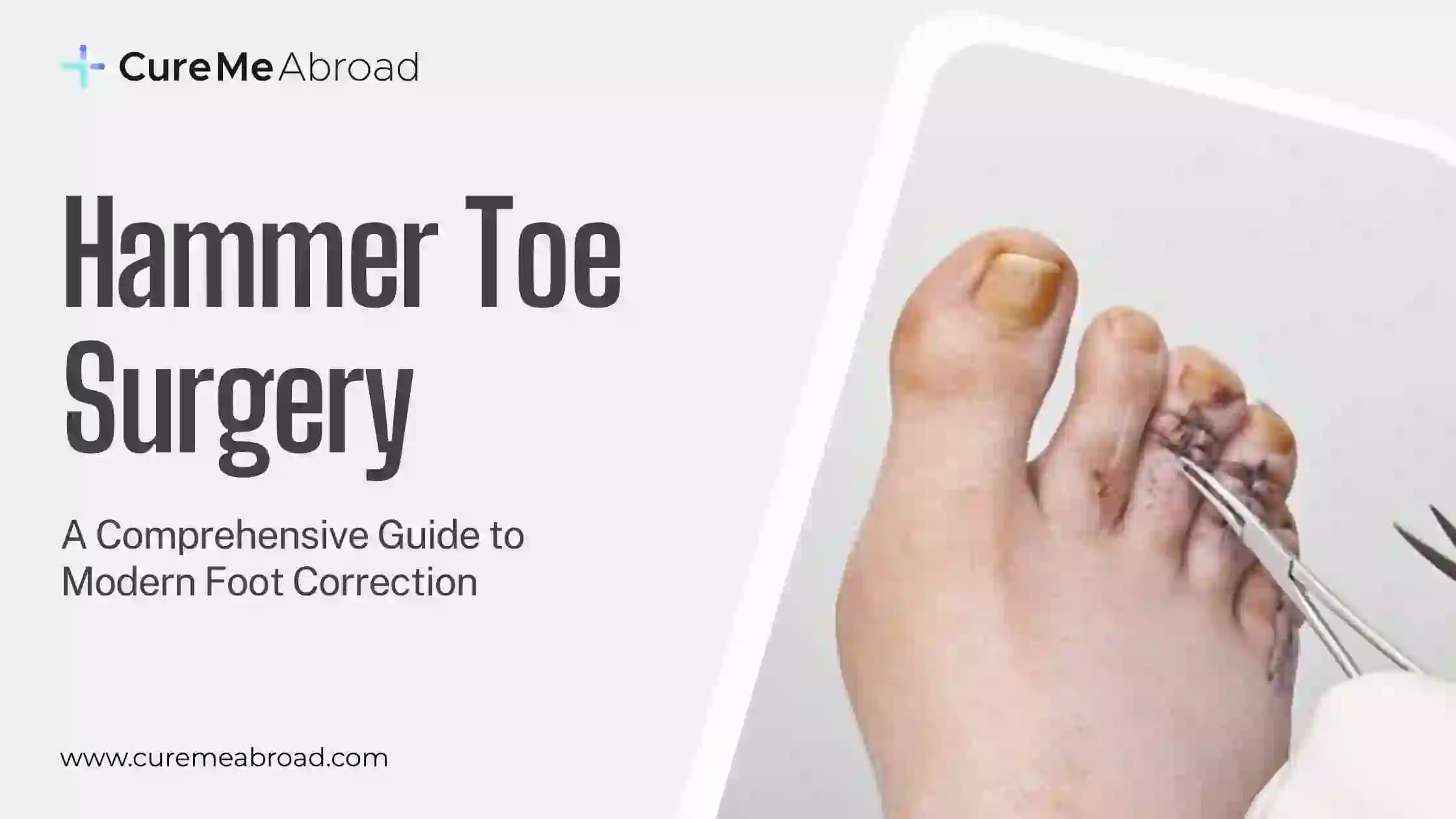
In recent times, hammer toe surgery has been through a lot of technological transformations, which move from conventional open procedures to highly accurate, less invasive corrections. For those who are suffering with the discomfort of a curled and rigid toe, choosing to undergo surgery is often the starting point towards regaining mobility and confidence. The complete guide that provides detailed information about everything a person needs to know about the surgery, from hammer toe surgery success rate to global cost-effectiveness in the world's best medical tourism hub.
Understanding the Modern Hammer Toe Surgery Name and Techniques
The medically approved hammer toe surgery name is mostly based on the extent of severity of the bend on the toe. Although 'hammer toe correction' is the general term when the surgeon is conversing with patients and their relatives, the surgeon at times may use specific technical terms when addressing the joint that is involved in the surgery.
Arthroplasty and Arthrodesis: The Standard of Care
Arthroplasty (Joint Resection):
This procedure includes eradicating a small portion of the joint to enable straightening. It is usually used for semi-flexible toes.
Arthrodesis (Fusion):
For toes that are rigid, the surgeon gets rid of the joint surface and enables the bone surface to fuse into a straight line. This comprises hammer toe surgery with pins to manage the alignment when the fusion process is in process.
Tendon Transfer: Correcting the Pull
In case the condition of the deformity is still flexible, a tendon transfer may have to be carried out. The surgeon reroutes a tendon from the bottom of the toe to the top and, most importantly, “rebalances” the tension to pull the toe flat.
Navigating the Immediate Hammer Toe Surgery Recovery Phase
The success of the procedure is majorly dependent on the first few days of the hammertoe surgery recovery. Compared to the conventional surgeries, most surgeries are usually outpatient, which enables the patient to begin healing in the comfort of the patient’s home or recovery suite.
Hospital Discharge and the First 48 Hours
The patient, when sharing about their experience, always says that they leave the hospital with a bulky dressing and a specially designed post-op shoe. It is advised to each and every patient that elevation is their best friend during the recovery period, as keeping the foot above the heart level decreases the level of swelling and substantially reduces the risk of the hammertoe surgery going wrong due to obstruction in blood flow.
Expert Management of Pain and Post-Op Symptoms
- Common Symptoms: Throbbing, swelling, and a sensation of "tightness" are normal.
- Medication: Most surgeons prescribe patients with a short course of anti-inflammatories. In 2026, many clinics also help the patients with a localised nerve block that lasts up to 72 hours, which substantially smooths the first phase of recovery.
Critical Milestones: Understanding Hammer Toe Surgery Recovery Time
The heart ablation surgery recovery time is more like a marathon, not a sprint. Although the patient may be walking the day of the surgery in a specialised boot, the internal tissue needs time to solidify and align with the framework.
- Weeks 1-2: Stitches are usually taken out. You must keep the foot dry and elevated as much as possible.
- Weeks 3-6: If you received hammer toe surgery with pins, these are generally removed in the clinic around the 4-to-6-week mark.
- Weeks 8-12: Most patients move back into supportive sneakers or "wide-toe-box" shoes.
Real Expectations: Hammer Toe Surgery Before and After
When comparing hammer toe surgery before and after modifications, the outcomes are generally unexpected. “Before” images usually demonstrate a noticeable “knuckle” that hits against the shoes, which is generally accompanied by the appearance of painful corns. The “After” images usually showcase a straightened toe that sits aligned to the ground, which enables the patient to experience the natural walking pattern and explore a wide range of footwear alternatives.
Hammer Toe Surgery Cost: 2026 Global Comparison
One of the beneficial factors of medical tourism is the substantially low hammer toe surgery cost, which is found in overseas centres with remarkable outcomes without compromising on patient safety.
| Country | Estimated Surgery Cost (USD) | Standard of Care |
|---|---|---|
| Turkey | $2,500 – $4,500 | JCI Accredited / Luxury Recovery |
| India | $1,800 – $3,500 | High-Volume Expert Surgeons |
| Thailand | $3,000 – $5,500 | World-Class Medical Hubs |
| Mexico | $2,800 – $5,000 | Proximity for North Americans |
| Spain | $5,000 – $8,500 | EU Surgical Standards |
| USA | $8,000 – $15,000+ | High Deductibles / Out-of-Pocket |
Note: Costs typically cover the surgery, facility fees, and initial post-op footwear.
Top 5 Facilities Worldwide for Hammer Toe Surgery Excellence
For patients who are looking for the facility with the highest hammer toe surgery success rate, the following facility demonstrates the ultimate high standard of orthopaedic precision in 2026:
Turkey: Liv Hospital (Istanbul)
Turkey being one of the most prestigious overseas destinations, Liv Hospital uses the 2026-edition robotic-assisted minimally invasive surgery (RAMIS). The use of this technology enables for sub-millimeter bone removal, which provides a less post-operative swelling and scarring that is not visible and results in a more natural look. Looking. Their “all-inclusive” orthopaedic bundles are specialised in design for overseas patients, which provides the patients with 5-star recovery accommodations along with the globally trained surgical team’s top-notch attention.
Thailand: Bangkok International Hospital
The “Smart Orthopaedic Center” at the facility is the world leader in foot reconstruction. They use real-time 3D motion capture and AI-driven analysis to analyse the patient’s foot biomechanics, which is essential for the before and after of hammertoe surgery. This makes sure that the correction of the hammer toe surgery before and after is not just good-looking in the pictures but also enhances the overall walking experience of the patient and also avoids future joint degeneration.
India: Max Super Speciality Hospital (Delhi)
They are known for taking care of the most complex revision cases where the patients have had hammer toe surgery gone wrong at some other facility. Max Healthcare staff and the surgical team of skilled vascular and orthopaedic surgeons have their expertise in such critical surgeries. They have high traffic of patients, which just displays their expertise in limb-salvaging and complicated multi-toe realignment procedures; they provide patients with modern internal fixation methods at the most affordable hammer toe surgery cost when compared to elsewhere across the world.
South Korea: Asan Medical Center (Seoul)
They are world-renowned in bioabsorbable implant technology. At Asan, numerous patients can choose bio-resorbable screws that allow rigid stability during the recovery period but steadily dissolve within 18 months. This innovative approach eradicates the need for hammer toe surgery with pins that stick out of the skin; that substantially reduces the risk of infection and psychological stress of pin removal.
Spain: Centro Médico Teknon (Barcelona)
The most specialised medical facility in the European region for hidden scar foot surgery. Their surgeons specialise in the percutaneous method of surgery, where the entire hammer toe surgery is handled through a puncture no larger than a needlehead. This method is favoured by patients who are looking majorly in the direction of aesthetic recovery, as it bypasses the conventional large incision, which substantially decreases the hammer toe surgery recovery time.
Mitigating Risks: When Hammer Toe Surgery Goes Wrong
Although rare, it is essential to know about the potential risk of hammer toe surgery gone wrong. Risks may involve floating toe, which is basically where the toe doesn’t touch the ground, the infection at the pin site or nerve numbness. Opting for a surgeon who is skilled specifically in foot and ankle orthopaedics is the most efficient way to reduce the risk of complications associated with the surgery.
Proactive Long-Term Monitoring for Your Foot Health
To manage your outcomes, being on consistent self-monitoring is necessary.
- Footwear Habits: avoid footwear that has a narrow ridge or high-pointed shoes that will lead to deformity in the initial period after the surgery.
- Follow-up Testing: the patient must make it a practice to perform X-rays in every 6-12 month period to make sure that the fusion or resection is holding its aligned and maintained position post-surgery.
- Symptom Awareness: if you notice a return of the curl or new corns forming, it is vital to inform your physician about the development immediately to avoid full recurrence and manage it early.
Conclusion: Step Into the Future with Confidence
Hammer toe surgery in 2026 is not at all an expensive choice; it is more refined, predictable, and most importantly a very successful procedure. This uses an overseas centre or facility that has years of experience in this field and adheres to strict recovery protocols to eradicate the risk of chronic foot pain and return to an active life. It doesn’t matter if the patient is seeking the procedure of the hammer toe surgery cost in Turkey or in the advanced technology of Korea; the path is straightforward, and now it’s the question of the individual’s feasibility and how much they are looking to invest in a better future where they don’t have to worry about their gait deformity.
Frequently Asked Questions (FAQ)
What is the average hammer toe surgery success rate?
In 2026, the success rate for primary hammer toe correction is between 85% and 95%. Success is generally defined as a straight, pain-free toe that allows comfortable shoe wear without recurrence of the deformity.
Is hammer toe surgery with pins painful?
The pins themselves do not contain nerve endings. However, the skin around the insertion site may be sensitive. Pin removal is a quick, typically painless office procedure that takes only a few seconds and rarely requires local anesthesia.
How soon can I return to work after hammer toe surgery?
If you have a sedentary desk job, you can often return to work within 1 to 2 weeks. Jobs that require prolonged standing, walking, driving, or heavy physical activity may require a recovery period of 6 to 8 weeks before returning to full duties.
Can I travel after hammer toe surgery?
Short-haul travel lasting less than 3 hours is generally possible after one week. However, long-haul international flights are usually discouraged for 4 to 6 weeks to reduce the risk of deep vein thrombosis (DVT) and excessive leg swelling.
Are there non-surgical alternatives to hammer toe surgery?
Yes. For flexible hammer toes, custom orthotics, toe splints, and stretching exercises may help relieve symptoms and slow progression. However, once the toe becomes rigid or fixed, surgery is typically the only effective long-term treatment.
Will my insurance cover the hammer toe surgery cost?
If the condition causes documented pain, difficulty walking, or complications such as recurring ulcers or infections, most insurance providers consider hammer toe surgery medically necessary and may provide coverage. Cosmetic procedures without symptoms are generally not covered.
Can the hammer toe return after surgery?
Although hammer toe surgery has a high success rate, recurrence is possible, particularly if patients continue wearing narrow or high-heeled shoes that contributed to the condition. Following your surgeon's footwear and rehabilitation recommendations can significantly reduce the risk of recurrence.
References
- American Academy of Orthopaedic Surgeons (AAOS): Surgical Management of Hammer Toe Deformities and Clinical Outcomes.
- Mayo Clinic Health System: Patient Recovery Protocols for Minimally Invasive Foot and Ankle Surgery.
- The Journal of Foot and Ankle Surgery (JFAS): Success Rates and Complication Management in Multi-Joint Toe Realignments.
- Cleveland Clinic: Understanding Arthrodesis vs. Arthroplasty for Rigid Digital Deformities.
- British Orthopaedic Foot & Ankle Society (BOFAS): International Standards for Post-Operative Mobility and Rehabilitation.