




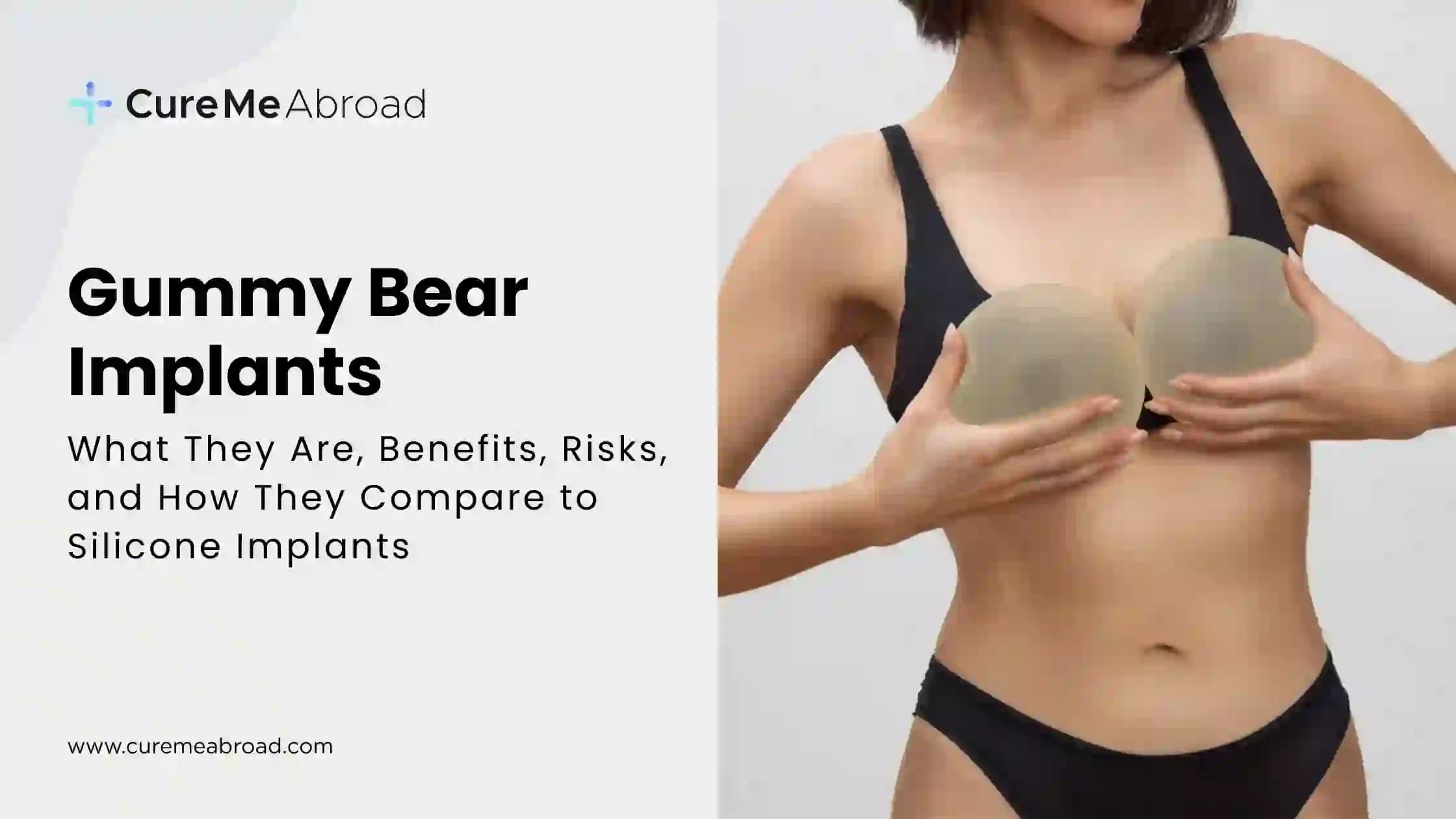
Breast augmentation technology has evolved, and gummy bear implants are one of the most advanced options available. They provide a natural shape, stable structure, and lower risk of leakage compared to traditional silicone implants.
This guide explains everything you need to know about gummy bear breast implants, including their benefits, risks, how they differ from regular silicone implants, and whether they might be right for you.
What Are Gummy Bear Implants?
Gummy bear implants are form-stable silicone breast implants. They are named for their texture, which resembles gummy candy.
Key Characteristics:
- Highly cohesive silicone gel
- Form-stable structure that maintains shape
- Teardrop-shaped to mimic natural breast anatomy
- Lower risk of gel leakage if ruptured
- Firmer than traditional silicone implants
Because of these features, gummy bear implants are recommended for patients seeking natural contour and long-lasting results.
How Gummy Bear Implants Work
- Cohesive silicone gel: Maintains shape even under pressure
- Form-stable design: Gel stays intact if the shell is damaged
- Natural feel: Provides realistic breast contour
Structure:
- Outer silicone shell
- Cohesive silicone gel
- Form-stable design
Benefits of Gummy Bear Implants
Natural Shape
- Teardrop shape mimics natural slope
- Fuller lower breast, gradual upper slope
Maintains Shape Over Time
- Reduces folding or long-term deformation
- Provides stable, consistent contour
Lower Risk of Silicone Leakage
- Cohesive gel prevents migration even if the shell breaks
Reduced Rippling
- Firmer structure reduces visible edges, especially in thin tissue
Long-Lasting Results
- Durable aesthetic results for many years
Risks and Potential Complications
- Implant Rotation – Teardrop shape requires proper orientation
- Firmer Feel – Slightly firmer than traditional silicone
- Larger Incisions Required – Pre-filled, form-stable implants need precise placement
- Higher Cost – Advanced technology increases price
- Capsular Contracture (Rare) – Scar tissue tightening around implant
Gummy Bear Implants vs Regular Silicone Implants
| Feature | Gummy Bear Implants | Regular Silicone Implants |
|---|---|---|
| Gel Consistency | Highly cohesive | Softer gel |
| Shape | Teardrop / anatomical | Round |
| Shape Retention | Excellent | Moderate |
| Leakage Risk | Very low | Possible if rupture |
| Natural Feel | Slightly firmer | Softer |
| Incision Size | Larger | Smaller |
Key Difference:
Gummy bear implants’ thicker gel maintains form like a solid, while regular silicone implants are softer and more flexible.
Who Is a Good Candidate?
Ideal candidates:
- Seeking natural breast shape
- Want long-lasting results
- Have thin breast tissue
- Breast reconstruction after mastectomy
- Moderate to large augmentation
May prefer traditional silicone implants if:
- Desire a softer feel
- Prefer round implants with upper fullness
- Want smaller surgical incisions
- Prefer lower cost
Surgery and Recovery
Surgery:
- Performed under general anesthesia
- Incision under breast, armpit, or around areola
- Implant inserted into breast pocket and positioned carefully
- Surgery duration: 1–2 hours
Recovery Timeline:
- First Week: Swelling, mild discomfort, limited arm movement, surgical bra
- 2–4 Weeks: Return to daily activities, reduced swelling
- 6 Weeks: Resume exercise, implants settle
- 3–6 Months: Final results visible
Longevity and Safety
- Lifespan: 10–20 years, sometimes longer
- Replacement Reasons: Aging, cosmetic changes, rupture, capsular contracture
- Safety: FDA-approved, widely used, high patient satisfaction
- Recommendation: Regular follow-ups with a board-certified surgeon
FAQs
Are gummy bear implants better than silicone implants?
- Not necessarily better, but offer more shape stability and lower leakage risk
Do they feel natural?
- Slightly firmer but feel natural once tissue settles
Can they rupture?
- Yes, but cohesive gel usually stays in place
Are they worth it?
- Ideal for those prioritizing natural shape, stability, and durability
Final Thoughts
Gummy bear implants are one of the most advanced innovations in breast augmentation. Their form-stable design, natural shape, and cohesive gel make them a popular choice.
While slightly firmer and more costly than traditional silicone implants, the benefits—shape retention, reduced rippling, and lower leakage risk—often outweigh the drawbacks.
Consult a qualified plastic surgeon to determine the best implant type for your anatomy and aesthetic goals.