



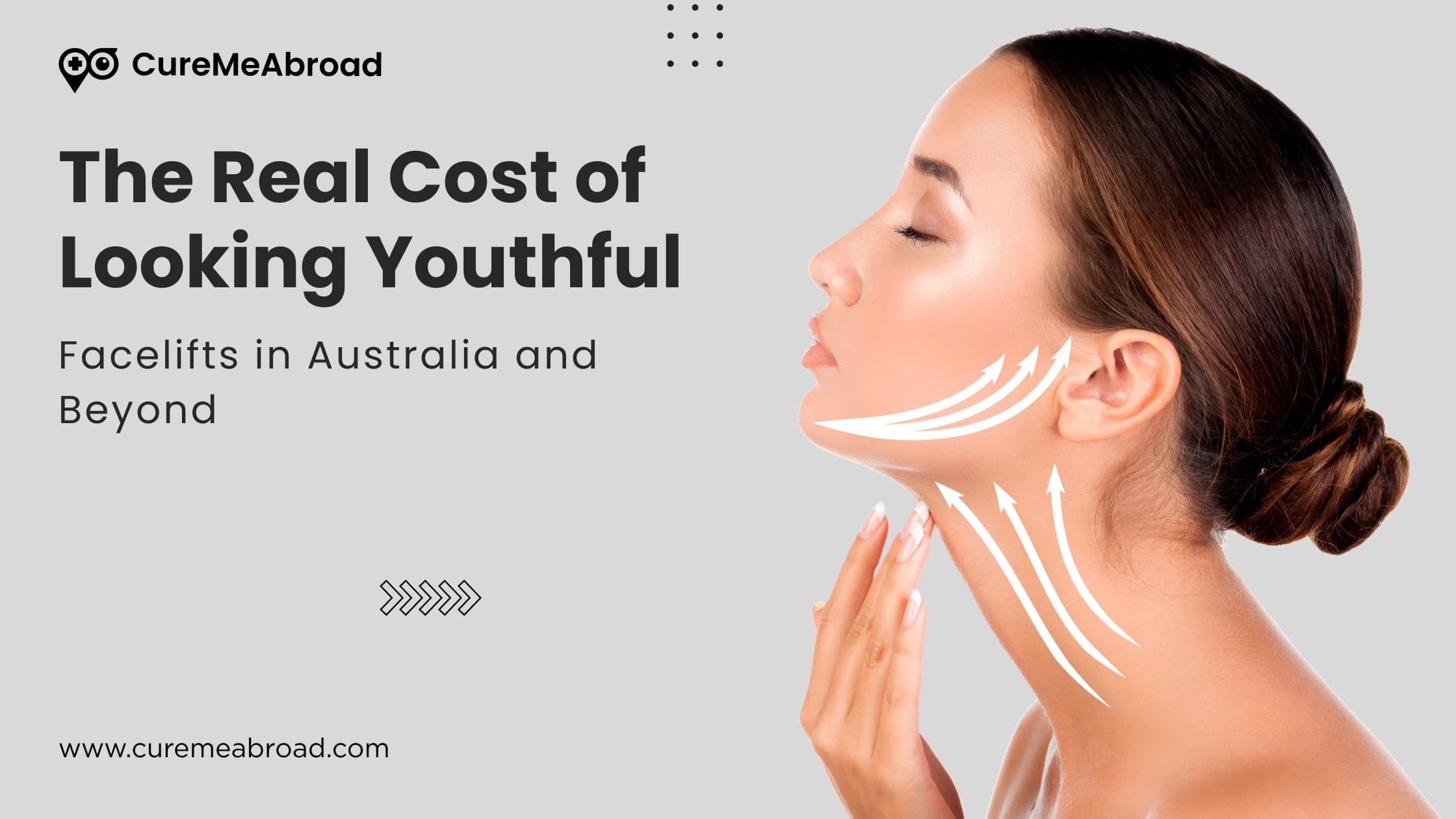
Aging is something that is destined to occur, but how we choose to address its signs is something that is a personal choice. For many people residing in Australia who are considering facial rejuvenation, the common concern they have isn’t just "Should I?" but rather "Can I afford to?" and also "Where should I go?"
The facelift procedure, medically known as a rhytidectomy, has evolved drastically over the years, transforming from one size that fits everyone to highly personalized procedures. Today’s patients have access to various different techniques that range from minimally invasive mini-facelifts to comprehensive full-face and neck rejuvenations. Although, these advanced options also come with a significant price tag, especially in Australia.
In this guide, we’ll walk through the actual prices of facelift procedures in Australia, cut through the factors that influence the prices, and also analyze the reasons for the influenced pricing. We’ll also examine whether medical tourism that is present is actually a real and safe alternative or not. It doesn’t matter if you’re in the initial stages of the research or ready for the consultation; this guide can help you with knowing the appropriate information that you need to make an informed decision for your facial rejuvenation journey.
What Is a Facelift? Understanding the Procedure
A facelift is basically a cosmetic surgical procedure that is done to reduce visible signs of aging in areas like the face and neck. These surgeries can cause several common issues like sagging skin, deep creases, jowls, loss of muscle tone, and the formation of a double chin. The main aim of the procedure is to create a more youthful version and refreshed appearance while maintaining natural-looking results.
Types of Facelift Procedures
The new age of facial surgery offers various distinct approaches, and all are tailored to specific aging issues and patient goals:
Mini Facelift (Short Scar Facelift)
This is basically for the patients who experience the early signs of aging, which are normally around the jawline and lower portion of the face. This is a minimally invasive option and involves smaller incisions, usually around the ears, and focuses on the tightening of mild to moderate skin sagging. The recovery period is shorter, and the results also appear more natural and subtle. This procedure usually costs around $20,000 to $35,000
Standard SMAS Facelift
The Superficial Musculoaponeurotic System (SMAS) facelift is usually indicated for both skin and underlying facial muscles. This technique gives out comprehensive rejuvenation of the mid-face, jawline, and neck region, offering results that are guaranteed for at least 10-15 years. Costs range from $30,000 to $45,000 in Australia. procedures
Deep Plane Facelift
This is considered one of the most advanced and comprehensive techniques, as the deep plane facelift repositions deeper facial tissues and lasts longer than the procedure that are listed above, and provide natural looking results. This procedure is particularly beneficial for patients who has significant aging concerns. In australia, deep plane facelifts and range between $35,000 to $70,000.
Composite Facelift
These modern approaches combine multiple techniques, which include fat grafting and muscle reconfiguration, to achieve a fuller, more youthful facial features. The price tag on such procedure ranges from $40,000 to $70,000+
The Surgical Process
Facelift surgery usually takes around 2-6 hhours,which depends on the complexity of the patient and the techniques that are used. The procedure is performed under general anesthesia, which is under the guidelines of hospital accreditation or the surgical facility. Surgeons make thoughtful, planned incisions, which often hidden under the hairline or natural facial structures to minimize the obvious scarring.
During surgery, the surgeons separate the skin from the underlying layer of fats and muscles, which tightens the facial tissues, removes any excess skin, and cautiously repositions everything for a naturally lifted look. The new age techniques may involve fat grafting to restore volume to areas that have diminished with age.
Breaking Down Facelift Costs in Australia: What You're Really Paying For
Understanding the entire cost of the facelift surgery may require analyzing various components, which is more than just the surgeon’s compensation. Australia’s facelift costs around $15,000 to $70,000, while most standard procedures fall between $20,000 and $35,000.
Primary Cost Components
Surgeon's Fees ($8,000 - $30,000)
The surgeons' compensation normally aligns with their expertise, experience, and time. A board-certified plastic surgeon (certified from FRACS) who specializes in facial procedures normally charges a premium fee, which is because of their extensive training and lower rates of complications. A leading surgeon from Sydney may charge anywhere from $27,500 to $40,000 for a complete facelift, while a comparatively less experienced surgeon’s fee may start from $12,000.
Anesthesia Fees ($500 - $650 per hour)
Most facelift procedures require general anesthesia, which is administered by a professional trained and qualified anesthetist. This fee depends on the procedure timeline and complexity and typically ranges from $2,000 to $4,000 for a comprehensive facelift procedure.
Hospital or Surgical Facility Fees ($2,000 - $7,000)
These comprehensive costs cover the operating room fee, recovery facility, and nursing staff. Procedures last around 1-6 hours, attracting various different facility fees. Many different surgeons also recommend an overnight stay at the hospital for facelift patients, which causes these costs to increase.
Pre-Operative Consultations ($200 - $500)
The initial consultations enable the surgeons to assess the patient’s goals, discuss various options, and develop a personalized surgical plan. Some clinics also apply consultation fees towards the final surgery cost.
Post-Operative Care
Recovery expenditure may include follow-up appointments (normally 3-6 visits), medications, compression garments, and potential further treatments like laser resurfacing to aid healing. All these can add $1,000 to $3,000 to the total fee.
Regional Price Variations
The location of the procedure impacts the facelift procedure expenses within the country, which in this case is Australia. Major cities in Australia are Sydney, Melbourne, and Brisbane, which has a surge of 15-25% due to higher operational expenses, which include rent, staff salaries, and other overhead expenses. A normal facelift in Sydney may cost $25,000-$40,000, whereas the same procedure in a regional facility may be available for $18,000-$30,000.
Surgeon Experience and Qualifications
The experience and credentials of the surgeon of the patient’s choice may drastically influence pricing. Board-certified plastic surgeons with specialized training in facial surgery, years of experience, and a strong reputation attract a higher fee. However, the patients pay these higher prices, as this generally translates to better results, more natural-looking outcomes, and marginally reduced complications.
A reputed FRACS-certified plastic surgeon generally charges $15,000-$30,000 as their fees alone, whereas complex procedures by highly skilled specialists can range from $40,000 to $70,000.
Procedure Complexity and Technique
Extensively advanced surgical techniques require prolonged operating hours, specially skilled teams, and advanced equipment all this gives rise to higher costs. For eg,
- Mini facelift: $15,000 - $25,000
- Standard SMAS facelift: $20,000 - $35,000
- Deep plane facelift: $35,000 - $50,000
- Composite facelift with adjunct procedures: $40,000 - $70,000+
Pairing procedures like facelift with neck lift, eyelid surgery, or brow lift adds both surgical complexity and also cost but can provide more overall natural-looking rejuvenation.
Investment Value: Why Australian Facelifts Cost What They Do
While the prices may seem expensive, Australian facelift costs indicated various essential factors that add to patient safety, satisfaction, and long-term reliability.
World-Class Medical Standards
Australia maintains meticulous medical standards and norms. Surgeons must complete comprehensive training, generally 12+ years, which includes medical school, surgical residency, and a specialized plastic surgery fellowship. A board certification from the Royal Australasian College of Surgeons (RACS) makes sure that the surgeons meet the highest level of professional standards.
State-of-the-Art Facilities
The surgical facility chosen for the procedure must meet strict accreditation norms for safety, equipment, and hygiene. Operating rooms are equipped with advanced technology, complete monitoring systems, and emergency equipment to handle any problems. These advanced environments add up to drastically increase surgical costs but also make sure optimal patient safety.
Long-Lasting Results
Effective facelifts performed by experienced plastic surgeons achieve outcomes that last 10-15 years or even more, which is longer than temporary treatments like fillers or thread lifts. A study from 2023 shows that patients who were above the age of 50 maintained their results for more than 12 years post surgery. Also, when this is done along with healthy lifestyle habits like sun protection, smoking cessation, and suitable skincare, the outcomes can last even longer.
Comprehensive Patient Care
Australian clinics provide extensive preoperative tests, comprehensive surgical planning, thoughtful intraoperative care, and comprehensive postoperative follow-up. This system of care substantially decreases complication rates and also ensures that the healing process is smooth.
No Medicare or Insurance Coverage
It’s important to understand that the facelift surgery is considered exclusively for cosmetic purposes and receives no Medicare reimbursement or private health insurance coverage in Australia. Patients have to pay the whole fee personally, although many clinics offer payment plans or financial options to make procedures more feasible for people.
Is Medical Tourism the Answer? Exploring International Alternatives
The drastic cost difference between Australian facelifts and facelifts that are done overseas has encouraged many patients to look into medical tourism. Countries like Thailand, Turkey, South Korea, Spain, Poland, and Mexico deliver facelift procedures at a 50-70% reduced rate while managing to get an exceptionally high standard of care.
The Financial Appeal
If you compare the price internationally, it reveals that the patients can get significant potential savings:
- Australia: $20,000 - $70,000 AUD
- Thailand: $5,100 - $5,600 USD ($7,650 - $8,400 AUD)
- Turkey: $4,000 - $7,600 USD ($6,000 - $11,400 AUD)
- South Korea: $3,500 - $11,000 USD ($5,250 - $16,500 AUD)
- Spain: $15,000 - $25,000 EUR ($24,000 - $40,000 AUD)
- Poland: $6,900 - $7,700 USD ($10,350 - $11,550 AUD)
- Mexico: $2,500 - $8,000 USD ($3,750 - $12,000 AUD)
These prices usually include a complete package that covers surgeon fees, anesthesia, hospital stay, medications, follow-up visits, and sometimes even accommodation in the country and transfer.
Benefits of Medical Tourism for Facelifts
Cost Savings
Economically it is a positive aspect for the patients. They can save up $10,000 to $40,000 or even more, even after accounting for travel expenses, accommodation, and recovery time abroad after the surgery. For several Australians these savings can make facial rejuvenation procedures more accessible when normally they are out of reach for them.
Access to Specialized Expertise
Several international destinations have become hubs of excellence for certain procedures. South Korean surgeons, for example, are world-renowned for facial aesthetics procedures; their clinics perform thousands of facelifts annually for introducing advanced techniques.
Shorter Wait Times
In contrast to Australia, where the process of consultation to surgery can take up to several months, international clinics generally offer end-to-end services within weeks. This efficiency is favorable for people with time constraints or immediate cosmetic rejuvenation requirements
Comprehensive Packages
Medical tourism companies provide an all-inclusive service that makes the process easier. The package covers surgery, hospital stay, medications, follow-up care, airport transfer, accommodation, and even, when required, translator services, eliminating any unexpected expenditure.
Privacy and Recovery
Travelling abroad has its own perks, like privacy and distance from daily responsibilities. Patients can recover at a cozy resort away from social responsibilities and work pressure, often combining medical treatment with a relaxing vacation.
Risks and Considerations
While medical tourism has several advantages, probable complications and challenges must be thought of beforehand:
Limited Post-Operative Care
The most serious concern with patients is follow-up care after returning home. Complications can be very unpredictable and can arise within weeks or months of surgery, and your doctor might be reluctant to treat the issue, as it has been performed overseas. Some procedures require the primary surgeon’s intervention, involving costly return travel expenses.
Quality and Safety Variability
It is not important that all the facilities maintain the same standards as Australian hospitals. While many are exceptional and internationally accredited, others may lack proper regulations. Researcher accreditation, like JCI (Joint Commission International), ISO certifications, or local medical board approvals, is necessary.
Communication Barriers
Language can be a very significant barrier when thinking of getting a procedure done abroad, as it could lead to several misunderstandings about expectations about the surgery, plan, or, importantly, post-operative instructions. While many international clinics have appointed English-speaking staff and translators to help the overseas patients, intricate medical communications may still be difficult.
Travel Risks
Flying immediately after a major surgery carries its own risks, like deep vein thrombosis (DVT), increased swelling, and delayed healing. The majority of the surgeons recommend waiting for 7-10 days before travelling home, involving extended international stays.
Limited Legal Recourse
If there is a complication that has arisen after the surgery or the patient didn’t feel the procedure was satisfactory, then trying to impose legal action against an overseas provider or organization can be complex, expensive, and at times impractical. Australian consumer protection doesn’t cover overseas medical services.
Revision Surgery Challenges
If there's a case where the patient feels the procedure was unsatisfactory, then it requires the attention of the original surgeon, as a surgeon in the patient’s country may charge a higher fee for a revision procedure on the already existing procedure that is performed elsewhere. This can eliminate all the savings that the patient benefited from initially.
Top Destinations for Mini Facelifts: 20 Renowned International Hospitals
For Australians who are considering getting their mini facelift procedure done overseas, the following are the options of hospitals that are some of the most reputed facilities specialized in the mini facelift procedure and spread across six different destinations.
Thailand (7 Hospitals)
Bumrungrad International Hospital (Bangkok)
One of the largest South Asian private hospitals, it serves patients from around 190 countries annually. They are JCI accreditation, a strong plastic surgery department, and staff well versed in English. They offer mini facelift procedure using some of the most advanced techniques, with packages starting from $5,500 USDYanhee International Hospital (Bangkok)
They have been specialized in cosmetic procedures since 2000. Yanhee has ISO certification and hospital accreditation. They are known for carrying out over 8,500 plastic procedures annually with an attention on natural-looking facial rejuvenation. Packages include complete care with multilingual support.Asia Cosmetic Hospital (Bangkok)
They are JCI, ISO, and hospital accreditation certified; they were recently awarded “Best Regional Hospital” and awarded “Best Facial Cosmetic Surgery Hospital in Thailand 2024.” They offer mini facelifts with 3D facial scanning technology for highly accurate outcomes. Their packages start from $5,564 USD.BNH Hospital (Bangkok)
This hospital holds a royal patronage and was established in 1898. BNH maintains international standards with JCI accreditation. It comprises an advanced plastic surgery department with experienced surgeons who are trained internationally. They are renowned for their facial rejuvenation services.Vejthani Hospital (Bangkok)
Vejthani is a multi-specialty hospital with a dedicated plastic surgery center that specializes in offering rejuvenation procedures. Provides cutting-edge technology and experienced surgeons, they are reputed for their patient-centric care and affordable transparent pricing.ID Clinic Bangkok
It is a premium, top-of-the-line, specialized clinic for facial aesthetics. This clinic is the brainchild of Dr. Phatcharasak Kraisornphongsakul, with 27+ years of experience. They offer tailored mini facelift packages from $4,750 USD with complete aftercare services.BKFL Clinic (Bangkok)
It is a specialized facility that focuses completely on facial plastic surgery procedures. The major highlight of their clinic is deep plane and mini facelift techniques performed by surgeons with 20+ years of experience. They are named Best Facial Cosmetic Surgery Hospital in Thailand for 2024. They use Swiss 3D facial scanning for the highest degree of accuracy.
Turkey (4 Hospitals)
Acibadem Maslak Hospital (Istanbul)
Acibadem Maslak Hospital in Istanbul is part of one of the largest private hospital networks. Features an outstanding plastic surgery department with advanced technology, which comprises a CAD/CAM system for surgical planning. They are a JCI-accredited facility that offers an all-inclusive facial rejuvenation procedure.Florence Nightingale Hospitals (Istanbul)
Florence Nightingale has a modern and internationally accredited hospital specialized in minimally invasive facelift procedures. They are equipped with new-age 3D imaging and advanced surgical equipment. Surgeons are internationally trained with extensive surgical experience. They have mini facelift packages starting from $5,000 USD.Memorial Şişli Hospital (Istanbul)
Memorial Şişli is JCI accredited, and they have their very own specially trained plastic surgery team. They offer traditional as well as minimally invasive facelift options using 3D imaging for surgical planning. Their team is specialized in performing procedures that provide natural-looking results.Medipol University Hospital (Istanbul)
It is Istanbul’s largest and most advanced hospital in terms of its comprehensive plastic surgery department, which also involves CAD/CAM technology for personalized surgical planning, which is unique for patients with complex surgical procedures. They offer various facelift techniques, which include SMAS and mini-lift procedures.
South Korea (4 Hospitals)
12. JK Plastic Surgery Center (Seoul)
Korea is the hub for plastic surgery, with over 100,000 successful plastic surgery procedures. KAHF is accredited with ISO 9001 certification; it is founded by Dr. Joo Kwon, who is a member of American Society of Aesthetic Plastic Surgery. They specializes in mini facelifts and facial contouring
13. Banobagi Plastic Aesthetic Clinic (Seoul)
They perform over 8,500 plastic procedures annually and receive winners who are predominantly from Europe and Asia. They are KAHF-accredited and winners of the Korea Health & Medical Award for exemplary services. They are specifically specialized in facial rejuvenation with skilled surgeons.
14. ID Hospital (Seoul)
This is Korea’s only plastic surgery clinic that is certified by the Ministry of Health and Welfare. They are an advanced center that offer innovative anti-aging procedures, which include mini facelifts. The surgeons are internationally qualified and have been through extensive training and have years of experience in facial aesthetics.
15. THEPLUS Plastic Surgery (Gangnam, Seoul)
It is one of the most premium destinations, which is led by two distinguished surgeons, Dr. Kim Taek Kyun and Dr. Jeong Jae Yong (president of the Korean Society of Plastic Surgeons). They specialize in modern facelift methods that emphasize organic and balanced results. Their treatment and procedures make use of advanced 3D imaging technology and minimally invasive approaches.
Spain (2 Hospitals)
16. Quirónsalud Madrid
This is Spain’s finest and Europe’s leading facility based on patient volume. They are ranked among the World’s Best Hospitals 2021 by Newsweek. They have some of the nation’s top plastic surgeons with board certification. The location is suitable for recovery, as it is situated in the suburbs of Madrid.
17. HM Hospital (Madrid)
They are part of the HM Hospital network, one of the six private hospitals in the region of Madrid. European Foundation for Quality Management certified. They specialize in facial plastic surgery procedures with cutting-edge technology-equipped facilities. The surgeons are internationally trained with expertise in modern techniques and complex procedures.
Poland (2 Hospitals)
18. KCM Clinic (Jelenia Góra)
They are a leading facility in the region of Poland that focuses on plastic surgery for overseas patients. They are specialized in using modern surgical procedures; the surgeons are board certified and provide all-round patient care. Offers a comprehensive plan with accommodations and transfers. Reputed for excellent patient satisfaction levels.
19. University Hospital Krakow
It is an academic medical center with an exclusive plastic surgery department. Surgeons are university-trained specialists with rigorous experience. Their advanced facility is equipped with new-age technology. They offer VASER and other traditional facelift techniques
Mexico (1 Hospital)
20. Galenia Hospital (Cancun)
It is a JCI-accredited hospital with SiNaCEAM certification, which guarantees a standard of professionalism. It is equipped with an exclusive plastic surgery department led by internationally certified surgeons. This facility is located in Cancun, offering convenient access from the US and Canada. They specialize in mini facelift procedures, and their packages start from $3,200 USD, which is all-inclusive.
Making Your Decision: Key Consideration
When you are choosing between getting a facelift in Australia versus medical tourism, it requires careful consideration of multiple variables apart from cost.
Assessing Your Priorities
Safety and Quality
If reducing risk and ensuring the highest medical standards are essential, then Australian facilities are far superior in terms of monitoring, regulation, and recourse. The sense of security that comes with a familiar healthcare system, convenient follow-up, and end-to-end legal protection may account for the higher cost.
Budget Constraints
For patients coming from weak economic backgrounds, medical tourism can make facial rejuvenation affordable. The money that the patients save is between $20,000 and $50,000 and can be significant for some. While this can be rewarding in terms of savings, it can be potentially risky in terms of unpredictable expenditures like complications, return visits, or revision procedures that might eliminate the money saved initially.
Recovery Environment
Every patient has a different set of expectations in terms of the environment they want in their recovery period; some patients prefer recuperating close to home alongside their family and having the security of following up with their regular doctor, who will be looking over their healing process. On the other hand, some people cherish the privacy and imposed rest that come with the international recovery period in resort-like accommodations that are included in their package.
Research and Due Diligence
Surgeon Credentials
Regardless of the location, whether the patient is choosing Australia or international facility, verification of board certification of that specific region is essential before getting through with the procedure, as this certification is assurance that the surgeon has undergone specialized training in facial surgery, years of experience and has membership in prestigious organization like
- Australian: FRACS (Fellow of the Royal Australasian College of Surgeons)
- International: ISAPS (International Society of Aesthetic Plastic Surgery), ASPS (American Society of Plastic Surgeons)
Facility Accreditation
Ensure the hospital has the following recognized accreditations:
- JCI (Joint Commission International): Gold standard for international healthcare
- ISO certifications: Quality management standards
- Local medical board approvals and hospital accreditation programs
Before-and-After Galleries
Review the facility’s extensive collection of pictures that show surgeons’ real results. Look for consistent, natural-looking outcomes, and especially look for examples that are similar to the expected outcome.
Patient Reviews and Testimonials
Review the comprehensive patient experience, essentially in terms of communication quality, crisis management, if the results were satisfactory, and postoperative support. Take into consideration positive and negative feedback.
Financial Planning
Hidden Costs
Plan for possible expenses that are beyond the mentioned treatment cost:
- International travel (flights, accommodation, meals)
- Extended stay for recovery before flying
- Medications and supplies for ongoing recovery at home
- Follow-up visits with local doctors
- Potential revision surgery
- Time off work (typically 2-4 weeks)
Payment Options
Numerous Australian clinics provide the following:
- Payment plans with easy monthly installment plan
- Medical financing through specialized lenders
- Low- or no-interest loans for cosmetic procedures
International hospitals usually require the entire payment right away, though some offer financing options for overseas patients.
Creating a Backup Plan
Complication Management
Regardless of the location where the patient wants to have the surgery, the patient should consider planning for any potential complications:
- Firstly, secure an Australian surgeon who is ready to provide follow-up support in case of any emergency or unsatisfactory results.
- Make sure that the overseas surgeon is available for post-operative support via teleconsultation
- Plan for the expenses and logistics that are involved in case the patient has to travel back to the overseas surgeon
- Evaluate travel insurance to verify if it covers medical complications that are caused due to cosmetic procedures, as most companies don’t
Recovery: What to Expect
It is essential to have knowledge about the recovery process, as it helps set realistic expectations and easily plan the recovery process to be done at home or abroad.
Immediate Post-Operative Period (Days 1-7)
The patient might experience facial swelling, bruising, and tightness immediately after the surgery. Pain is normally with prescribed drugs by the surgeon. Surgeons apply compression bandages or garments to reduce swelling and help heal tissues.
A lot of patients stay at the hospitals or clinics overnight for monitoring purposes. During the initial weeks, rest is very important. Also, take care of things like keeping your head elevated while sleeping, avoiding bending or lifting weights, and following all necessary instructions by the surgeon. If there are any sutures, then they are normally removed after 7-10 days.
Early Recovery (Weeks 1-3)
Swelling and any signs of bruising generally subside, although they may worsen before improving at times. At 3-4, most patients feel better and return to work in a week or two, which totally depends on the extent of the procedure and work requirements. Social activities can normally be resumed within 10-14 days once the bruising fades.
The patient needs to follow stringent limitations: no moderate exercise, no bending at the waist, avoid exposure to the sun, and maintain light facial movements. Maintain elevation of head even while sleeping.
Intermediate Recovery (Weeks 3-8)
The remaining swelling will resolve with time; the major will be unnoticeable by week 4-6. Patients generally resume normal activity, which includes light exercise, by week 6. Results become apparent as tissue starts to settle and swelling diminishes.
The feeling of numbness and altered sensation in facial areas generally subsides slowly and gradually over a few months.
Long-Term Results (Months 3-12)
The final outcome comes out as the swelling resolves and incision lines fade. Many patients notice major improvements within 3 months, along with proper finished outcomes that are noticeable after 6-12 months. The final scar lines continue to blend with the final results through the first year.
An effective facelift shows its results slowly and gradually and lasts for 10-15 years or more in a few cases. Maintaining these results requires protection of skin from sun exposure, maintaining a healthy lifestyle, an effective skincare routine, and, if possible, non-surgical maintenance procedures like laser resurfacing and injectable fillers.
Properly performed facelifts provide results lasting 10-15 years or more. Maintaining results requires sun protection, healthy lifestyle habits, good skincare, and possibly non-surgical maintenance treatments like laser resurfacing or injectable fillers.
Conclusion: Finding Your Path to Facial Rejuvenation
The decision to undergo a facelift procedure constitutes both a substantial financial commitment and a profound personal choice on how the person wants to showcase themselves to the world. For the Australian population specifically, this journey requires taking into consideration the security and convenience of Australian procedures versus the significant savings one might get and the distinct experience offered by the medical tourism company.
If You Choose Australia:
As a patient, if you're making an investment in a world-class medical facility, the ease of access to ongoing care, firm legal protection, and the ease of comfortable surroundings are important. Although the financial aspects can range from $20,000 to $70,000, the patient is investing this money for assurance of everything being taken care of and comprehensive care.
If You Choose Medical Tourism:
Patients can save up to 50-70%, receive specialized care from qualified surgeons who perform numerous procedures annually, and experience treatment and travel simultaneously. Although this requires in-depth research, acknowledging the risk associated with it and meticulous planning for the post-operative care.
Whichever approach you choose is important:
- urgeon qualifications and experience over expenditure alone
- Facility accreditation and safety standards
- Complete understanding of all expenses involved
- Realistic expectations about results and recovery
- Clear communication about your goals and concerns
- Thorough preparation for post-operative care
It is important to understand the facelift isn’t just about appearing younger but about feeling more confident, being comfortable, and being aligned with how the person sees themselves. Regardless of whether the path takes you to Sydney or Bangkok, the most important factor is taking an unbiased decision that feels right.
Take adequate time to learn about the options and consult with various experts to guide you in the right direction, review galleries of facilities that provide your preferred procedure, and do not hesitate to ask questions about the whole process. Your face and your financial investment deserve nothing but the best.
Take your time researching options, consult with multiple surgeons, review extensive before-and-after galleries, and don't hesitate to ask detailed questions about every aspect of the procedure. Your face and your investment deserve nothing less than your most careful consideration.
References
https://my.clevelandclinic.org/health/treatments/11023-facelift{: rel="nofollow"}
https://drturner.com.au/blogs/what-is-the-cost-of-facelift-surgery-in-sydney-update-2024/{: rel="nofollow"}
https://www.drkevinho.com.au/face-lift-cost-australia/{: rel="nofollow"}
https://drellischoy.com.au/what-is-the-cost-of-a-deep-plane-facelift-in-sydney-2025/{: rel="nofollow"}
https://drmarkkohout.com.au/blog/cost-of-a-facelift-in-sydney/{: rel="nofollow"}
https://www.plasticsurgeryhub.com/pricing/face-surgery-prices-in-australia/{: rel="nofollow"}
https://www.artisteplasticsurgery.com.au/the-cost-of-a-facelift-surgery-in-sydney/{: rel="nofollow"}
https://cocorubyplasticsurgery.com.au/blog/facelift-surgery-cost/{: rel="nofollow"}
https://us-uk.bookimed.com/clinics/country=thailand/procedure=tightening-of-facial-skin-facelift/{: rel="nofollow"}
https://us-uk.bookimed.com/clinics/country=turkey/procedure=tightening-of-facial-skin-facelift/{: rel="nofollow"}
https://us-uk.bookimed.com/clinics/country=republic-of-korea/procedure=mini-facelift/{: rel="nofollow"}
https://us-uk.bookimed.com/clinics/country=spain/procedure=tightening-of-facial-skin-facelift/{: rel="nofollow"}
https://us-uk.bookimed.com/clinics/country=poland/procedure=tightening-of-facial-skin-facelift/{: rel="nofollow"}
https://us-uk.bookimed.com/clinics/country=mexico/procedure=mini-facelift/{: rel="nofollow"}
https://us-uk.bookimed.com/article/how-much-is-facelift-in-australia/{: rel="nofollow"}
https://www.healthtrip.com/blog/best-hospitals-for-face-lift-surgery-in-thailand{: rel="nofollow"}
https://www.konkai.health/articles/best-plastic-surgery-hospitals-in-thailand{: rel="nofollow"}
https://www.mymeditravel.com/facelift-procedures-in-thailand{: rel="nofollow"}
https://www.vejthani.com/2024/07/plastic-surgery-in-thailand/{: rel="nofollow"}
https://us-uk.bookimed.com/clinics/country=thailand/city=bangkok/procedure=tightening-of-facial-skin-facelift/{: rel="nofollow"}
https://www.mespoir.com/turkey/all/cosmetic-surgery-and-plastic-surgery/facelift/hospitals{: rel="nofollow"}
https://www.rememore.com/blog/why-choose-turkey-for-a-facelift-advantages-costs{: rel="nofollow"}
https://clinicsoncall.com/en/clinics/country-south-korea/plastic-surgery/procedure-mini-facelift/{: rel="nofollow"}
https://www.koreaclinicguide.com/blog/facelift-in-korea{: rel="nofollow"}
https://clinicsoncall.com/en/clinics/country-poland/plastic-surgery/procedure-mini-facelift/{: rel="nofollow"}