




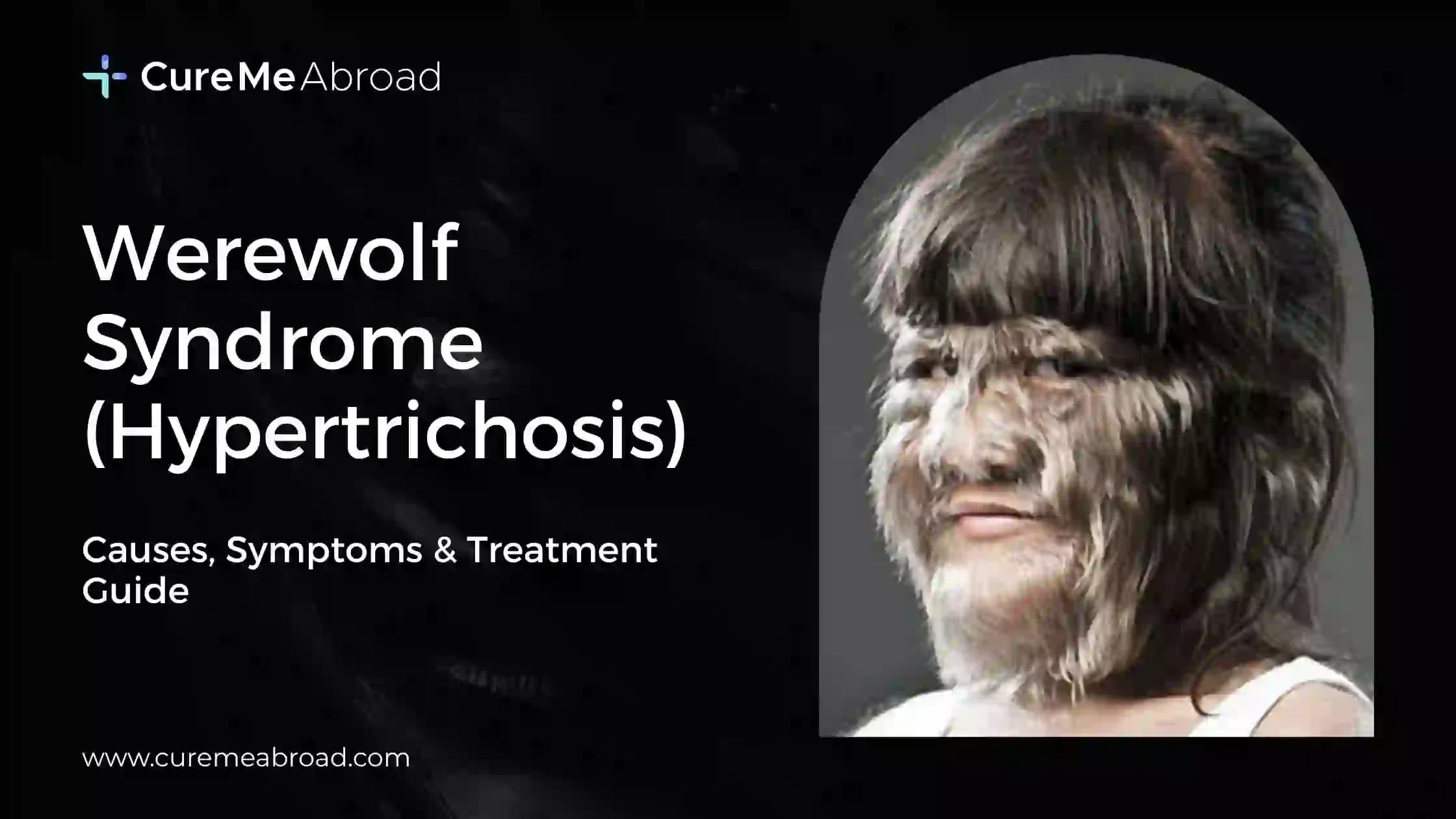
Werewolf syndrome, the striking popular name for a rare medical condition known clinically as hypertrichosis, is one of the most visually distinctive and historically documented rare disorders in human medicine. If you have heard the term "werewolf syndrome" and want to understand what it truly means medically, what causes it, how it is diagnosed, and how people with this condition live, you have come to the right place.
Werewolf syndrome, or hypertrichosis, is characterized by abnormal, excessive hair growth on areas of the body where hair does not normally grow in significant amounts, or hair growth that far exceeds what is considered normal for a person's age, sex, or ethnic background. In its most dramatic form, generalized hypertrichosis covers the entire face, ears, shoulders, and body with dense, long hair, producing the appearance that historically inspired werewolf legends across multiple cultures worldwide.
This comprehensive guide covers everything patients, caregivers, medical students, and curious readers need to know about werewolf syndrome including its medical classification, genetic causes, historical cases, symptoms, diagnosis, available treatments, psychological impact, and the lived experience of people navigating life with this extraordinarily rare condition.
What Is Werewolf Syndrome? The Medical Definition of Hypertrichosis
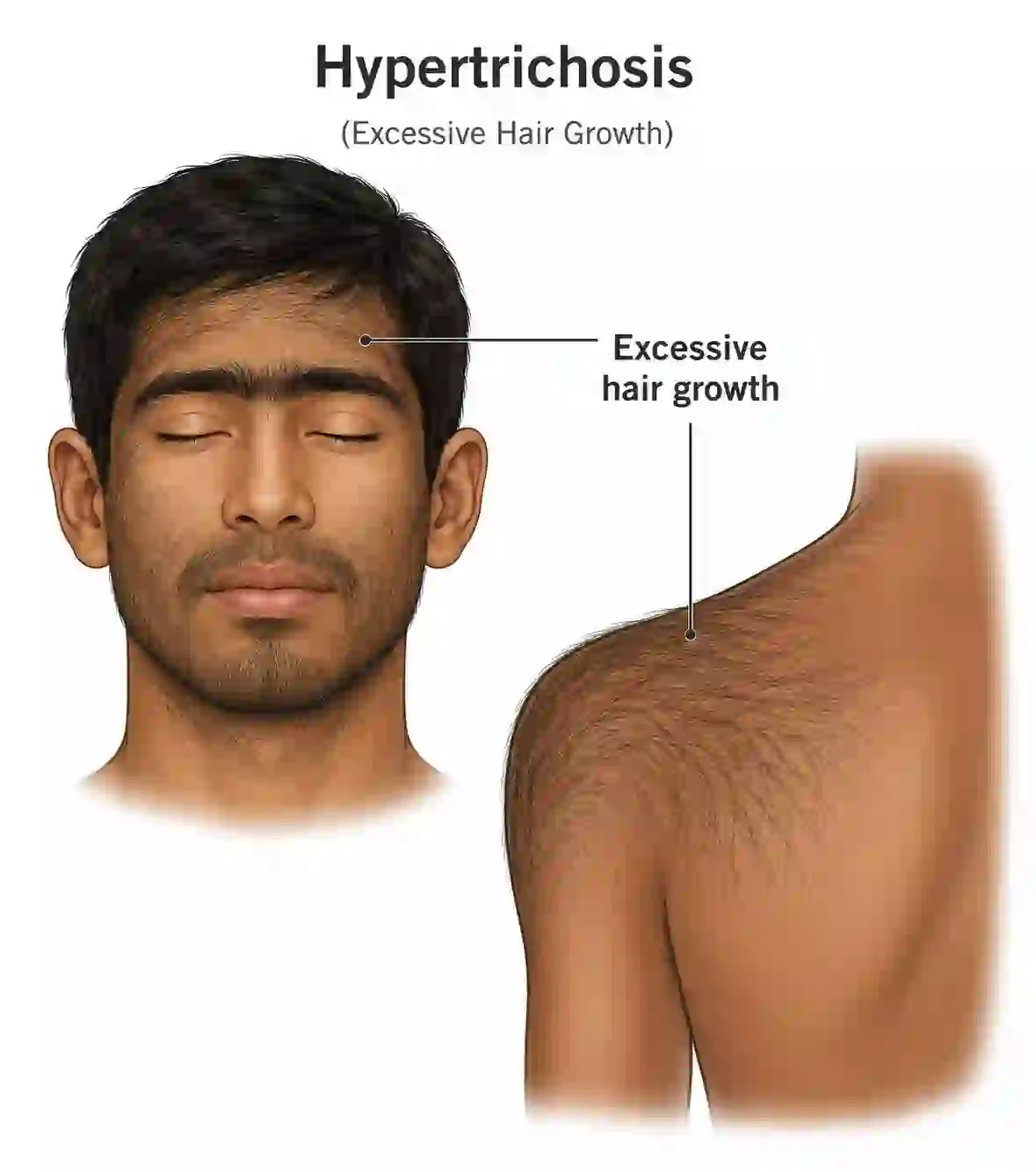
Werewolf syndrome is the colloquial name for hypertrichosis a medical term derived from the Greek words hyper (excessive) and trichos (hair). Hypertrichosis is formally defined as abnormal hair growth that exceeds the normal range for a person's age, sex, and ethnicity on any part of the body.
It is critically important to distinguish hypertrichosis (werewolf syndrome) from hirsutism a separate and far more common condition causing excess hair growth in women in androgen dependent areas (upper lip, chin, chest, abdomen) due to hormonal imbalance. Unlike hirsutism, hypertrichosis:
Affects both males and females equally
Is not driven by androgen hormone excess
Can affect any body surface including non androgen sensitive areas
Can be present from birth (congenital) or develop later in life (acquired)
Is entirely independent of hormonal status
Werewolf syndrome is classified as an orphan disease a rare condition affecting fewer than 200,000 people in the United States. True generalized congenital hypertrichosis is so rare that fewer than 100 cases have been documented in verified medical literature since records began, making it one of the rarest genetic conditions in human medicine.
Hypertrichosis vs. Hirsutism: What's the Difference?
Although both conditions involve excessive hair growth, hypertrichosis and hirsutism are different disorders with distinct causes and patterns of hair growth.
| Feature | Hypertrichosis | Hirsutism |
|---|---|---|
| Definition | Excessive hair growth anywhere on the body beyond what is normal for a person's age, sex, and ethnicity | Excessive growth of coarse, dark hair in women following a male-pattern distribution |
| Who Can Be Affected? | Men, women, and children | Primarily women and people assigned female at birth |
| Hair Distribution | Can occur anywhere on the body | Typically affects the face, chin, chest, abdomen, and back |
| Hair Type | May involve lanugo, vellus, or terminal hair | Usually terminal (coarse, dark) hair |
| Main Causes | Genetic conditions, medications, metabolic disorders, underlying illnesses, or unknown causes | Excess androgen hormones, polycystic ovary syndrome (PCOS), adrenal disorders, certain medications |
| Hormonal Involvement | Usually not hormone-related | Commonly caused by elevated androgen levels |
| Present at Birth? | Can be congenital or acquired | Usually develops after puberty |
| Associated Conditions | Rare genetic syndromes, drug-induced hypertrichosis, systemic diseases | PCOS, Cushing syndrome, congenital adrenal hyperplasia, androgen-secreting tumors |
| Treatment | Treat the underlying cause, laser hair removal, electrolysis, shaving, waxing, depilatory creams | Hormonal therapy (when appropriate), treatment of the underlying condition, and hair removal methods |
Hypertrichosis causes excessive hair growth anywhere on the body and can affect people of any age or sex, whereas hirsutism specifically refers to male-pattern hair growth in women due to increased androgen activity.
Types of Werewolf Syndrome: Classification of Hypertrichosis
Werewolf syndrome is not a single uniform condition it encompasses several distinct clinical subtypes classified by distribution, onset, and hair type. Understanding these classifications is essential for accurate diagnosis and appropriate management.
Classification by Distribution
Generalized Hypertrichosis Hair growth covers the entire body surface, including the face, ears, shoulders, trunk, and limbs. This is the form most commonly associated with the popular term "werewolf syndrome" and represents the most visually striking presentation. Generalized hypertrichosis may affect the face so extensively that facial features are partially obscured by hair coverage.
Localized Hypertrichosis Excessive hair growth is confined to a specific body region a patch on the back, a limb, or a circumscribed area of the face. Localized forms are more common than generalized forms and may appear as an isolated finding or as part of a broader syndrome.
Classification by Onset
Congenital Hypertrichosis is present at birth or develops within the first months of life. Congenital forms are predominantly genetic in origin and typically persist throughout the patient's lifetime. Congenital generalized hypertrichosis is the rarest and most severe form what most people mean when they say "werewolf syndrome."
Acquired Hypertrichosis Develops later in life in individuals who did not have the condition at birth. Acquired forms are most commonly caused by medications, systemic illness, malnutrition, or metabolic disorders rather than genetic mutation.
Classification by Hair Type
Hypertrichosis Lanuginosa is characterized by excessive growth of lanugo hair the fine, soft, unpigmented hair that normally covers a human fetus and sheds before or shortly after birth. In hypertrichosis lanuginosa, lanugo hair persists or regrows abnormally after birth, covering the face and body with a fine, silky coat. Both congenital and acquired forms exist.
Hypertrichosis Terminalis Characterized by excessive growth of terminal hair the long, thick, pigmented hair normally found on the scalp, eyebrows, and (after puberty) other body regions. Terminal hypertrichosis produces the most visually dramatic werewolf syndrome presentations.
Hypertrichosis Vellus is characterized by excessive growth of vellus hair the fine, short, lightly pigmented hair covering most of the body in healthy adults. Vellus hypertrichosis produces a less dramatic but clinically significant increase in body hair density.
4. Acquired Generalized Hypertrichosis
Acquired generalized hypertrichosis develops later in life rather than being present at birth. Unlike congenital forms, it is usually caused by another medical condition or external factor.
Possible causes include:
- Certain medications (such as minoxidil, cyclosporine, or phenytoin)
- Malnutrition or eating disorders
- Hormonal disorders
- Autoimmune diseases
- Rarely, underlying cancers (paraneoplastic hypertrichosis)
Treatment focuses on identifying and managing the underlying cause.
5. Acquired Localized Hypertrichosis
This type affects only one part of the body and is often triggered by repeated irritation or stimulation of the skin.
Common causes include:
- Friction from casts or splints
- Repeated shaving or skin trauma
- Chronic inflammation
- Localized medications
- Burns or injury
Hair growth may improve once the triggering factor is removed.
6. Nevoid Hypertrichosis
Nevoid hypertrichosis is a rare condition characterized by a single, well-defined patch of excessive hair growth present from birth or appearing during early childhood.
Features include:
- One or more isolated patches of dense hair
- Usually no symptoms other than cosmetic concerns
- May occasionally occur with other developmental abnormalities
Comparison of the Main Types of Hypertrichosis
| Type | Present at Birth | Hair Distribution | Common Cause |
|---|---|---|---|
| Congenital Hypertrichosis Lanuginosa | Yes | Generalized | Rare genetic mutation |
| Congenital Generalized Hypertrichosis | Yes | Generalized | Genetic disorder |
| Congenital Localized Hypertrichosis | Yes | Localized | Congenital abnormality |
| Acquired Generalized Hypertrichosis | No | Generalized | Medications, illness, cancer, malnutrition |
| Acquired Localized Hypertrichosis | No | Localized | Friction, trauma, inflammation |
| Nevoid Hypertrichosis | Usually | Localized patch | Developmental skin abnormality |
What Causes Werewolf Syndrome? The Genetics and Biology of Hypertrichosis
Understanding what causes werewolf syndrome requires examining both the genetic mechanisms underlying congenital forms and the diverse triggers responsible for acquired hypertrichosis.
Genetic Causes of Congenital Werewolf Syndrome
The congenital forms of werewolf syndrome are caused by genetic mutations and chromosomal abnormalities that disrupt the normal developmental programming of hair follicles during embryonic development.
X Linked Congenital Generalized Hypertrichosis (CGH) The most well documented genetic form of werewolf syndrome is X linked congenital generalized hypertrichosis, caused by a duplication of genetic material on the X chromosome at the Xq24 q27.1 region. This form follows an X linked dominant inheritance pattern, meaning:
Affected males display the full generalized phenotype (complete body and facial hair coverage)
Carrier females may show milder, more patchy hair growth
The condition is passed from mothers (who may be minimally affected carriers) to sons
Research published in leading genetics journals has identified copy number variations (CNVs) duplications of specific DNA segments as the primary molecular driver of X linked congenital generalized hypertrichosis. These duplications appear to affect the regulatory regions of genes involved in hair follicle morphogenesis and cycling.
Ambras Syndrome Ambras Syndrome is a specific subtype of congenital generalized hypertrichosis terminalis considered by some researchers to be a distinct genetic entity. It is characterized by long, fine, pigmented terminal hair covering the entire face (including the nose and ears), shoulders, and upper body, with relative sparing of the palms, soles, and mucous membranes. Ambras Syndrome has been linked to chromosomal rearrangements on chromosome 8q. Fewer than 50 cases have ever been reported in verified medical literature worldwide.
Congenital Hypertrichosis Lanuginosa This form involves persistence of fetal lanugo hair beyond birth. The precise genetic mechanism is not fully characterized, but autosomal dominant inheritance patterns have been observed in affected families, suggesting mutations in genes regulating the lanugo to vellus hair transition in late fetal development.
The Evolutionary Genetics Theory: Atavism
One of the most scientifically fascinating aspects of werewolf syndrome genetics is the atavism hypothesis the theory that hypertrichosis represents a reactivation of ancestral genes normally silenced in modern humans. Evolutionary biologists have noted that the hair distribution patterns seen in generalized hypertrichosis closely resemble the body hair coverage of non human primates, suggesting that the genetic programming for full body hair coverage remains present in the human genome but is epigenetically suppressed during normal development. Mutations disrupting this suppression may reawaken ancestral hair growth programming an extraordinary example of evolutionary biology made visible in a living individual.
Causes of Acquired Werewolf Syndrome
Acquired hypertrichosis werewolf syndrome developing after birth in previously unaffected individuals has numerous identified causes:
Medications Associated With Acquired Hypertrichosis
Minoxidil (antihypertensive and topical hair growth agent) the most commonly implicated drug
Cyclosporine (immunosuppressant used in organ transplantation)
Phenytoin (anticonvulsant)
Diazoxide (antihypertensive)
Corticosteroids (systemic, long term use)
Streptomycin (antibiotic)
Penicillamine (used in Wilson's disease and rheumatoid arthritis)
Systemic Diseases Associated With Acquired Hypertrichosis
Anorexia nervosa and severe malnutrition lanugo regrowth is a well documented physiological response to severe caloric restriction, representing the body's attempt to retain heat through insulation
Porphyria cutanea tarda a metabolic disorder causing photosensitive skin changes and facial hypertrichosis
Hypothyroidism may cause generalized vellus hypertrichosis
POEMS syndrome a rare paraneoplastic syndrome associated with hypertrichosis
Acquired hypertrichosis lanuginosa when it develops suddenly in adulthood, this form is strongly associated with underlying internal malignancy and is considered a paraneoplastic sign requiring urgent cancer workup
Historical Cases of Werewolf Syndrome: The People Behind the Legend
The history of werewolf syndrome is inseparable from the history of how societies have responded to physical difference sometimes with cruelty, sometimes with curiosity, and occasionally with profound humanity.
Petrus Gonsalvus (1537–1618)
Petrus Gonsalvus is the most historically documented individual with werewolf syndrome in recorded history. Born in the Canary Islands with generalized hypertrichosis terminalis, Gonsalvus was sent to the French court of King Henry II as a child curiosity. Rather than being mistreated, he received a remarkable education, learned Latin and French, was granted noble status, and married a French noblewoman named Catherine. Together they had seven children four of whom inherited hypertrichosis whose portraits were painted by court artist Joris Hoefnagel and preserved in noble collections across Europe. The Gonsalvus family represents the first documented multi generational case of inherited hypertrichosis in medical history. Some historians believe their story inspired Villeneuve's original Beauty and the Beast fairy tale.
The Dog Faced Performers of the 19th and 20th Centuries
The Victorian and Edwardian eras saw numerous individuals with hypertrichosis exhibited in traveling circuses and sideshows most notably Fedor Jeftichew Jo Jo the Dog Faced Boy and Julia Pastrana, a Mexican performer with hypertrichosis and gingival hyperplasia who became internationally famous in the 1850s. While their exhibition reflected the deeply exploitative attitudes of the era toward physical difference, their documented cases provided early medical descriptions that contributed to the clinical understanding of hypertrichosis.
Symptoms and Clinical Features of Werewolf Syndrome
Beyond excessive hair growth itself, werewolf syndrome, particularly in its congenital genetic forms, may be associated with additional clinical features:
Gingival hyperplasia Overgrowth of gum tissue, seen in several congenital hypertrichosis syndromes
Dental abnormalities Delayed tooth eruption, supernumerary teeth, enamel defects
Coarse facial features in some subtypes
Epilepsy Reported in association with some X linked hypertrichosis syndromes
Intellectual disability Present in a subset of syndromic hypertrichosis cases
Short stature Reported in some congenital generalized forms
Hearing loss Associated with specific hypertrichosis syndromes including Ambras syndrome in some case reports
Isolated congenital hypertrichosis without syndromic features meaning hair growth alone without associated systemic abnormalities does occur and represents the simplest clinical presentation of werewolf syndrome.
Diagnosis of Werewolf Syndrome
Diagnosing werewolf syndrome involves clinical evaluation, detailed family history, and increasingly, molecular genetic testing. The diagnostic process typically includes:
Clinical Assessment
Detailed characterization of hair distribution, density, color, and texture
Documentation of age of onset congenital vs acquired
Family history review for autosomal dominant or X linked inheritance patterns
Systematic exclusion of hormonal causes testosterone, DHEAS, androstenedione levels to differentiate from hirsutism
Review of all current medications for drug induced hypertrichosis
Laboratory Investigations
Full hormonal panel to exclude androgen excess
Thyroid function tests
Metabolic screen including porphyrin levels
Complete blood count and systemic inflammatory markers
Genetic Testing
Chromosomal microarray analysis to detect copy number variations CNVs at Xq24 q27.1 and chromosome 8q
Whole exome or whole genome sequencing in atypical or unclassified presentations
Family genetic studies when autosomal dominant inheritance is suspected
Skin and Hair Microscopy
Dermoscopy and trichoscopy to characterize hair shaft morphology
Punch biopsy in selected cases to examine follicular density and cycling stage
Treatment Options for Werewolf Syndrome
There is currently no cure for congenital werewolf syndrome genetic hypertrichosis cannot be reversed at its molecular source with currently available medical technology. However, a range of hair removal and management strategies provide meaningful cosmetic and psychological benefit:
Temporary Hair Removal Methods
Shaving Most accessible but requires very frequent repetition
Depilatory creams Chemical dissolution of hair shaft above skin surface suitable for facial and body use
Waxing and threading Mechanical removal from the root results last 3 to 6 weeks
Bleaching Does not remove hair but reduces visual contrast on lighter skinned individuals
Semi Permanent and Longer Duration Methods
Electrolysis Electrical destruction of individual hair follicles the only FDA recognized permanent hair removal method. Effective but extremely time consuming and impractical for the extensive coverage seen in generalized hypertrichosis
Laser hair removal Targets melanin in the hair shaft to damage follicles. Requires multiple sessions 6 to 10 or more most effective on dark hair against light skin. Provides long term reduction rather than permanent elimination in most patients
Pharmacological Management
Eflornithine Vaniqa cream A topical prescription medication that inhibits ornithine decarboxylase an enzyme critical to hair follicle cell proliferation. Eflornithine slows facial hair regrowth and is commonly used in combination with laser therapy for the facial hypertrichosis component of werewolf syndrome
Management of Acquired Hypertrichosis
When werewolf syndrome develops as an acquired condition due to medication or systemic disease, the primary treatment is addressing the underlying cause discontinuing the causative drug or treating the underlying illness often produces partial or complete hair growth normalization over months.
Average Treatment Costs for Hypertrichosis (Werewolf Syndrome)
The following are approximate costs for common hypertrichosis treatments:
| Treatment | Estimated Cost (USD) |
|---|---|
| Dermatologist consultation | $50–$300 |
| Hormonal evaluation and blood tests | $100–$600 |
| Laser hair removal (per session) | $100–$600 |
| Electrolysis (per hour) | $50–$200 |
| Prescription medications (monthly) | $20–$300 |
| Genetic testing (if recommended) | $300–$2,000 |
Most patients require multiple laser or electrolysis sessions over several months to achieve long-term hair reduction, making the total treatment cost significantly higher than a single session.
Why Do Patients Travel Abroad?
Many patients choose to seek treatment overseas for access to experienced dermatologists, medical geneticists, endocrinologists, and advanced laser technologies that may not be readily available in their home country.
Medical tourism may also provide:
- Lower treatment costs compared with some Western countries
- Access to internationally accredited hospitals
- Advanced laser hair removal systems
- Multidisciplinary care from dermatologists, endocrinologists, and genetic specialists
- Shorter waiting times for specialist consultations
Choosing the Right Treatment Center
If you're considering treatment abroad, look for hospitals or clinics that offer:
- Board-certified dermatologists
- Experience treating rare hair growth disorders
- Modern laser technologies suitable for different skin and hair types
- Genetic counseling when hereditary hypertrichosis is suspected
- Comprehensive diagnostic services, including hormonal and genetic testing
Important Considerations
The best treatment depends on the underlying cause of hypertrichosis. Acquired hypertrichosis may improve once the triggering medication or medical condition is treated, whereas congenital forms usually require long-term cosmetic management. Before traveling for treatment, patients should undergo a thorough medical evaluation to determine the exact type of hypertrichosis and discuss realistic expectations for hair reduction.
Psychological and Social Impact of Werewolf Syndrome
The psychological dimensions of living with werewolf syndrome are profound and deserve as much clinical attention as the physical manifestations. Individuals with visible hypertrichosis particularly generalized facial hypertrichosis face significant psychosocial challenges from childhood onward:
Childhood bullying and social exclusion are nearly universal experiences for children with visible hypertrichosis, with documented impacts on self esteem, school engagement, and peer relationship development
Body image disturbance and chronic appearance related distress are common across the lifespan
Social anxiety and avoidance behaviors develop in many patients as protective responses to repeated negative social experiences
Depression rates are elevated in individuals with visible disfiguring skin and hair conditions compared to the general population
Identity negotiation the complex process of integrating a visually distinctive appearance into a positive self concept is a central psychological task for individuals with werewolf syndrome
Psychological support, including individual psychotherapy, cognitive behavioral therapy CBT for appearance anxiety, peer support groups, and family counseling, is considered an essential component of comprehensive hypertrichosis care, not an optional add on.
Importantly, many individuals living with hypertrichosis have spoken publicly about developing strong positive identities, rich social lives, and fulfilling careers. Advocacy and visibility exemplified by individuals like Supatra Nat Sasuphan from Thailand, recognized by the Guinness World Records as the world's hairiest girl, who has spoken openly about her life have helped shift public narratives around werewolf syndrome from spectacle to understanding.
Living With Werewolf Syndrome: Daily Management & Support
Living with Werewolf Syndrome (hypertrichosis) can be challenging, especially when excessive hair growth affects visible areas such as the face, arms, or back. While the condition is often medically harmless, it can impact self-confidence, emotional well-being, and social interactions. A combination of medical care, regular grooming, and emotional support can help improve quality of life.
Tips for Daily Management
- Follow a skincare routine before and after hair removal to reduce irritation.
- Choose a hair removal method that is appropriate for your skin type and the severity of hair growth.
- Attend regular follow-up appointments with your dermatologist, especially if the condition changes or new symptoms appear.
- If hypertrichosis is caused by medication or another medical condition, work with your healthcare provider to manage the underlying cause.
- Protect treated skin from sun exposure after laser hair removal or electrolysis to reduce the risk of pigmentation changes.
Emotional and Social Support
The visible nature of Werewolf Syndrome can sometimes lead to anxiety, low self-esteem, or social stigma, particularly in children and adolescents. Speaking with a mental health professional, joining patient support groups, and educating family members, teachers, or employers about the condition can provide valuable emotional support and reduce misconceptions.
Although Werewolf Syndrome is often a lifelong condition in congenital cases, many people successfully manage excessive hair growth through medical treatments, cosmetic procedures, and strong emotional support, allowing them to lead healthy and fulfilling lives.
Outlook and Prognosis
The outlook for Werewolf Syndrome depends on its underlying cause. Congenital forms are lifelong conditions that cannot usually be cured, but excessive hair growth can be managed with treatments such as laser hair removal and electrolysis. In contrast, acquired hypertrichosis often improves or resolves once the underlying cause, such as a medication or medical condition, is treated. In most isolated cases, hypertrichosis itself is a benign condition and does not affect life expectancy, although it can have a significant psychological and social impact.
Werewolf Syndrome in Popular Culture and Its Historical Connection to Werewolf Mythology
The connection between werewolf syndrome and werewolf mythology is one of the most compelling intersections of medicine and folklore in human history. Medical historians and cultural anthropologists have proposed that historical encounters with individuals affected by generalized hypertrichosis in an era before genetic medicine existed to explain the condition contributed directly to the development and persistence of werewolf legends across European, Asian, and Latin American cultures.
Key observations supporting this connection include:
Werewolf legends are particularly concentrated in regions and historical periods where hypertrichosis cases were documented or likely occurred
The physical description of werewolves in pre modern folklore human in form but covered entirely with hair, with prominent facial hair growth maps precisely onto the clinical presentation of generalized hypertrichosis terminalis
Historical records from royal courts including those describing Petrus Gonsalvus demonstrate that wolf human comparisons were the immediate cultural framework applied to people with visible hypertrichosis
The cyclical nature attributed to werewolf transformation in some traditions may reflect observed variations in hair growth patterns or seasonal changes in hair density in affected individuals
While werewolf mythology clearly predates documented hypertrichosis cases and incorporates many additional elements beyond physical appearance, the medical community broadly accepts that hypertrichosis contributed meaningfully to the cultural elaboration and persistence of werewolf legends in the human imagination.
FAQs: Werewolf Syndrome (Hypertrichosis)
Q1: What is werewolf syndrome medically called?
Werewolf syndrome is the popular name for hypertrichosis, a rare medical condition characterized by abnormal, excessive hair growth anywhere on the body beyond what is normal for a person's age, sex, and ethnic background.
Q2: How rare is werewolf syndrome?
True generalized congenital hypertrichosis the most severe form of werewolf syndrome is extraordinarily rare, with fewer than 100 verified cases documented in medical literature worldwide. Milder and localized forms of hypertrichosis are more common but still considered rare conditions.
Q3: Is werewolf syndrome genetic?
Congenital forms of werewolf syndrome are caused by genetic mutations most commonly duplications on the X chromosome at the Xq24 q27.1 region. Acquired forms are caused by medications, malnutrition, or systemic diseases rather than inherited genetic abnormalities.
Q4: Can werewolf syndrome be cured?
There is currently no cure for congenital hypertrichosis. Management focuses on hair removal methods, including laser therapy, electrolysis, and topical eflornithine cream. Acquired forms may improve when the underlying cause is identified and treated.
Q5: Is werewolf syndrome painful?
The hair growth itself is not painful. However, associated features in some syndromic forms including gingival hyperplasia and dental abnormalities can cause discomfort. The psychological burden of visible difference can be significant and warrants dedicated mental health support.
Q6: Did werewolf syndrome inspire werewolf legends?
Medical historians widely believe that historical encounters with individuals affected by generalized hypertrichosis contributed to the cultural development and persistence of werewolf mythology, particularly in Europe, where several documented historical cases coincide geographically and temporally with prominent werewolf folklore traditions.
Q7: Can women get werewolf syndrome?
Yes. Unlike hirsutism which affects only women hypertrichosis affects both males and females equally. In X linked congenital generalized hypertrichosis, males typically display more severe generalized involvement while female carriers may show milder or patchy distribution.
Q8: Is werewolf syndrome the same as lycanthropy?
No. Lycanthropy is a psychiatric condition a rare delusion in which a person believes they are transforming into a wolf or other animal. Werewolf syndrome hypertrichosis is a physical medical condition involving actual hair growth. The two conditions are completely unrelated medically.
Conclusion
Werewolf syndrome, hypertrichosis in its clinical reality, is far more than a curiosity of medical history or a footnote in folklore studies. It is a lived human experience that affects real individuals and families navigating a condition that makes them visually distinctive in a world not always prepared to respond with understanding.
From its Greek etymological roots to its genetic basis in X chromosomal duplications, from the extraordinary life of Petrus Gonsalvus in the 16th century French court to the molecular research advancing our understanding of hair follicle genetics today, werewolf syndrome occupies a unique position at the intersection of human biology, medical history, cultural mythology, and the enduring human capacity for both prejudice and compassion toward difference.
For patients and families affected by hypertrichosis, the most important message is this effective hair management options exist, psychological support is available and genuinely helpful, and a fulfilling, connected, and meaningful life is entirely achievable as demonstrated by the many individuals with werewolf syndrome who have lived it on their own terms.