




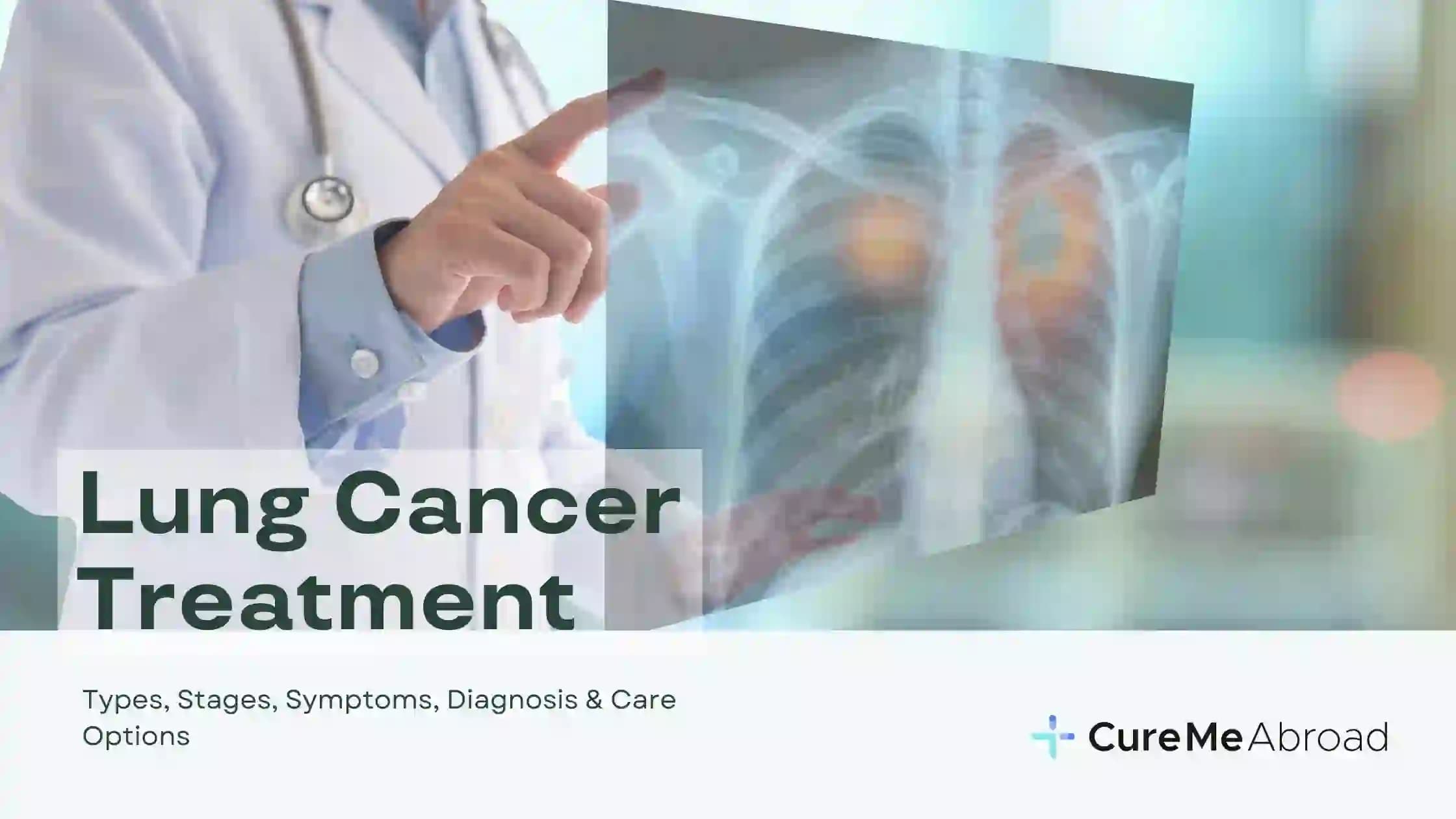
Lung cancer causes more deaths than any other type of cancer – around 1.8 million each year. Even so, progress in care has enhanced both survival and quality of life for many individuals. Beginning with symptoms to watch for, this guide covers key information about current approaches to managing the disease.
Overview
What is lung cancer?
Lung cancer develops when cells grow uncontrollably in one or both lungs. Tumors form as these cells multiply rapidly, interfering with how air sacs transfer oxygen into the bloodstream.
Without treatment, malignant cells may break away and spread to other organs such as the bones, brain, or liver.
How common is lung cancer?
Lung cancer remains one of the most commonly diagnosed cancers worldwide. Around 2.5 million new cases were reported globally in 2022.
Although rates among men have declined in many regions, diagnoses among women remain stable or are increasing in some areas, highlighting the need for continued awareness and screening.
Types of Lung Cancer
Understanding the specific type of lung cancer is important because treatment approaches differ between cell types.
Non-small cell lung cancer (NSCLC)
NSCLC accounts for approximately 80–85% of lung cancer cases. It typically grows and spreads more slowly than small cell lung cancer.
Major subtypes include:
- Adenocarcinoma (common among non-smokers)
- Squamous cell carcinoma
- Large cell carcinoma
Surgery is often the primary treatment when the disease is detected early, sometimes combined with targeted therapies guided by molecular testing.
Small cell lung cancer (SCLC)
Small cell lung cancer represents about 15% of lung cancer cases and is strongly associated with long-term tobacco use.
This type grows rapidly and often spreads before symptoms appear. Because of this, treatment usually involves chemotherapy, radiation therapy, or immunotherapy rather than surgery.
Rare lung tumors
Mesothelioma
Mesothelioma affects the lining of the lungs (pleura) and is primarily caused by asbestos exposure. It often develops 30–50 years after exposure.
Carcinoid tumors
Carcinoid tumors are slow-growing neuroendocrine tumors. They are often curable with surgery if detected early and rarely spread to distant organs.
Symptoms and Early Warning Signs
Common symptoms of lung cancer
Symptoms may not appear until the disease has progressed. Common signs include:
- Persistent cough that worsens over time
- Chest pain during breathing or coughing
- Hoarseness or voice changes
- Unexplained weight loss
- Loss of appetite
- Shortness of breath or wheezing
Early signs of lung cancer
Early symptoms may resemble minor respiratory illnesses. However, certain warning signs require medical evaluation:
- Coughing up blood or rust-colored mucus
- Recurrent lung infections such as bronchitis or pneumonia
- Persistent fatigue or chest discomfort
Symptoms of metastatic lung cancer
When lung cancer spreads to other organs, symptoms depend on the affected area:
- Bone metastasis: Bone pain, especially in the back or hips
- Brain metastasis: Headaches, dizziness, seizures
- Liver metastasis: Jaundice (yellowing of skin and eyes)
Causes and Risk Factors
What causes lung cancer?
Lung cancer begins when cells lining the airways sustain genetic damage. Repeated exposure to carcinogens disrupts normal cell repair processes, eventually leading to tumor formation.
Smoking and secondhand smoke
Smoking is the leading cause of lung cancer, responsible for about 80% of deaths from the disease.
Tobacco smoke contains over 7,000 chemicals, many of which are known carcinogens.
Secondhand smoke also significantly increases risk for non-smokers.
Environmental risk factors
Radon
Radon is a naturally occurring radioactive gas that can accumulate inside homes and is the second leading cause of lung cancer.
Asbestos
Exposure to asbestos fibers can cause lung cancer and is the primary cause of mesothelioma.
Air pollution
Long-term exposure to fine particulate pollution and diesel exhaust increases lung cancer risk.
Genetic factors
People with a family history of lung cancer may have increased risk due to inherited genetic mutations or shared environmental exposures.
Lung Cancer Staging
Cancer staging helps determine the severity of the disease and guides treatment decisions.
The TNM staging system
Doctors use the TNM system to describe cancer spread:
- T (Tumor): Size and location of the primary tumor
- N (Node): Whether cancer has spread to nearby lymph nodes
- M (Metastasis): Whether cancer has spread to distant organs
Stages of non-small cell lung cancer
- Stage 0: Cancer remains within the lung lining
- Stage 1: Tumor is small and confined to the lung
- Stage 2: Cancer may involve nearby lymph nodes
- Stage 3: Cancer spreads to lymph nodes in the chest
- Stage 4: Cancer spreads to distant organs
Stages of small cell lung cancer
- Limited stage: Cancer remains confined to one side of the chest
- Extensive stage: Cancer has spread throughout the lungs or to other organs
Diagnosis and Screening
How lung cancer is diagnosed
Diagnosis typically begins with a physical exam and imaging tests, followed by tissue analysis to confirm cancer.
Imaging tests
- Chest X-ray: Often the first imaging test but may miss small tumors
- CT scan: Provides detailed images of lung structures
- PET scan: Detects active cancer cells and distant metastasis
Biopsy procedures
A biopsy confirms cancer by examining tissue under a microscope.
Bronchoscopy:
A thin tube is inserted through the airways to view the lungs and collect samples.
Needle biopsy:
A needle is inserted through the chest wall to collect tissue from a lung nodule.
Molecular and genetic testing
For NSCLC, biomarker testing identifies genetic mutations such as:
- EGFR
- ALK
- KRAS
These results guide targeted treatment options.
Lung Cancer Treatment Options
Treatment depends on:
- Cancer type
- Stage of disease
- Patient health status
Treatment by stage
Early stages (I–II):
- Surgery
- Possible chemotherapy or radiation after surgery
Locally advanced (Stage III):
- Combined chemotherapy, radiation, and immunotherapy
Metastatic disease (Stage IV):
- Targeted therapy
- Immunotherapy
- Systemic treatments
Surgery
Surgical procedures remove tumors and surrounding lung tissue.
- Lobectomy: Removal of one lung lobe (most common)
- Wedge resection: Removal of a small lung section
- Pneumonectomy: Removal of an entire lung
Radiation therapy
Radiation therapy uses focused energy beams to destroy cancer cells. Advanced techniques such as stereotactic body radiation therapy (SBRT) precisely target small tumors.
Chemotherapy
Chemotherapy uses drugs that destroy rapidly dividing cancer cells.
Treatment usually occurs in 4–6 cycles over several months.
It is often the main therapy for small cell lung cancer and may be used before or after surgery in NSCLC.
Immunotherapy
Immunotherapy helps the immune system recognize and attack cancer cells.
Common drugs include:
- Pembrolizumab (Keytruda)
- Nivolumab (Opdivo)
- Atezolizumab (Tecentriq)
These medications block the PD-1/PD-L1 pathway, allowing immune cells to target tumors more effectively.
Targeted therapy
Targeted drugs attack specific genetic mutations within tumor cells.
Examples include:
- Osimertinib for EGFR mutations
- Sotorasib for KRAS G12C mutations
These treatments often have fewer side effects than traditional chemotherapy.
Palliative care
Palliative care helps manage symptoms such as:
- Pain
- Breathing difficulty
- Fatigue
It can be used alongside curative treatment to improve quality of life.
Managing treatment side effects
Common side effects may include:
- Fatigue
- Nausea
- Hair loss
The severity often depends on treatment intensity and duration.
Prevention and Outlook
Can lung cancer be prevented?
Although not all lung cancers can be prevented, risk can be reduced by:
- Avoiding tobacco use
- Testing homes for radon
- Reducing occupational exposure to harmful substances
Survival rates
Survival varies by stage.
For localized NSCLC, the 5-year survival rate exceeds 60%. Survival decreases when cancer spreads to distant organs.
However, modern treatments continue improving long-term outcomes.
Living with lung cancer
Patients often require:
- Regular follow-up scans
- Lifestyle adjustments
- Support groups or pulmonary rehabilitation
These measures help maintain physical and emotional well-being.
Frequently Asked Questions
Is lung cancer curable?
Lung cancer may be curable when detected early (Stage I or II) and treated with surgery or radiation.
Advanced stages are usually managed as chronic conditions rather than cured.
How fast does lung cancer spread?
Small cell lung cancer spreads rapidly, often within weeks or months.
Non-small cell lung cancer typically grows more slowly but can still spread if untreated.
What is the best treatment for lung cancer?
There is no single best treatment. Therapy depends on:
- Cancer stage
- Genetic biomarkers
- Patient health
Most treatment plans combine surgery, targeted therapy, or immunotherapy.
Conclusion
Lung cancer remains a serious global health challenge, but advances in diagnosis and treatment continue to improve outcomes.
Early detection plays a critical role. Screening for high-risk individuals and recognizing symptoms early can significantly increase treatment success.
References
JNCCN. Non–Small Cell Lung Cancer, Version 4.2024, NCCN Clinical Practice Guidelines in Oncology.
https://jnccn.org/view/journals/jnccn/22/4/article-p249.xmlHMP Global Learning Network. 2024 NCCN Clinical Practice Guidelines Update.
https://www.hmpgloballearningnetwork.com/site/jcp/jcp-special-report/2024-nccn-clinical-practice-guidelines-oncology-nccn-guidelines-rNCCN. Guidelines for Patients: Small Cell Lung Cancer.
https://www.nccn.org/patients/guidelines/content/PDF/SCLC-patient-guideline.pdfCancer Research Institute. Lung Cancer Immunotherapy.
https://www.cancerresearch.org/immunotherapy-by-cancer-type/lung-cancerNHS. Lung cancer – Treatment.
https://www.nhs.uk/conditions/lung-cancer/treatment/World Health Organization. Global cancer burden growing.
https://www.who.int/news/item/01-02-2024-global-cancer-burden-growing--amidst-mounting-need-for-services