




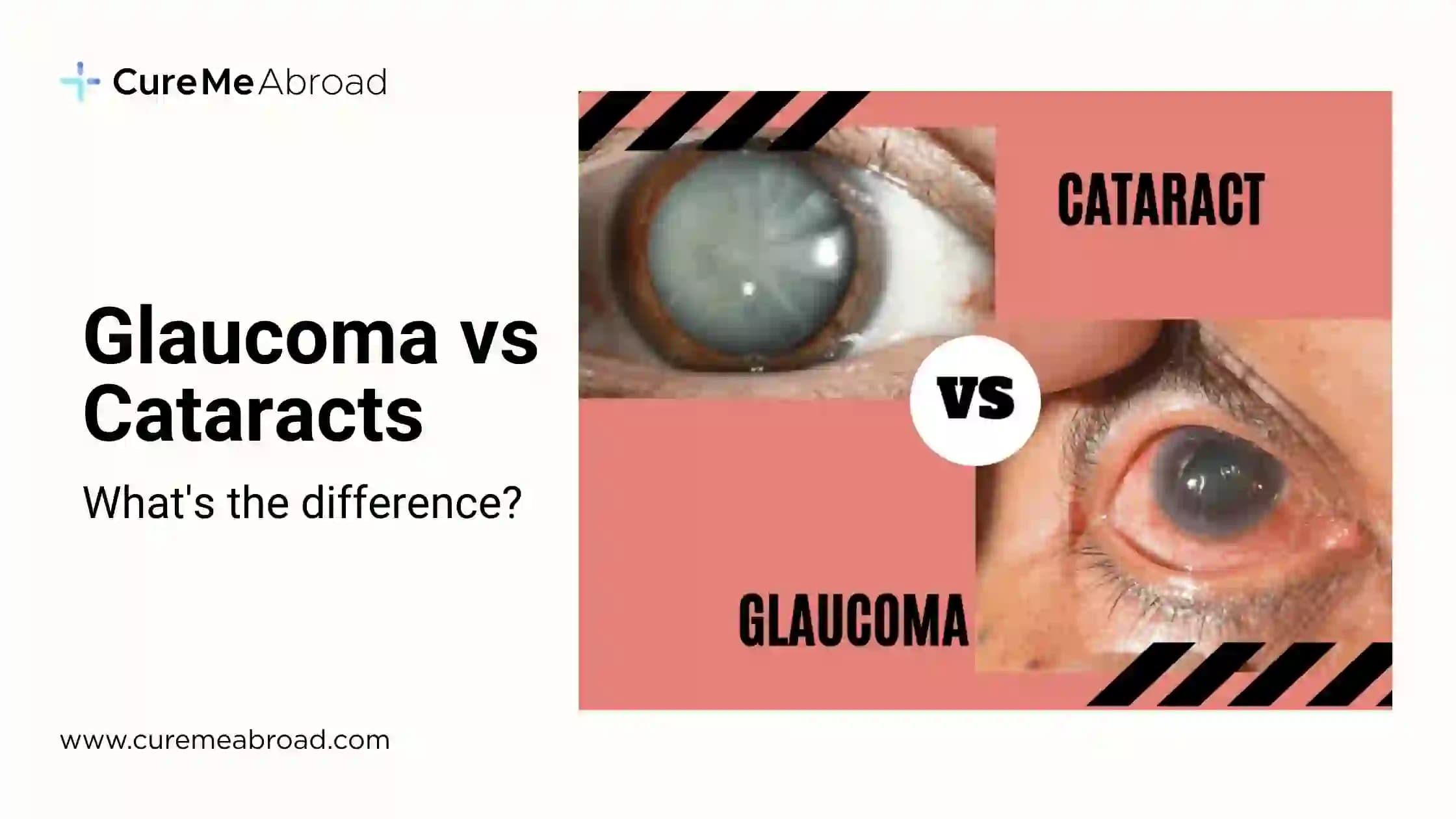
Glaucoma and cataracts are two of the most common eye conditions that can lead to vision loss or blindness. While both are often age-related, they affect different parts of the eye and require completely different treatments.
This guide explains their symptoms, causes, treatments, and key differences to help you make informed decisions.
What is Glaucoma?
Glaucoma is a group of eye conditions that damage the optic nerve, which connects the eye to the brain. This damage is usually caused by increased intraocular pressure (IOP) due to fluid buildup.
It commonly affects older adults but can occur at any age.
Types of Glaucoma
Open-Angle Glaucoma
- Most common type
- Slow fluid drainage → gradual pressure buildup
- Painless with no early symptoms
- Vision loss occurs in advanced stages
Closed-Angle Glaucoma
- Medical emergency
- Sudden blockage of drainage angle
- Rapid increase in eye pressure
Causes and Risk Factors of Glaucoma
- Increased intraocular pressure (IOP)
- Diabetes or high blood pressure
- Age (especially 60+)
- Eye injuries
- Family history
- Refractive errors (near/farsightedness)
Symptoms of Glaucoma
- Blind spots (peripheral vision loss)
- Tunnel vision
- Eye pain
- Blurred vision
- Redness
- Headache
- Nausea or vomiting
- Halos around lights
What are Cataracts?
Cataracts occur when the eye’s natural lens becomes cloudy, leading to blurred or dim vision. This happens due to protein buildup in the lens, usually with aging.
They may affect one or both eyes.
Types of Cataracts
Nuclear Cataract
- Develops in the center of the lens
Cortical Cataract
- Starts at the outer edge and moves inward
Posterior Subcapsular Cataract
- Forms at the back of the lens
- Progresses faster than other types
Causes and Risk Factors of Cataracts
- Aging (most common cause)
- Diabetes
- Long-term steroid use
- UV exposure
- Family history
- Smoking or alcohol use
Symptoms of Cataracts
- Blurry or cloudy vision
- Poor night vision
- Sensitivity to light
- Faded colors
- Double vision
- Frequent changes in glasses prescription
Glaucoma vs Cataracts: Key Differences
| Feature | Glaucoma | Cataracts |
|---|---|---|
| Affected Area | Optic nerve | Eye lens |
| Cause | High eye pressure | Protein buildup in lens |
| Onset | Silent, gradual | Slow and noticeable |
| Pain | Sometimes painful | Usually painless |
| Vision Loss | Permanent | Reversible with surgery |
| Treatment | Drops, laser, surgery | Surgery (lens replacement) |
Treatment for Glaucoma
Glaucoma damage cannot be reversed, but progression can be slowed.
Common Treatments
- Prescription eye drops
- Oral medications
- Laser therapy
- Surgery
Surgical Options
- Trabeculectomy: Creates a drainage pathway
- Tube shunt surgery: Implants tube to drain fluid
Treatment for Cataracts
The only effective treatment is cataract surgery.
Cataract Surgery Process
- Cloudy lens is removed
- Replaced with artificial intraocular lens (IOL)
Types of Cataract Surgery
- Phacoemulsification (Phaco): Most common, ultrasound-based
- Micro-Incision Cataract Surgery (MICS): Smaller cuts, faster healing
- Femtosecond Laser Surgery (FLACS): Laser-assisted precision
Can Cataract and Glaucoma Surgery Be Done Together?
Yes. Combined surgery is often recommended when both conditions are present.
- Cataract removal may slightly lower eye pressure
- Combined procedures improve overall outcomes
Recovery: Glaucoma vs Cataract Surgery
Glaucoma Surgery Recovery
- Vision may fluctuate
- Takes several weeks
- Requires lifelong monitoring
Cataract Surgery Recovery
- Vision improves in a few days
- Full recovery in 2–4 weeks
- Requires temporary medications
Conclusion
Glaucoma and cataracts may both affect vision, but they differ significantly:
- Glaucoma damages the optic nerve and causes irreversible vision loss
- Cataracts cloud the lens but can be cured with surgery
Early detection through regular eye exams is crucial for both conditions.
Frequently Asked Questions
Is cataract surgery enough if I have glaucoma?
It depends on severity. Mild glaucoma may benefit slightly, but advanced cases need separate treatment.
Can glaucoma surgery restore vision?
No, it only prevents further damage.
Which surgery is riskier?
Glaucoma surgery generally carries more risk and requires closer follow-up.
Can glaucoma worsen after cataract surgery?
Rarely, but eye pressure fluctuations can occur and require monitoring.
References
- Florida Eye Specialists (2023)
- ASG Eye Hospital (2024, 2026)