



Many people are affected by tooth loss caused by age, gum disease, trauma, or even congenital absence. It not only affects the appearance but can have an impact on speech, chewing, and alignment.
Dental veneers are known for their capacity to improve the appearance of discolored, broken, or chipped teeth. Nonetheless, people often get mixed up about whether veneers can be used to replace missing teeth.
In this article, we will discuss the use of dental veneers for missing teeth, how they might be used indirectly, their advantages and drawbacks, and the most efficient alternative treatments currently available.
What are Dental Veneers?
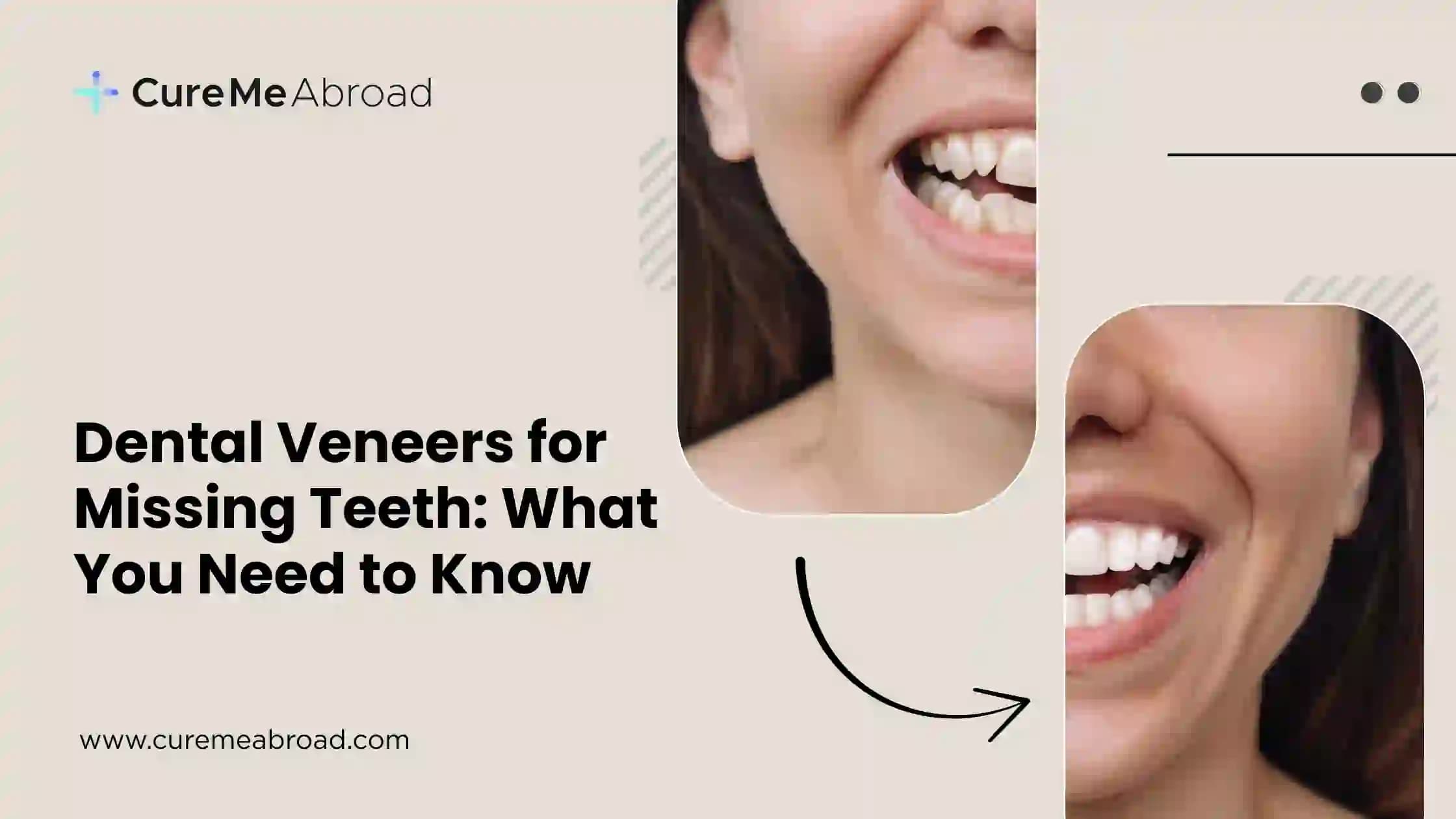
Dental veneers are thin, tailor-made shells of porcelain or composite resin. They are glued to the front surface of natural teeth to cosmetically enhance them. Usually, permanent veneers are bonded to the teeth, and only a dentist can detach them.
There are also non-permanent veneers, often called snap-on or pop-on veneers, which are removable and non-invasive cosmetic options.
Veneers are mainly used for:
- Chipped or broken teeth
- Stained teeth resistant to whitening
- Teeth with gaps
- Uneven teeth
- Worn-out teeth
Can Veneers Replace Missing Teeth?
In short, no—veneers cannot replace missing teeth.
They are cosmetic restorations that require an existing natural tooth for support. Without a tooth, there is no surface for the veneer to bond to.
Why Veneers Alone Do Not Fix Missing Teeth
No Support Structure
Veneers rely on enamel or dentin for bonding. Without a tooth, they cannot be placed.
Cosmetic Purpose Only
They are designed to enhance appearance, not restore function like chewing or biting.
Durability Limitations
Veneers alone cannot withstand the pressure required for full tooth function.
Alternative Options for Missing Teeth
Dental Bridges
A dental bridge fills the gap using artificial teeth supported by adjacent natural teeth or implants.
- Fixed Bridge: Permanently attached to surrounding teeth
- Resin-Retained Bridge: Ideal for front teeth, bonded at the back
Removable Partial Dentures
Replace a few missing teeth and can be removed easily.
Complete Dentures
Used when all teeth are missing in an arch.
Dental Implants
A long-term solution where a titanium post is placed in the jawbone and topped with a crown.
Implants restore both function and appearance and can be combined with veneers on other teeth for a full smile makeover.
Things to Consider Before Choosing Veneers
Number of Missing Teeth
Single vs multiple gaps affect treatment complexity.
Location of the Gap
Front teeth impact aesthetics; back teeth affect function.
Condition of Surrounding Teeth
Healthy adjacent teeth are essential for support.
Bite and Jaw Alignment
Misalignment can damage veneers over time.
Gum and Bone Health
Important especially if implants or bridges are planned.
Procedure of Dental Veneers
Consultation
Dentist evaluates suitability.
Preparation
A thin enamel layer (~0.5 mm) is removed.
Impression and Fabrication
Custom veneers are created in a lab.
Temporary Veneers
Placed while waiting for permanent ones.
Bonding
Veneers are attached with strong adhesive.
Polishing and Adjustment
Final adjustments ensure a natural look and proper fit.
Benefits of Dental Veneers
- Improved appearance and smile symmetry
- Minimally invasive compared to crowns
- Stain-resistant (especially porcelain)
- Quick results (2–3 visits)
- Boosts confidence
Limitations of Dental Veneers
- Cannot replace missing teeth
- Not suitable for severely damaged teeth
- Permanent procedure (enamel removal required)
- Can chip under heavy biting forces
- Do not restore chewing function
Summary
Dental veneers are excellent for enhancing the appearance of existing teeth but are not a solution for missing teeth. For functional and long-term replacement, options like implants, bridges, or dentures are more appropriate.
A cosmetic dentist can design a personalized treatment plan that may combine veneers with other restorations for optimal results.
Frequently Asked Questions
Can dental veneers restore missing teeth completely?
No, veneers require an existing tooth and cannot replace a missing one.
How long do veneers last?
- Porcelain: 10–15 years
- Composite: 5–7 years
Are veneers better than implants?
No. Veneers are cosmetic, while implants restore both function and structure.
What do veneers cost?
Typically $400 to $2,500 per tooth, depending on material and expertise.
Do veneers require special maintenance?
No special care beyond good oral hygiene and regular dental visits.
References
- Prograse. “Dental Veneers for Missing Teeth: Benefits, Procedure, Cost.” 2025.
- Aesthetic Dental Clinic. “Can You Get Veneers with Missing Teeth?” 2024.
- Enamel Dentistry. “Dental Veneers for Missing Teeth.” 2025.