




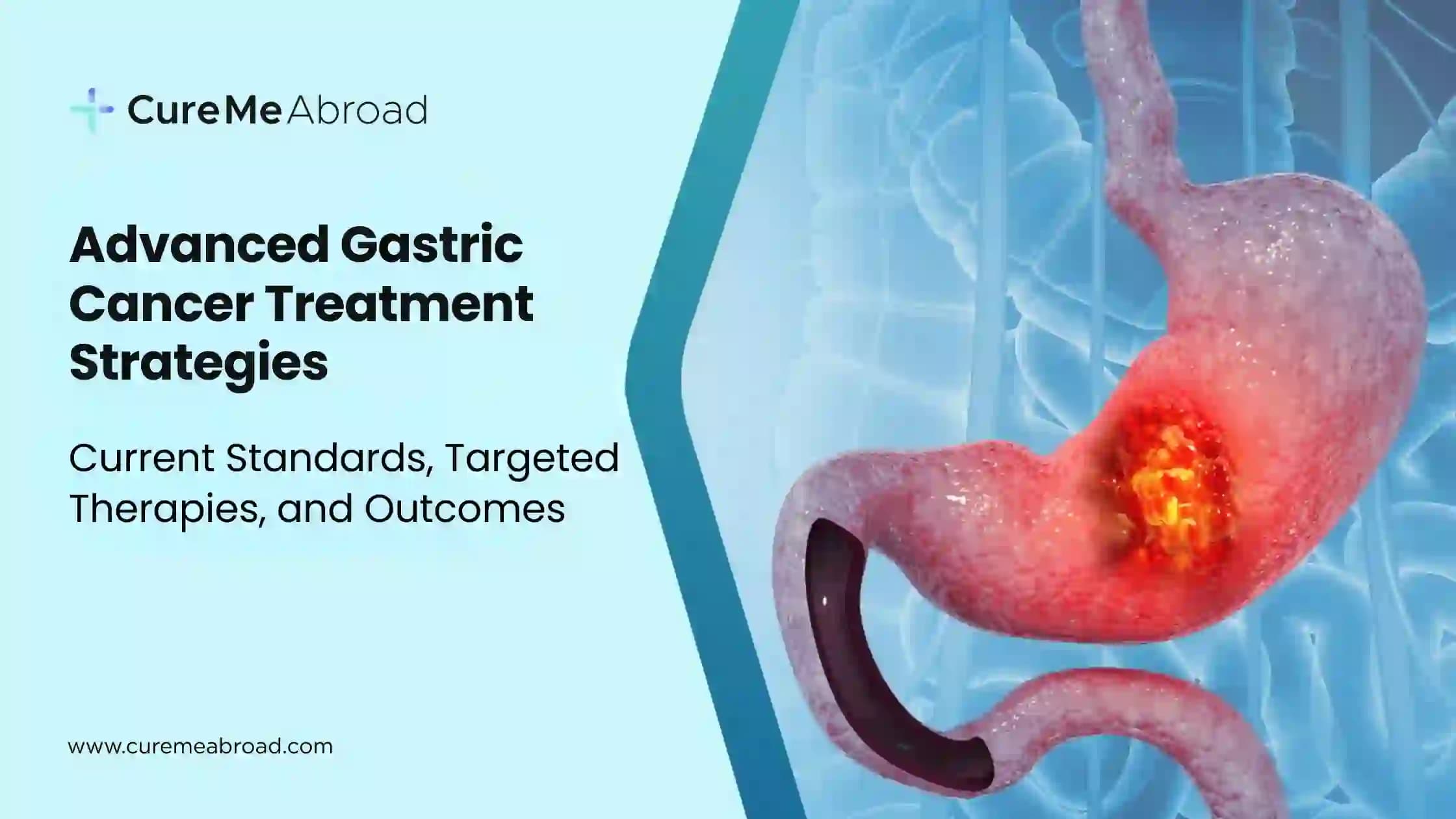
Gastric cancer is the fourth leading cause of cancer-related death worldwide and the fifth most commonly diagnosed malignancy. Due to delayed diagnosis and limited effective treatments, patients with advanced gastric cancer have historically faced poor outcomes, with average survival around one year.
Traditional therapies often lead to drug resistance and tumor relapse. However, recent advancements in immunotherapy, targeted therapy, antibody-drug conjugates (ADCs), and function-preserving surgeries are opening new doors for more personalized and effective treatment strategies.
What is Gastric Cancer?
Gastric cancer is a type of cancer that develops in the stomach, an organ located in the upper left abdomen. The stomach plays a key role in digestion and is part of the gastrointestinal tract, which extends from the mouth to the anus.
Types of Gastric Cancer
Gastric Adenocarcinoma
- Originates from mucus-producing cells in the gastric lining
- Accounts for most stomach cancer cases
Based on Location
Gastric Cardia Cancer
- Occurs at the junction between the esophagus and stomach
Non-Cardia Gastric Cancer
- Occurs in other regions of the stomach
Gastroesophageal Junction Adenocarcinoma (GEJ)
- Develops where the esophagus meets the stomach
- Often treated as either esophageal or gastric cancer
Gastroenteropancreatic Neuroendocrine Tumors (GEP-NETs)
- Arise from neuroendocrine cells in the digestive tract
- Can produce hormones like:
- Insulin
- Glucagon
- Gastrin
Gastrointestinal Stromal Tumors (GISTs)
- Originate from stromal cells in the GI tract
- Classified as soft tissue sarcomas
Causes and Risk Factors
Common risk factors include:
- Helicobacter pylori infection
- Advanced age
- Diet high in salted, smoked, or preserved foods
- Chronic atrophic gastritis
- Gastric adenomas
- Family history of gastric cancer
- Cigarette smoking
- Obesity and GERD (for upper stomach cancers)
Diagnosis of Gastric Cancer
Key Diagnostic Methods
Upper Gastrointestinal Endoscopy
- Visual examination of stomach lining
- Biopsy collection
Histopathological Examination
- Confirms cancer type and grade
Imaging Studies
- CT scan (chest, abdomen, pelvis)
- Detects metastasis and lymph node involvement
Endoscopic Ultrasound (EUS)
- Determines tumor depth and lymph node involvement
Additional Tests
- PET scan
- Laparoscopy
Molecular Testing
- Biomarkers:
- HER2
- MSI (Microsatellite Instability)
- PD-L1
Traditional Gastric Cancer Treatment
Surgery
Endoscopic Resection
- EMR and ESD for early-stage tumors
Partial (Subtotal) Gastrectomy
- Removes part of the stomach
Total Gastrectomy
- Removes entire stomach and nearby tissues
Radiation Therapy
- Uses high-energy radiation to kill cancer cells
- Often combined with chemotherapy
Chemotherapy
Common drug combinations:
- Fluorouracil + Folinic acid + Oxaliplatin + Docetaxel
- Epirubicin + Cisplatin + Fluorouracil
- Oxaliplatin + Fluorouracil + Folinic acid
Advanced Gastric Cancer Treatment
Immunotherapy
- A major breakthrough in gastric cancer treatment
- Uses immune checkpoint inhibitors
Key Drugs:
Nivolumab
Pembrolizumab
Especially effective in:
- HER2-positive cases
- PD-L1-positive tumors
- MSI-high cancers
Targeted Therapy
- Targets specific cancer cell markers
Common Drugs:
Trastuzumab
Deruxtecan
Zolbetuximab
Ramucirumab
Regorafenib
Often combined with chemotherapy
Anti-Angiogenic Therapy
Blocks blood vessel formation in tumors
Helps prevent tumor growth and spread
Future focus:
- Combination with immunotherapy
- Biomarker-driven selection
Palliative Care
- Improves quality of life
- Focuses on:
- Pain relief
- Symptom management
- Emotional and psychological support
Prognosis and Survival Outcomes
Median survival: 12–18 months with modern therapies
Depends on:
- Tumor biology
- Molecular subtype
- Treatment response
Personalized treatment significantly improves outcomes
Frequently Asked Questions
What is advanced gastric cancer?
Cancer that has spread to lymph nodes or distant organs (Stage III or IV).
Is gastric cancer curable?
Advanced gastric cancer is usually not curable, but treatments can:
- Slow progression
- Improve quality of life
- Extend survival
What is the first-line treatment?
- Systemic chemotherapy
- Followed by:
- Targeted therapy
- Immunotherapy (based on biomarkers)
How long can patients live?
- Median survival: 12–18 months
- Some patients live longer depending on treatment response
Can immunotherapy treat gastric cancer?
Yes, especially in:
- MSI-high tumors
- PD-L1-positive cancers
- EBV-associated gastric cancer
References
- Mayo Clinic – Stomach Cancer Diagnosis and Treatment
- American Cancer Society – Surgery for Stomach Cancer
- Li H, et al. Frontiers in Oncology (2024)
- Cancer Research UK – Chemotherapy for Stomach Cancer