

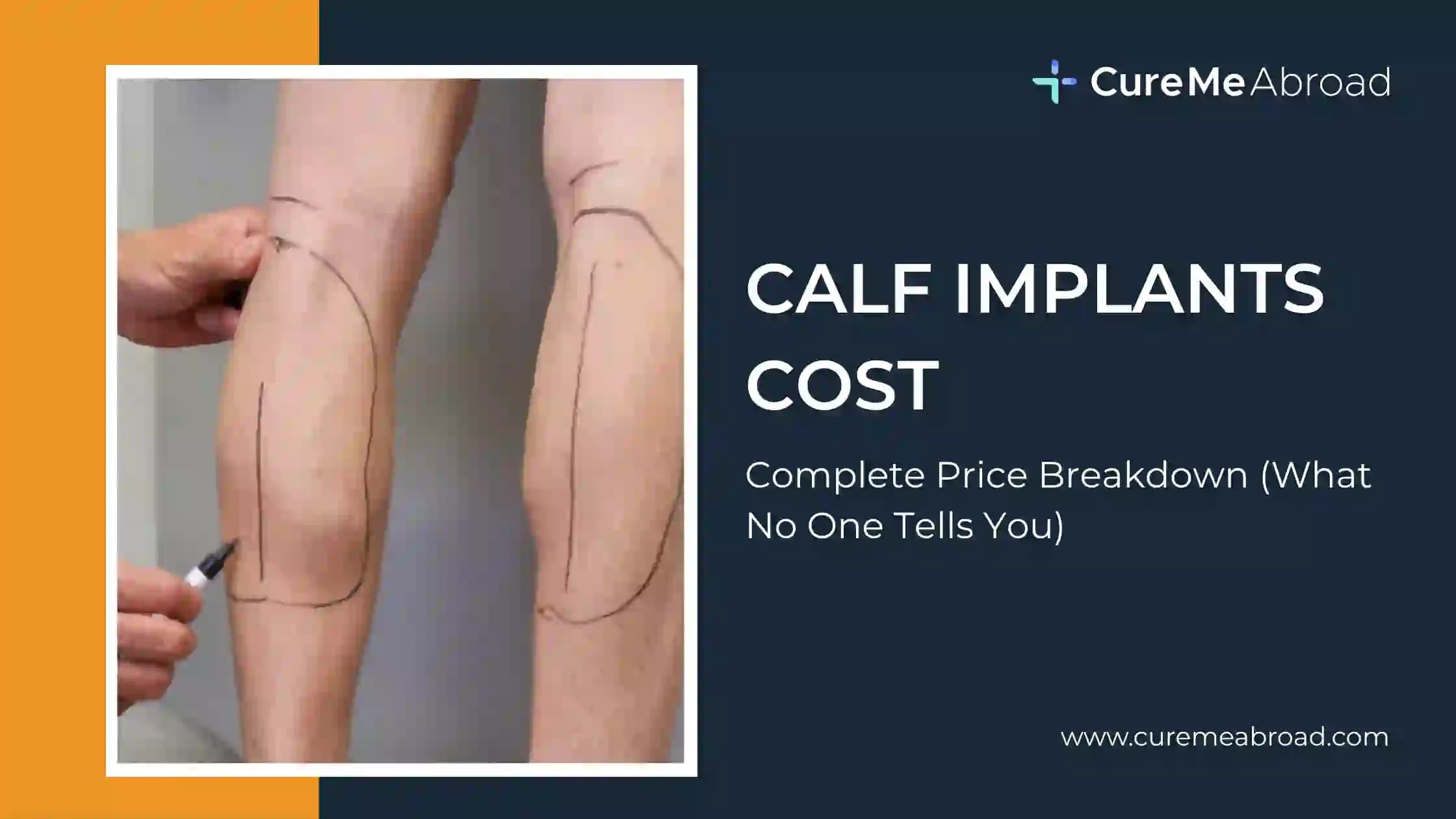
You've trained legs consistently for years. You've tried every calf raise variation in existence. And yet, your calves stubbornly refuse to grow. If this sounds familiar, you're not alone calf development is one of the most genetically resistant muscle groups in the human body. For those who want a permanent solution, calf implants cost is often the first question that comes to mind, and understanding it fully before booking a consultation can save you thousands.
The average calf implants cost cited by the Aesthetic Plastic Surgery National Databank is approximately $5,026 but that figure is misleading. Once you factor in anesthesia, facility fees, medications, and recovery costs, most patients spend between $7,000 and $12,000 out of pocket. Some spend considerably more.
By the end of this guide, you'll know exactly what to budget, what questions to ask your surgeon, whether financing makes sense for your situation, and whether medical tourism is a legitimate money-saving strategy or a risk not worth taking.
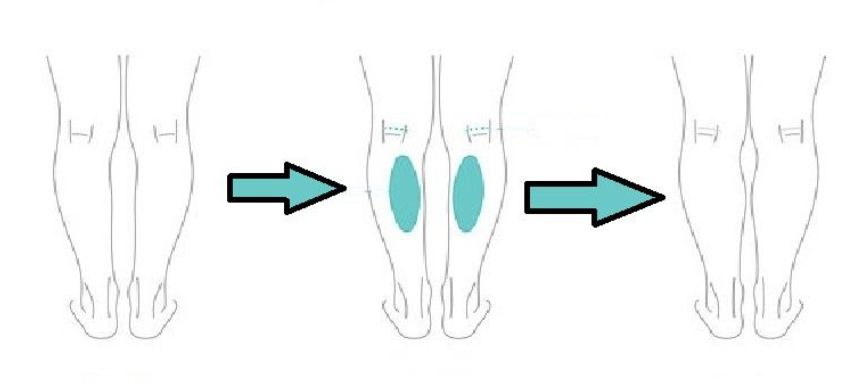
What Is the Average Calf Implants Cost in 2026?
Calf implants cost varies widely depending on where you live and who performs the procedure. National statistics put the baseline surgeon and facility fee at around $5,026 but this number represents only the surgeon's professional fee and a basic facility charge. It is not the total amount you will actually pay.
Here's how the full range breaks down:
- $3,800–$5,000: Surgeon fee plus basic facility in lower-cost U.S. cities
- $5,000–$9,000: Full package including surgeon, anesthesia, facility, and follow-up appointments
- $9,000–$15,000: Custom implants or high-end metropolitan practices in cities like New York or Beverly Hills
For most patients, a realistic all-in budget is $7,000 to $12,000. The wide range exists because calf implants cost is shaped by several variables geography, surgeon experience, implant type, and whether you need one or two implants per leg.
What Does Calf Implants Cost Actually Cover? The Hidden Fees
This is the section most competing cost guides skip entirely, and it's the one that catches patients off guard. There is a meaningful difference between the sticker price a practice advertises and your true out-of-pocket total.
What's usually included in the quoted calf implants cost:
- Surgeon's fee
- Surgical facility and operating room fee
- Standard silicone implants
What's frequently excluded:
- Anesthesia fee: $500–$1,500
- Pre-operative lab work and bloodwork: $200–$500
- Compression garments: $50–$150
- Prescription medications (pain relief and antibiotics): $100–$300
- Post-op physiotherapy if needed: $100–$300 per session
- Time off work and lost wages: variable
- Revision surgery if complications arise: $2,000–$6,000 or more
These excluded items can add $2,500 or more to the total calf implants cost. If you're considering medical tourism, you'll also need to budget for flights, hotel stays, and a longer recovery period abroad.
Before committing to any surgeon, ask directly: "What is NOT included in this quote?" A reputable practice will give you a clear, itemized breakdown not just a headline figure.
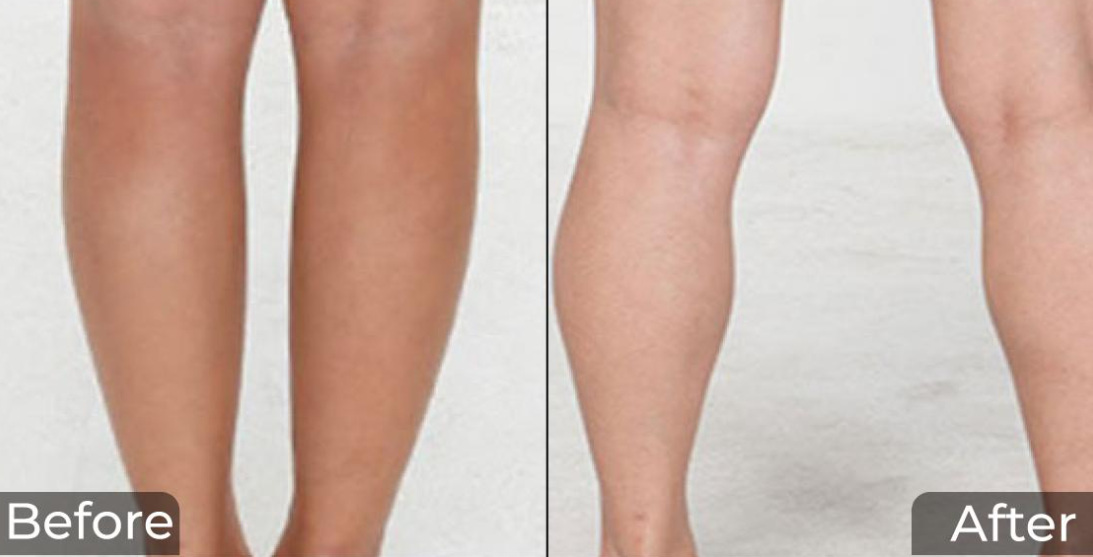
6 Factors That Directly Affect Calf Implants Cost
Calf implants cost is not a fixed number. These six variables explain why the price range is so wide.
1. Geographic location
Where you have surgery may be the single largest variable in determining calf implants cost. In lower-cost U.S. cities across the Midwest or Southeast, all-in prices often fall between $4,000 and $6,000. In premium markets New York City, Los Angeles, Beverly Hills, Miami the same procedure with a top-tier surgeon can reach $9,000 to $15,000.
2. Surgeon's experience and credentials
Board-certified plastic surgeons who specialize in body contouring command higher fees, and for good reason. Their complication rates are lower, their results are more predictable, and their revision rates are lower. The American Society of Plastic Surgeons consistently advises patients never to select a surgeon based primarily on price. A $1,000 saving on a surgeon's fee means very little if it leads to a $5,000 revision.
3. Type of implant
Standard solid silicone implants are the most common choice and carry the lowest cost. Silicone gel implants offer a slightly softer feel but cost more. Custom-molded implants often used for patients correcting a congenital deformity, injury, or significant leg asymmetry can add several thousand dollars to the total calf implants cost.
4. Implant placement method
The subfascial technique places the implant beneath the fascia. It is less invasive, involves shorter surgery, and typically costs less. The submuscular technique goes deeper between muscle layers it produces a more natural-looking result and is less prone to shifting, but requires a longer operation and recovery, both of which increase calf implants cost.
5. Single vs. dual implants per leg
Many patients need only one implant per leg. Others benefit from dual implants per leg, placing a second implant at the outer head. Dual placement essentially doubles the implant material cost and adds surgical time.
6. Combined procedures
Scheduling calf augmentation alongside another body contouring procedure liposuction, pectoral implants, or abdominal etching means sharing one anesthesia session and operating room block. This bundling approach can meaningfully reduce total calf implants cost compared to having each procedure on a separate day.
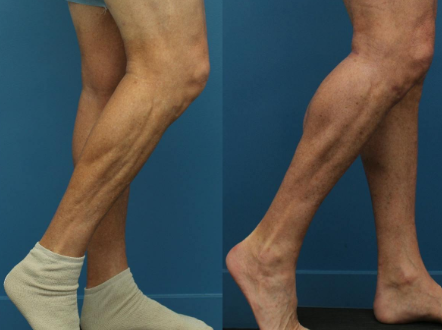
Calf Implants Cost Around the World: Is Medical Tourism Worth It?
Here's how calf implants cost compares internationally:
| Country | Estimated Cost |
|---|---|
| USA (average) | $5,000–$9,000 |
| USA (NYC / Beverly Hills) | $9,000–$15,000 |
| Turkey | $2,138–$4,000 |
| Mexico | ~$6,199 |
| Canada (Toronto) | $7,500–$10,000 |
| UK (London) | £4,000–£6,000 |
On paper, Turkey's starting price looks compelling. But the full picture is more nuanced. Long-haul flying within days of surgery significantly elevates deep vein thrombosis risk. Managing complications from abroad is logistically difficult and expensive. If revision surgery is needed, you may face full domestic costs eliminating the original savings entirely.
If you pursue medical tourism, budget for an extended stay of at least 10–14 days. Factor this into your true calf implants cost comparison before making a decision.
Does Health Insurance Cover Calf Implants Cost?
For purely cosmetic calf augmentation, the answer is almost always no. Health insurers classify this as elective cosmetic surgery and exclude it from coverage.
The exception is calf augmentation performed as reconstructive surgery. Coverage may be available either partially or fully when the procedure corrects a congenital deformity such as clubfoot or limb asymmetry, significant muscle loss from polio or neurological disease, or documented injury resulting in muscle atrophy.
If any of these circumstances apply to you, call your insurer's member services line and ask specifically about reconstructive calf augmentation. Ask your plastic surgeon to prepare supporting clinical documentation. Even if your insurer won't cover the procedure itself, it may cover anesthesia or facility fees if there is a documented medical reason.
How to Finance Calf Implants Cost: Payment Plans and Options
Because calf implants cost is rarely covered by insurance, most patients pay out of pocket. Here are the main financing options:
- Surgeon-offered payment plans: Many practices offer in-house installment plans, spreading calf implants cost over 3 to 24 months, often at low or no interest.
- Medical credit cards: CareCredit and Alphaeon Credit both offer promotional 0% APR periods typically 6, 12, or 18 months. Important caution: deferred-interest products charge retroactive interest on the full balance if it isn't paid before the promotional period expires. Read the terms carefully.
- Personal loans: Unsecured personal loans from banks, credit unions, or online lenders are another route. Borrowers with strong credit can find rates below 10% APR.
- Healthcare financing companies: Specialized medical lenders such as Prosper Healthcare Lending focus exclusively on elective healthcare and may offer terms unavailable through general loan products.
A smart rule: always calculate your total all-in calf implants cost including hidden fees before applying for financing. Applying for $5,500 when the true cost is $8,200 creates a shortfall at the worst possible moment.
Calf Implants vs. Fat Transfer vs. Non-Surgical Options: Which Is Most Cost-Effective?
Calf implants cost is not the only path to fuller calves. Here's how the options compare:
- Silicone calf implants: $5,000–$15,000 upfront; permanent results; 4–8 week recovery
- Fat transfer: $3,000–$7,000; mostly permanent but some volume reabsorption expected; 2–4 week recovery
- Dermal fillers (e.g., Sculptra): $1,500–$3,500; temporary results lasting 1–2 years; minimal downtime
- Exercise and nutrition: Minimal cost; requires consistent effort; no downtime
Evaluating cost on initial price alone is misleading. Fillers may cost $2,000 upfront but require retreatment every one to two years meaning a five-year total of $5,000–$10,000 with no permanent result. Silicone implants carry the highest upfront calf implants cost but are designed to be permanent. For patients committed to a long-term result, the ten-year total cost of implants may actually be lower than repeated filler treatments.
Are Calf Implants Worth the Cost? What Patients Say
Given that calf implants cost between $7,000 and $12,000 all-in, patient satisfaction data matters. Published studies report satisfaction rates above 95% among patients who undergo the procedure with a qualified surgeon and realistic expectations.
Many patients describe significant improvements in self-confidence, reduced self-consciousness in shorts or swimwear, and improved perceived bodily proportionality. For patients correcting a congenital deformity or injury-related asymmetry, the psychological impact can be especially meaningful.
Realistic expectations are essential. Implants are designed to be permanent but not unconditionally lifelong. Migration, capsular contracture, or changes in personal preference may require revision surgery at some point which is why choosing a surgeon with a clear revision policy matters.
How to Choose a Calf Implant Surgeon: Getting Quality Without Overpaying
The surgeon you choose has a greater impact on your outcome and your total calf implants cost including any revisions than almost any other variable.
Look for board certification from the American Board of Plastic Surgery. Ask to see before-and-after photos specifically for calf augmentation, not just general body contouring. Ask directly about complication rates and revision policies. Get two or three consultations and request a complete itemized quote from each compare total all-in calf implants cost, not headline prices.
The golden rule: do not choose your surgeon based on the lowest price. Choose based on credentials, experience, and portfolio then discuss the cost.
Calf Implants Cost: Frequently Asked Questions
Q1: How much does calf implants cost on average in the U.S.?
The national average for the surgeon and facility fee alone is approximately $5,026, but that figure doesn't tell the full story. Once you add anesthesia, pre-operative lab work, compression garments, prescription medications, and follow-up appointments, most U.S. patients should budget between $7,000 and $12,000 as a realistic all-in calf implants cost. In premium markets like New York City or Beverly Hills, the total can climb to $15,000 or more.
Q2: Does health insurance cover calf implants cost?
For purely cosmetic calf augmentation, health insurance almost never covers calf implants cost. Insurers classify the procedure as elective and exclude it from standard coverage. The exception is when the surgery is medically necessary, for example, to correct a congenital deformity like clubfoot, significant muscle atrophy caused by polio or neurological disease, or documented injury-related muscle loss. If any of these apply to you, contact your insurer directly and ask your surgeon to prepare clinical documentation supporting medical necessity before assuming no coverage exists.
Q3: What is the cheapest way to reduce calf implants cost?
The most effective ways to lower your total calf implants cost without compromising safety are choosing a board-certified surgeon in a lower-cost U.S. city rather than a premium metropolitan market, combining calf augmentation with another body contouring procedure to share a single anesthesia and operating room session, and getting two or three itemized quotes to compare true all-in costs rather than headline prices. Avoid selecting a surgeon based on the lowest fee alone, as a cheaper surgeon who leads to revision surgery will cost significantly more in the long run.
Q4: How long do calf implants last, and does that affect the overall cost value?
Silicone calf implants are designed to be permanent with no official expiration date, which is a key reason why calf implants cost is considered good long-term value compared to non-surgical alternatives. Dermal fillers, for example, require retreatment every one to two years, meaning a five-year total cost of $5,000 to $10,000 with no permanent result. While implant migration or capsular contracture may require revision surgery in some cases, for most patients a single investment in calf implants cost delivers lasting results that temporary treatments cannot match.
Q5: Is calf implants cost worth it? What do patients say?
Patient satisfaction data for calf augmentation is notably strong, with published studies reporting satisfaction rates above 95% among patients who undergo the procedure with a qualified surgeon and realistic expectations. Beyond the physical change, many patients report meaningful improvements in self-confidence, reduced self-consciousness in shorts or swimwear, and a better sense of body proportion. For patients correcting a congenital deformity or injury-related asymmetry, the psychological impact can be especially significant. For those committed to a permanent result, most patients feel that calf implants cost is a worthwhile long-term investment.
Q6: How much does calf implants cost on average?
The national average surgeon and facility fee is approximately $5,026. However, once anesthesia, lab work, medications, compression garments, and follow-up care are included, most patients should budget $7,000 to $12,000 as a realistic all-in calf implants cost.
Q7: Are calf implants covered by insurance?
Rarely, for cosmetic augmentation. Coverage may be available when the procedure is medically necessary, for example, to correct a congenital deformity, significant muscle atrophy from disease, or a documented injury.
Q8: How long do calf implants last?
Silicone calf implants are designed to be permanent with no official expiration date. However, implant migration, capsular contracture, or personal preference changes may lead some patients to seek revision surgery in the future.
Q9: Can you finance calf implants cost?
Yes. Options include medical credit cards such as CareCredit or Alphaeon (with 0% APR promotional periods), in-house payment plans through your surgeon's practice, and personal loans. Always compare the total financing cost, not just the monthly payment.
Q10: What is the cheapest way to reduce calf implants cost?
Combining calf augmentation with another body contouring procedure shares the anesthesia and operating room costs. Choosing a board-certified surgeon in a lower-cost city and getting multiple quotes are the most reliable ways to reduce calf implants cost without compromising safety.
Q11: Is calf implant surgery painful?
Most patients experience soreness, stiffness, and tightness in the first week, manageable with prescribed medication. Pain subsides significantly by the second week.
Q12: How long is recovery from calf implants?
Most patients return to desk work within 1 to 2 weeks. Exercise is restricted for 4 to 6 weeks, while full swelling resolution can take 3 to 6 months.
Q13: What's the difference between subfascial and submuscular calf implants?
Subfascial placement is less invasive, involves shorter surgery, and carries a lower calf implants cost. Submuscular placement goes deeper between muscle layers, producing more stable and natural-looking results, but involves a longer procedure and higher surgical fees.
Q14: Can calf implants be combined with other surgeries?
Yes. Combining calf augmentation with liposuction, pectoral implants, or abdominal etching allows patients to share one anesthesia session and operating room booking, significantly reducing the overall treatment cost.
The Bottom Line
The true calf implants cost is rarely the advertised sticker price. When you account for anesthesia, medications, lab work, compression garments, time off work, and the possibility of future revision, a realistic all-in budget is $7,000–$12,000 for most U.S. patients more for premium markets or custom implants.
The most important financial decision isn't whether to invest in calf implants cost. It's who performs the surgery. A board-certified, experienced plastic surgeon will cost more upfront and save you significantly over time by minimizing revision risk.
Book a consultation with a board-certified plastic surgeon near you. Ask for a complete itemized quote, ask what is not included, and get two or three opinions before committing.