

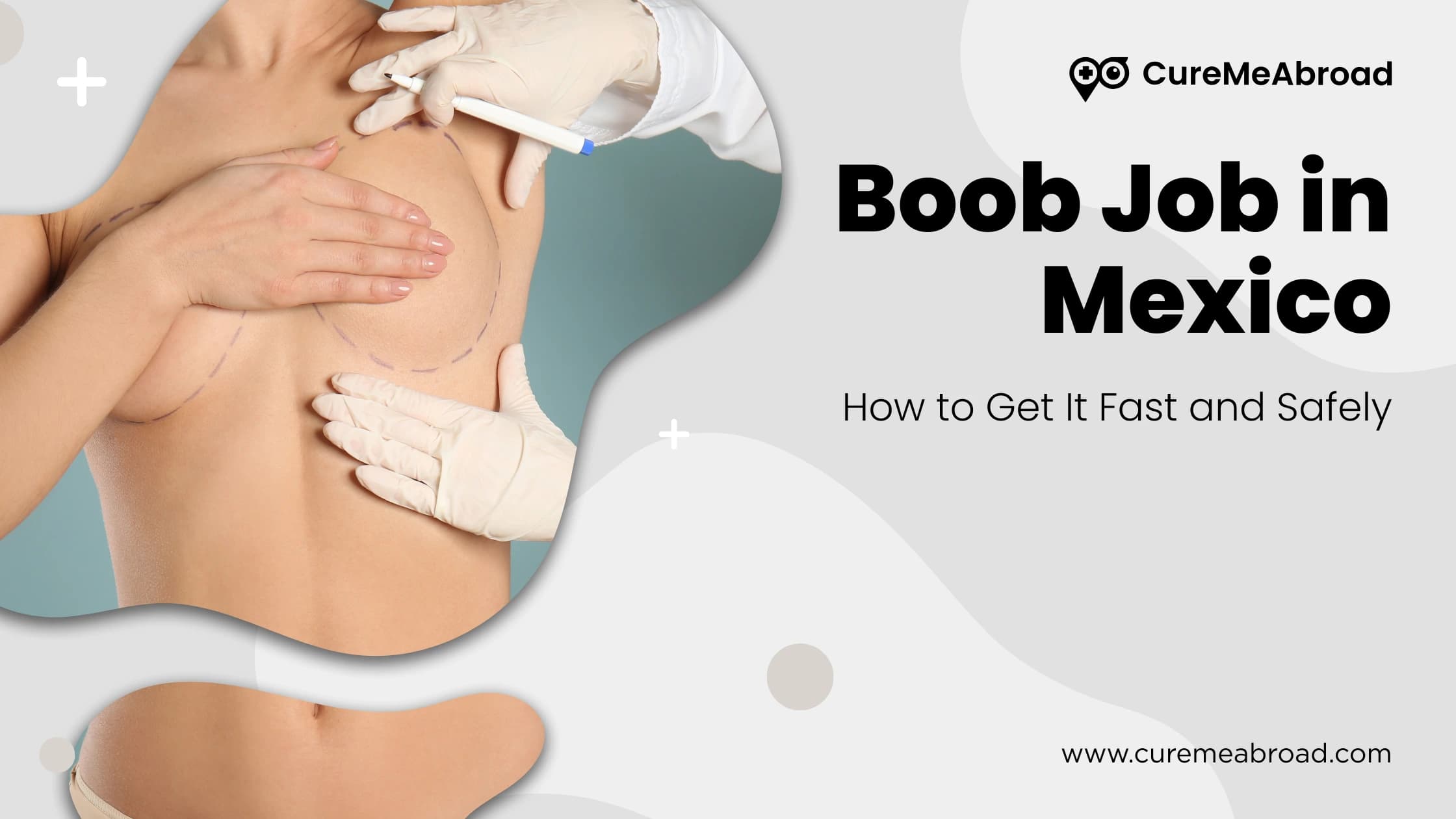
Breast augmentation (commonly called a “boob job”) is one of the world’s most frequently performed cosmetic procedures. For many patients in the United States, Canada, and other countries, Mexico has become an attractive option with shorter travel time than long-haul destinations, experienced surgeons, modern clinics, and substantially lower prices. This guide explains how to get a breast augmentation in Mexico quickly and safely: what to look for, how to plan a fast but responsible trip, how much you can realistically save, and practical tips for before/after photos, clinic selection, and FAQs for international patients.
This guide will provide you with information about the realistic cost ranges and potential savings; the safety checklist (board certification, facility accreditation, anesthesia and emergency plans); typical timelines for a fast, safe trip; how to evaluate before/after photos; some reputable clinic hubs and examples; and a patient FAQ covering recovery, implants, risks, and follow-up.
Why do people travel to Mexico for breast augmentation?
Mexico is a major medical-tourism hub for aesthetic surgery. Reasons commonly cited include lower prices (often a fraction of U.S./Canadian rates), surgeons trained domestically and internationally, short flights from the U.S., and clinics that offer “all-in” packages (surgery + hotel + transfers). That said, the ecosystem also includes a spectrum of providers from internationally accredited hospitals and highly experienced board-certified surgeons to small clinics with less oversight, so patient selection is critical.
Realistic costs and how much you save
Typical price range (2024–2025 estimates)
Mexico: roughly USD $3,000–$7,000 for primary breast augmentation (implant placement) in many clinics, depending on city, implant type, surgeon experience, and whether the quote includes anesthesia, implant brand, operating room fee, and follow-up. Some packages marketed to international patients fall within $4,000–$6,500.
United States / Canada: commonly USD $7,000–$15,000+ for the same baseline procedure (when facility/anesthesia/implant costs are included).
Typical savings: many medical-tourism comparisons and clinic listings estimate 30%–70% savings versus US prices, depending on case complexity and the U.S. market you compare with. Real savings depend on travel costs, duration of stay, implant brand, and whether revision or combined procedures are needed.
Important note: a very low quote that looks “too good to be true” often excludes critical items (anesthesia by a board-certified anesthesiologist, accredited facility fees, post-op meds, or complication coverage). Always compare what is included in the package.
Safety first: the checklist every international patient must follow
Getting the procedure “fast” is understandable; getting it quickly and safely is the priority. Use this checklist when evaluating clinics and surgeons.
1. Surgeon certification
Confirm the surgeon is board-certified by recognized Mexican bodies (e.g., the Consejo Mexicano de Cirugía Plástica, Estética y Reconstructiva CMCPER or members of the Asociación Mexicana de Cirugía Plástica, Estética y Reconstructiva AMCPER). Certification confirms formal residency training and periodic recertification.
2. Facility accreditation and operating standards
Prefer clinics/hospitals accredited to international or national safety standards (JCI, where available, or well-documented private hospitals that serve international patients). Ask whether the operating room follows WHO surgical safety standards, whether there is a post-anesthesia care unit (PACU), and what emergency protocols exist.
3. Anesthesiology and perioperative care
Confirm that a licensed anesthesiologist (not a technician) will manage anesthesia and that appropriate monitoring and recovery staffing are available. Ask about DVT prophylaxis, antibiotic protocols, and standard peri-operative pain control.
4. Implant brand and traceability
Ask for the implant brand and model to be specified in writing. International brands (e.g., Mentor, Allergan, Motiva) with clear serial numbers and certificates are preferable because they support follow-up, known safety profiles, and management of recalls if needed.
5. Before/after outcomes & real patient reviews
Request an unedited before/after gallery of the surgeon’s cases and contactable patient references (or verified third-party reviews). Avoid clinics that refuse to show real-case photos or hide patient testimonials.
6. Transparent pricing and written contract
The quote should itemize what’s included (surgeon, anesthesia, implants, OR fees, medications, follow-up, transfers, overnight stay) and what isn’t (e.g., revision fees, emergency transfers, long-term complications). Ask about policies for complications and revisions.
7. Local regulation & reported risks
Be aware of local public health enforcement: Mexico’s booming aesthetic market has prompted regulatory action against some clinics, and isolated reports of malpractice/poor outcomes exist. This does not make every clinic unsafe, but it underscores the need to verify credentials and facility licensing. Use reputable intermediaries or medical-tourism platforms that vet clinics.
How to organize a fast but safe trip timeline & planning
If your goal is to have surgery quickly (weeks rather than months), the safe fast-track looks like this:
Ideal accelerated timeline (example: 2–4 weeks total)
Week 0 – Research & short listing (2–7 days)
Actions: collect 3–5 clinics/surgeons; verify surgeon board certification (CMCPER/AMCPER), read independent reviews, request itemized quotes, and perform a virtual consultation (video).
Week 1 – Virtual consultation & decision (2–5 days)
Actions: have a live pre-op consult with the surgeon (discuss goals, implant type/size, approach, risks). Upload recent medical records and labs if available. Confirm package inclusions and receive written informed consent in advance.
Week 2 – Travel for in-person consult and surgery (3–7 days)
Actions: first day in-person exam and consent signing; second/third day often scheduled for surgery depending on OR availability. Many clinics offer same-week surgery if you have completed preliminary screening.
Post-op stay (3–7 days)
Actions: stay in-country for immediate follow-up. Most surgeons will require 48–72 hours of monitored recovery; many international patients remain 5–7 days for safe early follow-up.
Return home & remote follow-up (4–12 weeks)
Actions: the surgeon should provide a written discharge summary, a follow-up schedule, and remote telemedicine checks. Plan to be available for a mandatory follow-up at 1–2 weeks (in person if needed) and virtual visits thereafter.
Why this schedule?
A responsible short timeline balances speed (quick scheduling) with the necessary pre-op assessment and early recovery monitoring. Avoid clinics that insist you fly home the day after surgery. Good clinics require at least a 48–72-hour monitored recovery.
Choosing the Right City & Clinic Hubs in Mexico
Certain Mexican cities are repeatedly mentioned for medical tourism because they have clusters of high-volume clinics that treat international patients and offer streamlined logistics:
- Tijuana (Baja California): Very popular with West Coast U.S. patients due to proximity; many experienced cosmetic surgeons practice here, and clinics often cater to international patients with English-speaking staff.
- Cancún / Playa del Carmen / Puerto Vallarta: Popular with “surgery + vacation” packages; airports and tourist infrastructure make logistics easy. Several clinics target international medical tourists.
- Mexico City: Has major academic hospitals and private hospitals with internationally trained surgeons, and good access to tertiary care if needed.
- Guadalajara / Monterrey: Regional hubs with strong private hospitals and experienced surgeons.
Example clinics and resources (for initial research; you must verify credentials and recent reviews before booking): find the list of top doctors and clinics in Mexico, and it can be a starting point for validation; also, look for clinics that publish transparent before/after galleries and make surgeon credentials public. Examples of clinics/physicians with online galleries: Dr. Sergio Soberanes in Tijuana; MedicalMex / Medical Tourism packages in Cancun; many clinics publish case galleries. Always cross-check on independent review platforms.
What a Reputable “All-In” Package Should Include
Many clinics market “all-in” packages for international patients. A high-quality package should explicitly include:
- Consultation (virtual + in-person)
- Surgeon fee (documented)
- Anesthesiologist fee (documented)
- Operating room and facility fees
- Implant brand and model with serial numbers (written)
- Pre-op labs if required (or accept recent labs from your home country)
- Medications (intra-op antibiotics, post-op analgesics)
- Hospital overnight stay (minimum first night in a monitored PACU)
- Transfers (airport/hotel/clinic)
- 48–72 hour post-op nursing checks and one in-person follow-up before discharge
- Written contingency plan for complications and contact details for emergency assistance
- Telemedicine follow-up plan after you return home
Note: If any of these are missing or ambiguous, request clarification and a written contract.
Before and After Photos: How to Evaluate Them Professionally
Before/after photos are one of the most useful tools for gauging a surgeon’s aesthetic style and consistency, but they can be misleading unless you know what to look for.
What to Ask For / Inspect:
- Unedited, consistent photos: Lighting, posture, distance, and background should match between before and after images. Beware of inconsistent angles or heavy lighting/editing.
- Full-series, not single “hero” shot: Ask to see multiple cases with different body types and not just one perfect result. A reputable surgeon will share a gallery showing variations and realistic outcomes.
- Timing of after photos: Early photos (2–4 weeks) can show swelling; look for mid-term (3–6 months) and longer-term (1 year) images to assess scar maturation and implant settling. Ask the surgeon to label the timing.
- Case details: Implant type (silicone vs saline), size (cc), approach (inframammary, periareolar, transaxillary), and any additional procedures (lift, fat grafting). These give context for the result.
- Permission & privacy: Ensure the photos are used with patient consent. Reputable clinics will document consent for publishing images.
Red Flags: Heavily airbrushed images, refusal to show full-series or pre-op photos, photos only of attractive “influencer” cases without routine results. Also, be wary of photos found only on social media; social posts are easy to stage and rarely include crucial clinical details.
Top Clinics and Deals in Mexico: How to Evaluate and Examples to Start With
Below are examples of types of providers and places to research. This is not an endorsement. You must verify current credentials, facility accreditation, patient reviews, and follow-up policies before booking.
- Tijuana clinics: Have many experienced plastic surgeons and clinics with large international caseloads that publish comprehensive galleries and offer rapid scheduling due to proximity to the U.S. Example: private Tijuana plastic surgery practices with published before/after galleries and international patient coordinators.
- Cancún & Puerto Vallarta clinics: Clinics that package surgery with recovery in resort settings (good for patients who want a comfortable recovery environment). Example: MedicalMex / MedicalTourism packages that include mommy makeovers, breast augmentation, hospital stays, and transport. Verify hospital affiliation and surgeon certification.
- Mexico City / Guadalajara / Monterrey: Have larger private hospitals with multi-disciplinary teams; suitable if you prefer an academic/hospital environment with access to tertiary care.
- Deals: “Deals” often come from package reductions (early booking, combined procedures like augmentation + lift, or seasonal offers). These can be legitimate, but confirm that cost reductions do not cut essential safety elements (anesthesia, OR staffing, or accredited hospital time).
Medical/Legal Considerations & Travel Tips
- Travel & insurance: Travel insurance typically does not cover elective cosmetic surgery complications. You may find specialized medical-tourism insurance or “complication coverage” options; read their limits carefully. Arrange for extended stay coverage in case an unplanned complication requires you to stay longer.
- Medication laws: Check which common post-op medications (e.g., some antibiotics or opioids) are available in Mexico and whether you can bring prescriptions from home.
- Follow-up at home: Plan for local follow-up with your primary care physician or a board-certified plastic surgeon in your home country. Many surgeons collaborate with colleagues in the patient’s home country for continuity of care—ask if they have such partnerships.
- Legal recourse: Understand that legal systems differ. In the rare event of malpractice, cross-border litigation is complex and expensive. That’s why pre-op vetting and choosing accredited surgeons/hospitals with clear contracts and complication policies is essential.
Recovery Expectations: What You’ll Feel and When
- Immediate post-op (0–48 hours): Pain, tightness, and swelling. Pain is typically manageable with oral analgesics. You will be monitored in PACU and commonly discharged within 24 hours if stable.
- Early recovery (first 1–2 weeks): Reduced activity, avoid heavy lifting and overhead motions. Sutures may be removed or dissolve depending on the technique. Many international patients stay locally for at least 4–7 days for early checks.
- Return to work: Desk work often possible after 1–2 weeks; avoid strenuous exercise and upper-body workouts for 4–6 weeks (surgeon-dependent).
- Final settling: Implants settle into their final position over 3–6 months; scars continue to mature up to 12–18 months.
Risks and Complications
Breast augmentation is generally safe when performed by trained teams, but risks exist and must be discussed during consent:
- Common/expected: Bruising, swelling, temporary numbness, pain.
- Less common but important: Infection, hematoma (may require drainage), wound dehiscence, unfavorable scarring, asymmetry, implant malposition, seroma, capsular contracture (hardening around the implant), and implant rupture.
- Rare but serious: Deep infection requiring explanation, anesthesia complications, venous thromboembolism, need for urgent re-operation.
Ask your surgeon for their personal complication rates (infection, reoperation, capsular contracture) and how complications are handled for international patients (on-site management vs. return home). Clinics that cannot or will not provide complication statistics raise concern.
Before & After Photos: Ethical and Privacy Note
If a clinic sends you photos, request patient consent confirmation and ask whether the photos are retouched. Many reputable surgeons provide unedited galleries and will show pre-op and staged post-op photos at standard time points. If a provider refuses to show unedited cases, consider that a red flag.
Practical Packing List & Documents for Travel
- Copy of surgeon’s CV and certification (printed).
- Written itemized contract and informed consent (in English if you are English-speaking).
- Passport, travel insurance details, and emergency contacts.
- Recent medical records (CBC, basic metabolic panel, any cardiac tests if older).
- List of current medications and allergies.
- Comfortable button-front shirts for the first 2 weeks post-op (to avoid overhead dressing).
- A compression bra or surgical bra (some clinics provide).
- Portable ice packs, stool softener (for pain meds), and spare chargers.
FAQs
Q: Is it safe to get a breast augmentation in Mexico?
Yes! When you choose a board-certified plastic surgeon and an accredited facility that follows international perioperative standards. Proper vetting (certification, facility accreditation, anesthesiology coverage, transparent implant information, and realistic Before & After photos) is essential. Mexico hosts many highly trained plastic surgeons, but the quality spectrum is broad; due diligence matters.
Q: How long should I stay in Mexico after the operation?
Most reputable surgeons require at least 48–72 hours of monitored post-op care; many recommend a 5–7-day local stay for early follow-up and to manage any early complications before travel. Do not fly within 24–48 hours after general anesthesia; follow your surgeon’s guidance.
Q: What implants are best? Silicone or saline?
Both have pros and cons. Silicone gel implants tend to feel more natural and are very commonly used for primary augmentations. Saline implants allow smaller incisions and are less expensive, but may feel less natural to some patients. Choice depends on patient anatomy, aesthetic goals, and surgeon recommendation. Ensure the implant brand is reputable and documented.
Q: Will my health insurance cover complications?
Routine elective cosmetic surgery is typically not covered. In the event of complications requiring emergency care, your travel insurance may or may not cover expenses depending on your policy. Specialized medical-tourism complication coverage exists. Read the fine print and consider purchasing a cover that includes extended stays and emergency repatriation.
Q: How do I verify a surgeon’s credentials in Mexico?
Ask for CMCPER certification and AMCPER membership documentation (or equivalent). Verify the surgeon’s membership on the national association directory (e.g., AMCPER/CMCPER), ask for diplomas and where they completed residency/fellowship training, and cross-check independent patient reviews.
Q: What happens if I need revision surgery?
Revisions happen (capsular contracture, malposition, implant rupture, dissatisfaction). Clarify the clinic’s revision policy before booking, who pays, where revisions will be performed (local clinic vs. return visit), and whether follow-up is coordinated with a local surgeon in your home country. Many clinics offer discounted revision pricing within a specified warranty period; get this in writing.
Final Checklist Before You Book (Quick Decision Aid)
- Surgeon is board-certified (CMCPER / AMCPER) and verified on a registry.
- Facility accreditation & hospital privileges confirmed.
- Written, itemized package with implant brand and serial numbers.
- Clear perioperative plan (anesthesiologist, PACU) and emergency protocol.
- Unedited B&A gallery with labeled time points and several case types.
- Transparent revision/complication policy and telemedicine follow-up.
- Travel and medical-tourism insurance reviewed (and if needed, purchased).
Balancing Speed, Cost, and Safety
Mexico offers many strong, experienced plastic surgeons and can deliver excellent results at substantially lower cost than many other countries. That combination makes it an attractive option for international patients who want to move quickly. However, the nation’s popularity for cosmetic procedures also means there is a broad quality spectrum. The single best predictor of a safe, good outcome is careful, objective vetting: board-certified surgeons, accredited facilities, transparent pricing, and realistic, labeled before/after photos with multiple cases. If you prioritize those things, you can get a boob job in Mexico both fast and safely.