




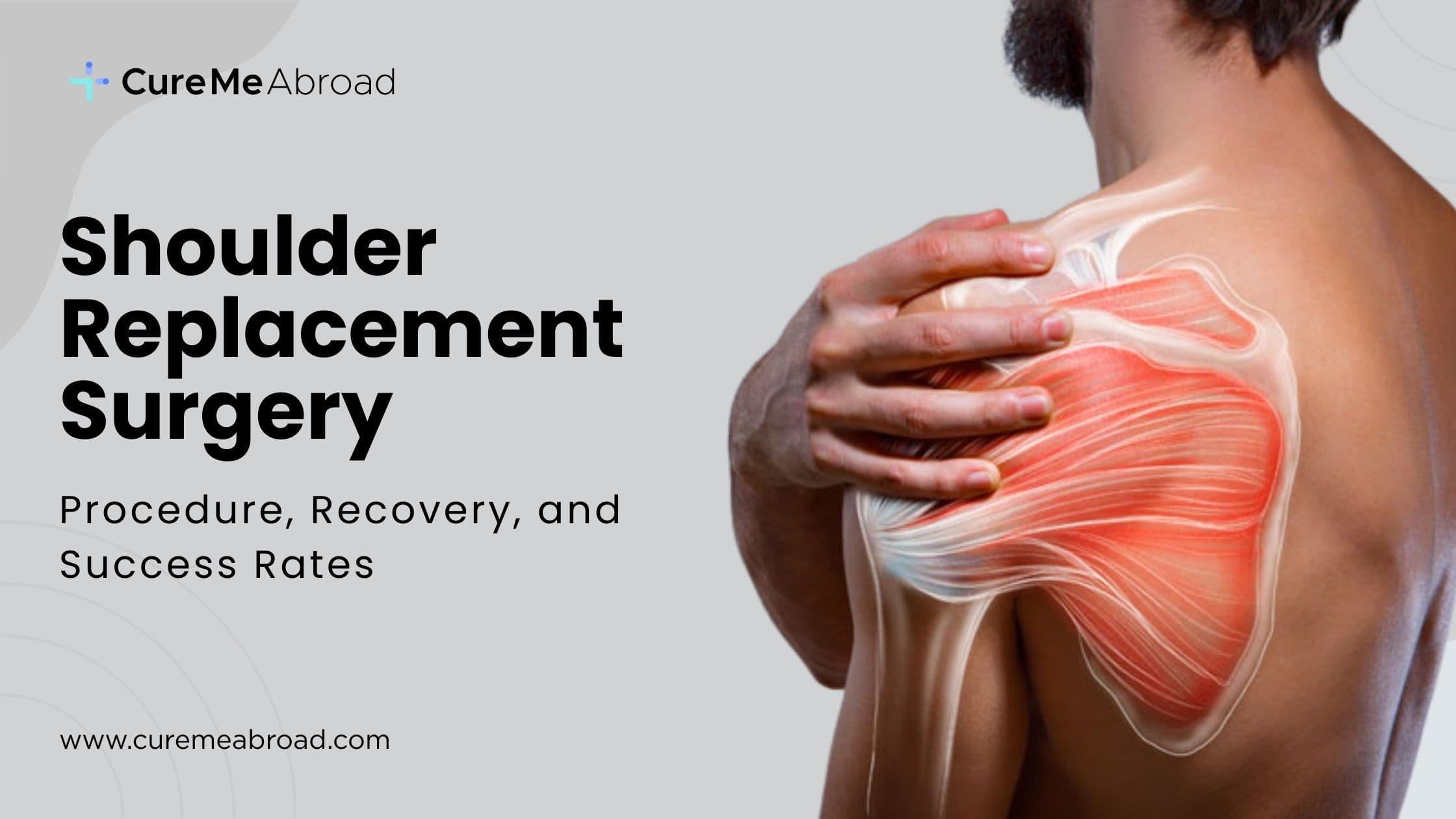
A persistent pain in the shoulder may creep into our lives in such an insidious manner that even tasks as minor as brushing our hair or drinking from our cup may become impossible due to pain. To most people, pain in their shoulders does not come as something transient; instead, it may be due to some long-term damage to the joint arising from arthritis and other such factors. When such pain does not abate even by medication, physiotherapy, and injections, shoulder replacement surgeries may come to their rescue.
Shoulder replacement surgery is a tried-and-confirmed operation done to alleviate a painful shoulder, restore shoulder joint functionality, as well as enhance the quality of life. It has never been safer or more successful than it is now due to developments in shoulder surgery techniques. This document presents shoulder replacement surgery, as well as an understandable guide for patients, in order to grasp the operation, the advantages, as well as the consequences.
What is Shoulder Replacement Surgery?
The ball-and-socket joint in the shoulder is created from three different types of bones: The upper arm bone (Humerus), the shoulder blade (Scapula), and the collar bone (Clavicle). In shoulder surgery, Shoulder Replacement refers to the simultaneous removal of damaged portions of the joint by replacing them with artificial (prothetic) parts.
In this process, a prosthetic part is put into the glenoid (the shoulder joint’s cavity) and the top part of the humerus (the upper arm) which is usually a round ball (the humeral head) is taken out and replaced by some type of metal rod or stem with a ball on it. The metal stem is first put into the top part of the humerus, and it will eventually meld into the bone as time passes.
Types of Shoulder Replacement Surgeries
Anatomic Total Shoulder Replacement
Here, both the ball and socket are replaced. The implants are similar in shape to the parts being replaced.
Reverse Total Shoulder Replacement
In reverse total shoulder replacement, both ball and socket replacement occur; however, their usual position is reversed. The ball is placed at the shoulder blade, and the socket is placed at the top of the arm bone. This option is usually preferred when there is more damage to the rotator cuff.
Partial Shoulder Replacement
Only the head of the joint, also known as the ball, is replaced. It may be recommended in the following situations: If the ball part of the shoulder joint is damaged.
Why Is Shoulder Replacement Surgery Performed?
Certain states lead to shoulder ache and disability in a patient and cause him to contemplate undergoing shoulder replacement surgery.
Osteoarthritis (Degenerative Joint Disease)
The osteoarthritis type of arthritis occurs due to wear and tear and occurs at an age beyond 50 years. Though it often occurs in people over 50 years, it could also occur in people who are younger. The cartilage covering the bone ends in the shoulder gradually gets depleted, and the bone ends rub against each other. The shoulder gradually becomes stiffer and painful with time passing.
Rheumatoid Arthritis
This is a medical condition that is characterized by swelling and inflammation of the synovial membrane covering the joint. The inflammation can cause deterioration and destruction of the cartilage within the joint, which consequently results in pain.
Osteonecrosis (AVN)
A painful condition that occurs when the supply of blood to the bone is interrupted is called a vascular necrosis (AVN) or Osteonecrosis. When the blood supply is not present, bone cells will die off, resulting in osteonecrosis causing damage to the shoulder joint, potentially resulting in arthritis.
Severe Fractures
A common reason that a person has shoulder replacement surgery is for a severe shoulder fracture. If the head of the upper arm is shattered, it may be difficult for the surgeon to repair. Furthermore, if the fracture interrupts the blood supply to the broken pieces of bone, the surgeon may recommend a shoulder replacement.
What Happens During Shoulder Replacement Surgery?
An anesthesiologist will administer anesthetics that numb your body and ensure that you don’t feel pain. There are two types of anesthetics that are given. These are general anesthetics that put a person to sleep, or regional anesthetics that numb the area around the shoulder.
During a shoulder replacement procedure, the surgeon will:
- A cut (incision) is made around the skin on your shoulder
- Damaged bone and cartilage in the shoulder joint will be removed
- The prosthetic shoulder will be placed
- The arm will be realigned and the shoulder will be stitched closed.
Recovery and Physical Therapy After Shoulder Replacement Surgery
Following a shoulder replacement surgery, a patient must undergo physical therapy. Normally, on the first day after a shoulder replacement surgery, a patient will meet a physical therapist who will guide him on various exercises that must be carried out to ensure that his elbow and shoulder joints do not lock up and to facilitate full range of motions in these areas. Carrying out these exercises might be challenging in the start but gets easy afterwards. The patient will be assisted to perform these exercises correctly before leaving the hospital.
The patient will have stitches along your incision that will be located in the front part of your shoulder, which will be removed during your first post-op appointment, which will be one to two weeks after your operation. You will need to ensure that the dressing, or bandage, which is located around your operation site does not become wet or dirty, as this will raise a chance that infection could happen, so try to avoid disturbing your dressing, leaving it alone until you are due to have your first post-op appointment.
A patient who undergoes an anatomic shoulder replacement will begin a structured physical therapy program within 1-2 weeks after the surgery. In the first 6 weeks of the program, passive range of motion exercises only will be used. If a patient undergoes a reverse shoulder replacement, they will start physical therapy 6 weeks after surgery, tapered usage of the sling, and be directed to active motion recovery. About 3 months after the surgery, the patient begins shoulder strengthening. The patient may return to most activities involving the shoulder around 6 months after surgery.
During the first year after surgery, you will need to see your orthopedic surgeon for routine follow-up visits, typically scheduled for 3, 6, and 12 months post-surgery. Thereafter, you will have annual check-ups to determine the status of the implant and its function.
Risks and Complications
Risks of shoulder replacement surgery are as follows:
Infection
Infection is one of the possible complications of any surgical operation. With regard to shoulder joint replacement, infection may either occur with the wound or deep around the joint replacement. It may also occur while still at the hospital or even after you have returned home. It may even arise after many years have passed.
Prosthesis Issues
Despite advances in prosthesis materials and designs, as well as surgical procedures:
The prosthesis can also degenerate while the parts can come loose from the bone.
The parts of a shoulder replacement may also become dislocated.
Excessive wear, looseness, and dislocation could require surgery
Nerve Damage
In rare cases, nerves in the surgical site of a joint replacement will be damaged during the operation. Recovery from these types of injuries generally improves over time and may fully recover as well.
Fractures
An implant placed in your bone may weaken the surrounding (peri-implant) bone leading to the development of stress fractures in the peri-implant bone, which can be a major complication.
Succes Rates Of Shoulder Replacement Surgery
Shoulder Replacement Surgery also showed a high graph when it comes to the success rate for the surgery. Initially, most patients undergoing the surgery have a significant degree of pain relief; satisfaction is at 90%.
Factors Influencing the Success Rates of Shoulder Replacement Surgery
It must be noted that every surgical operation does not come with the same results. The results depend on various factors, which, in turn, justify the success of the surgery. Here, various factors impacting the Success Rates of Shoulder Replacement Surgery will be tried to be understood.
Skill and Experience of the Surgeon
The skill level and experience of the surgeon may be considered one of the most important factors that can affect the success of the surgical procedure of shoulder replacement because they may be more aware of the problems involved.
Overall Health & Condition of the Patient
Overall, the state of the patient’s health will have a huge influence on the success of the surgery performed. BMI, in one way, will influence the patient’s expected successful possibility of the surgeries performed, especially in patients with high BMI levels, which may result in infections during the process.
Apart from that, any chronic illness, such as diabetes or heart conditions, also comes into play in the patient's case and hence the process to be followed. Moreover, the age of the patient is also crucial in identifying the exact type and process to be followed.
Mental Health and Emotional Well-being
When in the course of any surgery, the mental aspect is often neglected. Depression and other psychological complications can influence the rate of recovery in a patient. Patients who have excessive fear and worry prior to their surgeries may end up with high degrees of pain and long periods of recovery after surgery. It is vital that you start with a basic consultation to help deal with the fear that may be there.
Long-term shoulder injuries create both emotional and physical burdens and limit the independence and mobility of patients living with them. While other options for treatment exist, shoulder replacement surgery offers the highest rate of success in treating long-term shoulder pain and restoring a patient's functionality. With the introduction of innovative surgical techniques, established rehabilitation programs and adequate post-operative intervention, most recipients of shoulder replacement surgery regain comfort and mobility, and are able to return to their prior lifestyle without restriction.
If you are experiencing shoulder pain that has been negatively impacting your quality of life, seek an orthopedic surgeon for an evaluation of how shoulder replacement surgery may be beneficial for you and to provide you with resources to improve your quality of life by becoming as healthy, active and functional as possible..
Frequently Asked Questions
1. What is the duration of a Shoulder Replacement procedure?
It usually takes between 1.5 and 3 hours to undergo the process.
2. Is shoulder replacement surgery painful?
Pain following surgery is expected and can be controlled using medications and gets better especially during rehabilitation.
3. How is the recovery process?
Most patients make a functional reconstruction within 3 to 6 months. Full recovery occurs within a year.
4. Will I regain full movement in my shoulders?
Although normal normal motions may not fully return, significant improvement and pain-free normal functioning are obtainable.
5. How long do shoulder implants last?
Modern devices can withstand 15 or 20 years or more with proper attention.
6. Is it possible to replace both shoulders?
Yes, the shoulder replacements can be done on both the shoulders, though as separate procedures.
7. When can I expect to return to work?
While the desk jobs can be resumed within a period of 4-6 weeks, physically demanding jobs could take a few months.
References
---. “Shoulder Replacement Surgery.” Cleveland Clinic, 19 Nov. 2025{: rel="nofollow"}
Shoulder Replacement Surgery - Mayo Clinic.{: rel="nofollow"}
UCSF Health. “Recovering From Shoulder Replacement Surgery.” ucsfhealth.org, 21 May 2024{: rel="nofollow"}